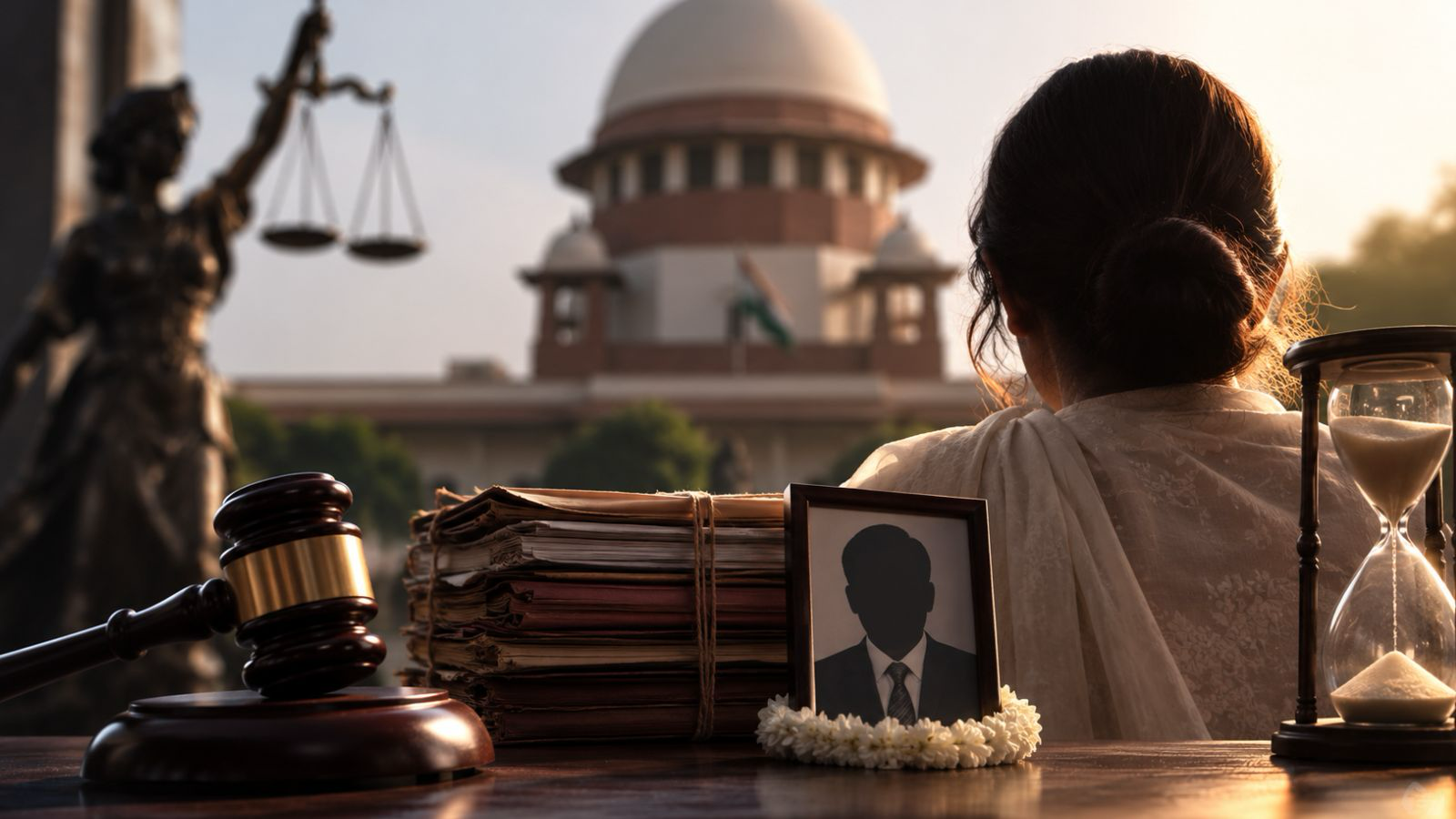
The Supreme Court dismissed Maharashtra’s appeal against a 2010 Bombay High Court order, reaffirming the acquittal of Monika Kiran Suryawanshi and two co‑accused. The bench highlighted gaps in circumstantial evidence and forensic mishandling.
Key Takeaways
- Supreme Court upheld the acquittal after 19 years.
- Prosecution failed to present an unbroken chain of circumstantial proof.
- Digital and forensic lapses weakened the murder narrative.
New Delhi — In a landmark judgment, the Supreme Court rejected Maharashtra’s challenge to a 2010 Bombay High Court order, confirming the acquittal of Monika Kiran Suryawanshi and two co‑accused. The decision underscores the challenges of securing convictions on purely circumstantial evidence within India’s criminal justice system.
Background
In February 2007, ICICI Bank employee Kiran Suryawanshi was found dead in Deopur, Maharashtra. A sessions court in 2008 convicted Monika, neighbor Prakash Nagraj Patil and Dnyaneshwar Mahale for murder and conspiracy, sentencing them to life imprisonment. The Bombay High Court overturned the murder conviction in 2010, citing lack of concrete proof, but the state government appealed.
Supreme Court Verdict
Justices Sanjay Karol and Prasanna B. Varale ruled that the prosecution could not establish a continuous chain of circumstances linking the accused to the crime, stating, “The chain of circumstances is broken, and the hypothesis of guilt is not exclusively established.” The bench therefore affirmed the High Court’s acquittal.
Key Evidence Gaps
The Court pointed out three critical deficiencies: (1) Telephone records showed no outgoing call from Monika to Prakash on the night of the incident, undermining the alleged affair motive; (2) Forensic analysis found no blood on the mattress, bedsheet or pillow, contradicting the claim that the victim was bludgeoned to death in his bed; and (3) The alleged murder weapon – a grinding stone – was not sealed at the time of seizure, diminishing its evidentiary value.
Implications for Future Litigation
This ruling sends a clear message that Indian courts will scrutinize the integrity of digital trails and forensic protocols more rigorously. Prosecutors will need to present unbroken, scientifically validated evidence rather than rely on speculative narratives. The decision also reinforces the principle that mere suspicion of an extramarital affair cannot substitute for solid proof of motive.
While Prakash and Mahale were convicted under Section 201 of the Indian Penal Code for tampering with evidence and served a one‑year sentence, the Supreme Court’s emphasis on evidentiary standards is likely to influence upcoming high‑profile criminal cases.