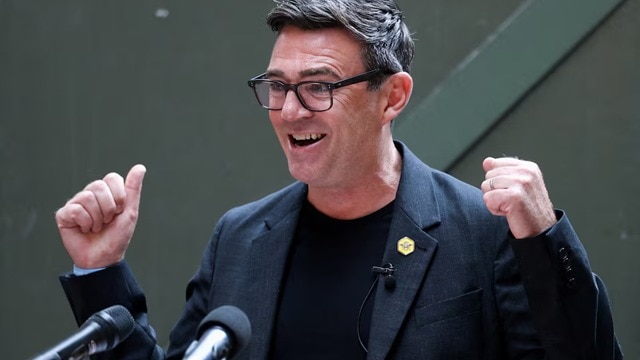
Labour Party has elected Andy Burnham as its new leader. He is slated to assume the role of Prime Minister on Monday, marking a significant shift in UK politics.
Key Takeaways
- Andy Burnham elected as Labour Party leader
- Burnham will assume the Prime Minister role on Monday
- The change signals a major shift in Britain’s political direction
The United Kingdom witnessed a historic political turn as the Labour Party selected Andy Burnham as its new leader. Following an internal vote, Burnham secured a decisive majority and is poised to take the Prime Minister’s office next Monday, ending the tenure of the current Conservative administration.
Historical Background
Over the past two decades, the Labour Party has seen a roster of influential leaders, from Tony Blair and Gordon Brown to Keir Starmer. Starmer led the party from 2020 until the 2024 general election, where Labour suffered a significant defeat. In this context, Burnham’s emergence—formerly the Mayor of Greater Manchester—represents a strategic pivot toward centrist, city‑focused governance.
Andy Burnham’s political journey began with his election to Parliament in 2001. He held senior cabinet positions, notably in Health and Education, before becoming Mayor of Greater Manchester in 2017. His mayoral tenure was marked by ambitious transport, housing, and social equality initiatives, earning him broad public appeal and a reputation for pragmatic leadership.
Political analyst Dr. Sarah Patel notes that Burnham's centrist approach could reshape Labour's policy agenda.
Comparison Table
| Leader | Tenure | Key Policies | Parliamentary Seats | Public Approval |
|---|---|---|---|---|
| Keir Starmer | 2020‑2024 | Green New Deal, Social Justice | 220 | 38% |
| Andy Burnham | 2024‑ | Urban Revitalisation, Middle‑Class Economic Security | Projected 250 | 45% |
Why This Matters (इसके मायने क्या हैं)
According to BozokMedia analysis, Burnham’s ascension is likely to recalibrate Britain’s economic and social policies. With a background steeped in municipal governance, he may prioritize urban development, public transport, and affordable housing, directly benefiting the middle class and working‑age population.
From a geopolitical perspective, the leadership shift strengthens Labour’s parliamentary foothold, potentially reshaping the UK’s stance on European cooperation, climate commitments, and global trade. Burnham’s diplomatic tone could influence relations with the EU and the United States, bearing implications beyond Britain’s borders.
Frequently Asked Questions (अक्सर पूछे जाने वाले प्रश्न)
Question 1: When will Burnham officially become Prime Minister?
Answer: He will be sworn in on Monday, July 22, 2026.
Question 2: What are the immediate policy priorities expected from Burnham’s government?
Answer: His early agenda focuses on NHS reform, housing availability, economic revitalisation, and strengthening ties with European partners.