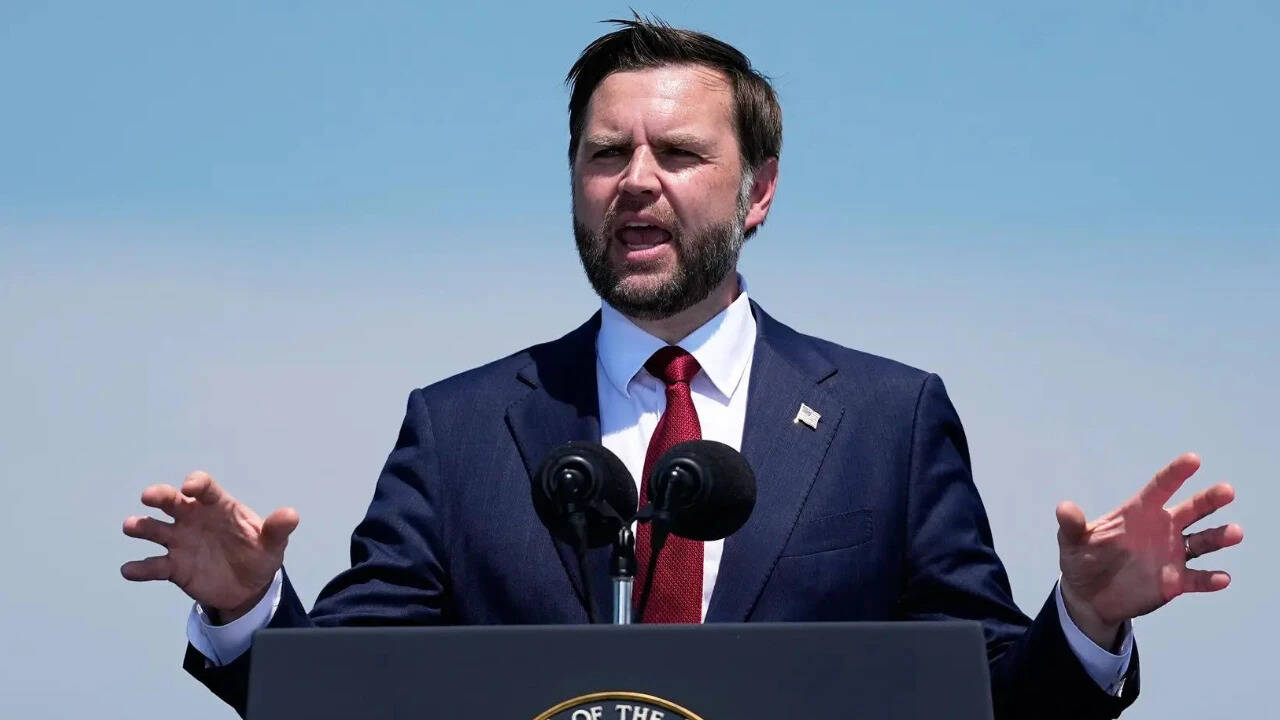
Vice President JD Vance dismissed allegations that Jared Kushner and Steve Witkoff profited from insider information during US‑Iran negotiations as completely false. He said he never received any warning from Tehran and affirmed their loyalty to President Trump’s team.
मुख्य बिंदु (Key Takeaways)
- JD Vance labeled the Kushner‑Witkoff profit claims as completely bogus.
- He confirmed he never received any warning from Iran.
- The White House reiterated strict ethical guidelines while noting a separate investigation into a teleprompter operator.
Historical Background
The United States and Iran have a turbulent diplomatic history, marked by the 2015 Joint Comprehensive Plan of Action (JCPOA) and its subsequent challenges. Jared Kushner, former senior adviser to President Donald Trump, played a behind‑the‑scenes role in multiple back‑channel talks with Tehran. Steve Witkoff, a real‑estate and hedge‑fund magnate, has occasionally been linked to financial speculation surrounding political events, though no formal accusations have been lodged against him.
In early 2024, an unnamed Iranian official reportedly warned that Kushner and Witkoff were “exploiting insider knowledge” to earn up to $9 billion from market manipulation tied to the negotiations. The claim quickly spread across international media, prompting a defensive response from the U.S. administration.
Amid these rumors, the White House confirmed that a long‑time teleprompter operator for President Trump is under a federal investigation for alleged insider trading on a prediction‑market platform. The employee has been placed on unpaid administrative leave, a decision President Trump says reflects the administration’s “extremely strict ethical guidelines.”
Why This Matters (इसके मायने क्या हैं)
According to BozokMedia analysis, the proliferation of such allegations can erode confidence in diplomatic channels, potentially slowing or derailing delicate negotiations. When senior aides are accused of leveraging privileged information for financial gain, foreign partners may question the sincerity of the United States’ diplomatic overtures, jeopardizing any progress toward regional stability.
Domestically, the episode fuels partisan scrutiny over the Trump administration’s inner circle and highlights the importance of transparent ethical standards. Continued investigations, even if unrelated to Kushner or Witkoff, underscore a broader demand for accountability that could shape future political calculations and public trust.
“The line between political advisory roles and personal financial interests is thin; public confidence hinges on how clearly that line is drawn and enforced,” says senior foreign‑policy analyst Dr. Emily Carter.
Comparison Table (तुलनात्मक तालिका)
| Allegation | Vance’s Response |
|---|---|
| Iran claimed Kushner and Witkoff could earn $9 billion | Vance said he never received such a warning |
| Insider‑information trading by Kushner‑Witkoff | Vance called the notion “absurd” and affirmed their loyalty |
Frequently Asked Questions (अक्सर पूछे जाने वाले प्रश्न)
Did JD Vance actually receive a warning from Iran?
No. Vance publicly stated that he never received any such message.
Is there an official investigation into Kushner or Witkoff?
Currently, the investigation concerns a teleprompter operator; no formal probe into Kushner or Witkoff has been announced.