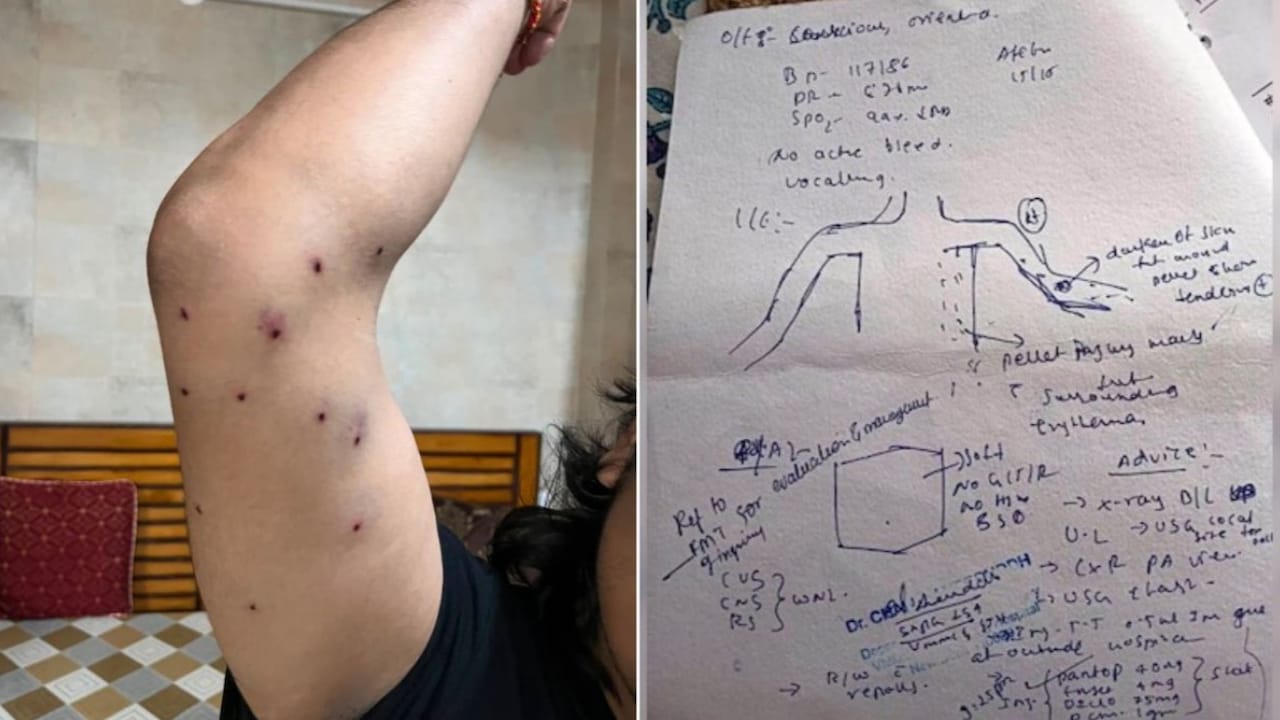
A medical case sheet from Safdarjung Hospital has surfaced, providing evidence that contradicts previous police assertions regarding injuries sustained during the Jantar Mantar protest.
Key Takeaways
- Safdarjung Hospital's case sheet confirms pellet shards were embedded in the patient's skin.
- The medical findings directly challenge the official narrative provided by the Delhi Police.
- The victim sustained these injuries during a protest at Jantar Mantar.
In a significant development regarding the recent unrest, a medical report from Safdarjung Hospital has emerged, casting doubt on the official version of events provided by the Delhi Police. The case sheet details the harrowing injuries suffered by a man during a protest at Jantar Mantar, providing a stark contrast to earlier police statements.
Detailed Medical Findings
The clinical documentation is explicit regarding the severity of the trauma. According to the case sheet, the patient exhibited "darkened skin around wounds" and significant tenderness at the impact sites. Most critically, the report notes that "pellet shards were stuck to the skin," a detail that suggests a high-velocity impact and direct use of pellet-firing devices.
Why This Matters
BozokMedia analysis shows that the discrepancy between law enforcement statements and medical evidence is a critical indicator of potential accountability issues. When clinical findings contradict police reports, it necessitates an independent inquiry to ensure that the use of force adheres to legal and human rights standards.
Medical records serve as an objective truth that can either validate or dismantle official narratives in cases of state-led force.
Historical Background: Jantar Mantar has long been a focal point for democratic dissent in India. Over the years, several protests have escalated into confrontations with security forces, often leading to debates over the proportionality of the force used for crowd control.
Frequently Asked Questions
1. What did the Safdarjung Hospital report specifically state?
The report stated that the patient had pellet shards stuck in his skin and darkened tissue around the wound sites.
2. How does this affect the ongoing investigation?
This medical evidence provides a counter-narrative to the police claims, potentially opening the door for legal challenges regarding the nature of the force used.