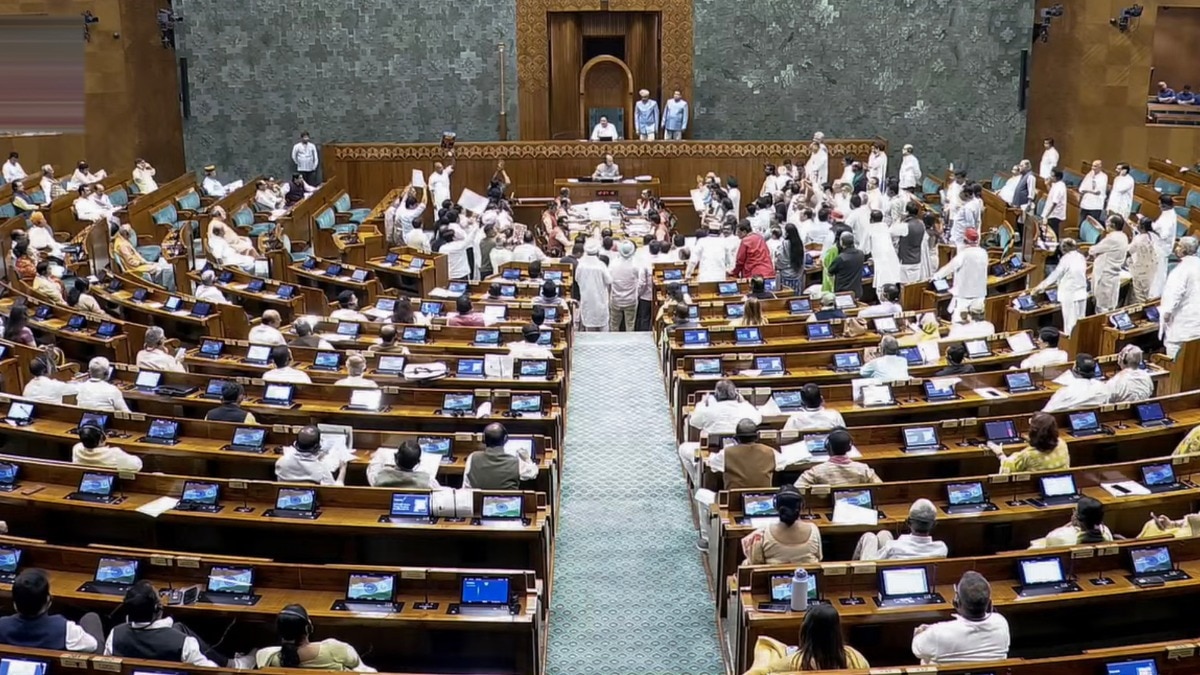
The tug-of-war between the Treasury and Opposition benches in Rajya Sabha often hinges on Rule 167 and Rule 267. Discover the legal nuances behind these parliamentary procedures.
Key Takeaways
- Rule 167 facilitates discussions on matters of general public importance via a formal motion.
- Rule 267 allows for the suspension of scheduled business to address urgent national issues.
- The decision to invoke Rule 267 rests entirely on the discretion of the Chairman.
- The Opposition frequently demands Rule 267 to force immediate government accountability.
In the complex machinery of Indian parliamentary democracy, specifically within the Rajya Sabha, the method of conducting debates is governed by strict procedural rules. Recent political standoffs have centered on the interpretation and application of Rule 167 and Rule 267. Understanding these rules is crucial to grasping how legislative priorities are set and how the government is held accountable.
Rule 167: Structured Discussion on Public Interest
Under the Rules of Procedure and Conduct of Business in the Council of States, Rule 167 provides a mechanism for discussing matters of general public importance. Unlike spontaneous debates, Rule 167 requires a formal motion to be moved with the prior consent of the Chairman. Once a motion is laid, a discussion ensues, followed by a response from the relevant Minister. In many cases, this process concludes with a formal voting procedure on the motion or its amendments.
Why This Matters
BozokMedia analysis shows that Rule 167 acts as a stabilizer for parliamentary proceedings, ensuring that discussions are organized and do not derail the pre-planned legislative calendar of the House.
While Rule 167 serves as a structured pathway for deliberation, Rule 267 functions as a parliamentary emergency brake.
Rule 267: Suspending the Agenda for Urgency
In contrast, Rule 267 is a more potent and disruptive tool. It empowers a member to request the Chairman to suspend the day's scheduled business (listed business) to allow for an immediate debate on a matter of extreme national urgency. This rule is often the focal point of intense friction between the ruling party and the opposition.
Invoking Rule 267 is not a right, but a request that requires a written notice. The ultimate authority to grant or deny this request lies solely within the discretion of the Chairman. The Opposition typically leverages this rule when they believe a critical issue is being sidelined by the government's routine legislative agenda.
| Feature | Rule 167 | Rule 267 |
|---|---|---|
| Primary Objective | General public interest matters | Urgent and critical national issues |
| Impact on Agenda | Proceeds alongside scheduled business | Can suspend/stop scheduled business |
| Procedure | Requires a formal motion | Request to suspend business |
| Decision Basis | Procedural motion & Chairman consent | Chairman's absolute discretion |
Frequently Asked Questions
Q1: Who has the final say in Rule 267 applications?
A: The Chairman of the Rajya Sabha has the absolute discretion to decide whether to allow the suspension of business under Rule 267.
Q2: How does Rule 167 differ from a simple question?
A: While a question is a specific inquiry, Rule 167 involves a formal motion and a broader discussion on a subject of public importance.