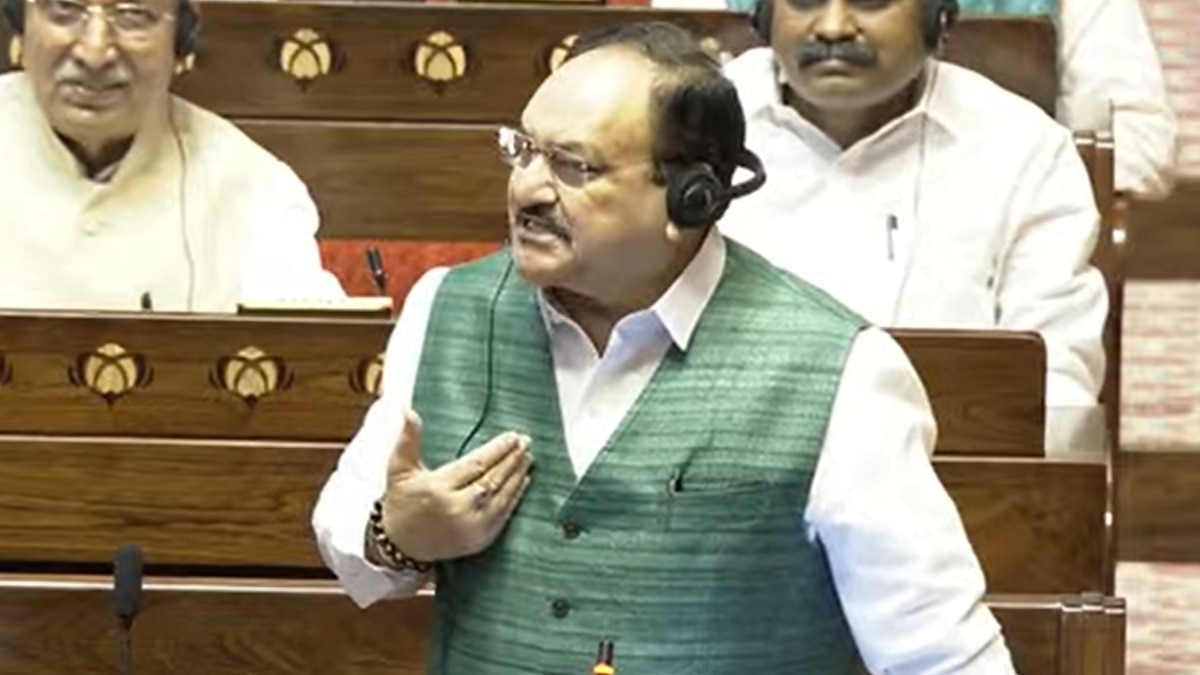
Union Minister JP Nadda responded to Congress criticism by stating that activists must expect police intervention, citing his own history of arrests during the Emergency.
Key Takeaways
- JP Nadda defended police crackdowns on student activists.
- Nadda cited his personal experience of being arrested during the Emergency.
- Congress leader Mallikarjun Kharge accused the BJP of undermining democracy.
A fierce political confrontation erupted in the Rajya Sabha as Union Health Minister JP Nadda defended the police's actions against student protesters. Nadda asserted that those who choose the path of activism must be prepared to face the consequences of law enforcement actions.
The debate was triggered by Mallikarjun Kharge, the Leader of the Opposition, who slammed the BJP-led government for creating an unsafe environment for democracy. Kharge questioned why there is a lack of accountability for officials allegedly using "brutal force" against student demonstrators.
Why This Matters
BozokMedia analysis shows that this exchange highlights the growing tension between state authority and the right to protest in India. The government's stance emphasizes maintaining order, while the opposition frames it as a systemic crackdown on dissent.
Nadda recalled his days as a student activist, noting that he was twice picked up from his classroom during the Emergency.
Responding to the charges, Nadda maintained that the police were justified in their measures to restore law and order. He attempted to normalize the experience of detention by drawing parallels to his own youth during the Emergency period.
Historical Background
The mention of the Emergency serves as a significant historical touchstone. During this period in Indian history, civil liberties were suspended, and many political figures, including Nadda, faced detention, a fact he used to contextualize current police interventions.
Frequently Asked Questions
1. What was Mallikarjun Kharge's primary concern?
Kharge expressed concern over the safety of democracy and the lack of accountability for police excesses.
2. How did JP Nadda justify the police action?
Nadda argued that police actions are necessary to maintain law and order and are a standard part of activism.