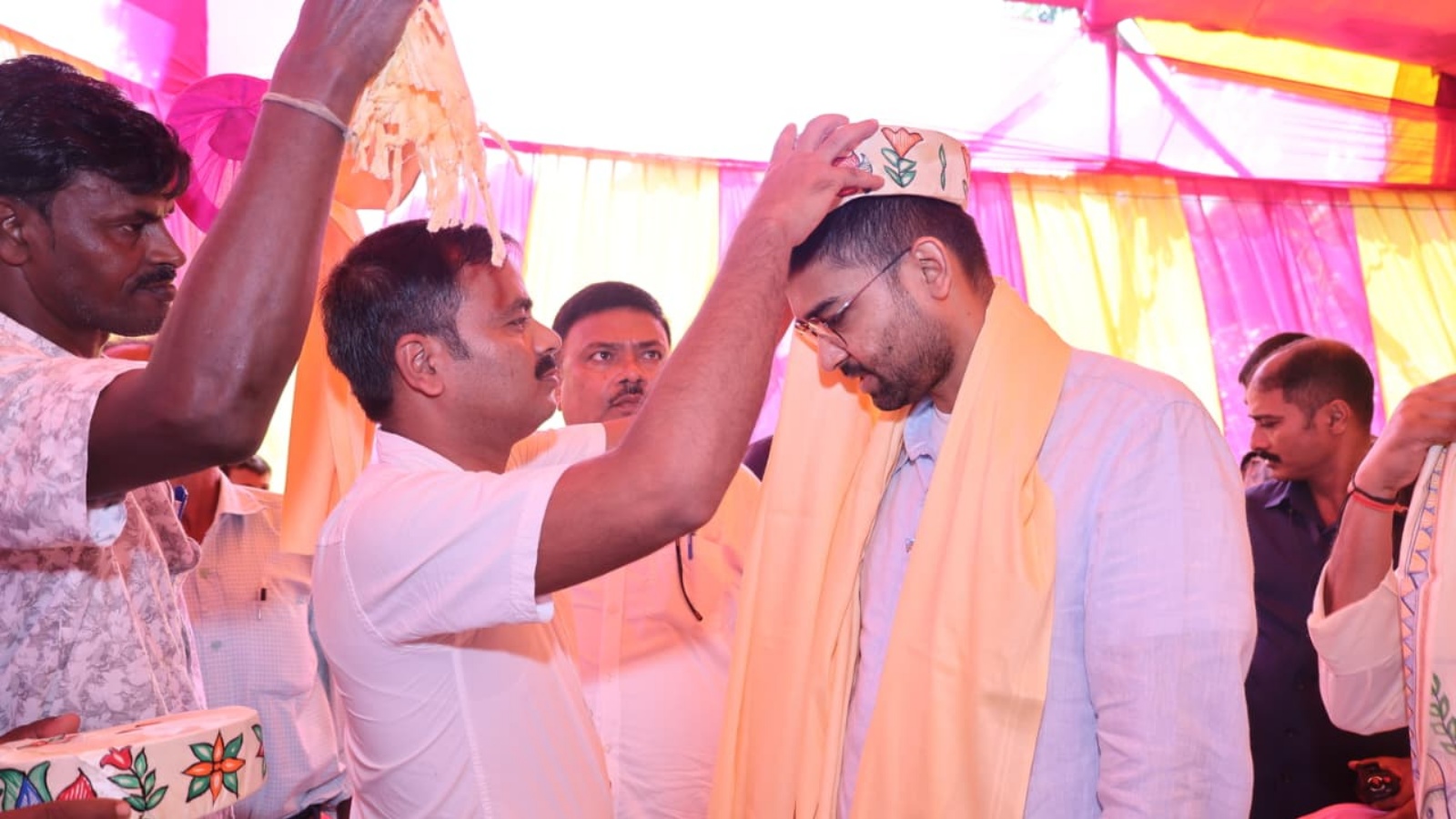
Following a Supreme Court rebuke over the legality of Minister Deepak Prakash’s tenure without legislative membership, BJP MLC Devesh Kumar stepped down to open a seat for the RLM leader. The move highlights the coalition’s maneuvering to keep the minister in power amid constitutional challenges.
Key Takeaways
- Supreme Court questions Deepak Prakash's ministerial legitimacy
- BJP MLC Devesh Kumar resigns to free up a seat
- Strategic move to ensure RLM’s representation in the Upper House
Supreme Court’s Legal Challenge
The apex court, in a three‑judge bench headed by Chief Justice Surya Kant, warned the Bihar government that retaining Minister Deepak Prakash beyond the six‑month constitutional window without legislative membership violates Article 164(4). The bench set the next hearing for August 4, leaving no room for further extensions.
BJP’s Rapid Response
In a swift political countermove, BJP Legislative Council member Devesh Kumar submitted his resignation on August 1, accompanied by Bihar BJP chief Sanjay Saraogi. The resignation was handed to Council Chairman Awadhesh Singh, effectively creating a vacancy for Prakash’s entry.
Deepak Prakash’s Dual Tenures
At 36, Prakash is the son of Rashtriya Lok Morcha president Upendra Kushwaha. He first joined the cabinet as Panchayati Raj Minister on November 20, 2025 under Chief Minister Nitish Kumar, and was re‑inducted on May 7, 2026 by Chief Minister Samrat Choudhary. Combined, his two stints total more than the six‑month limit—four months 26 days in the Nitish government and two months 24 days under Samrat.
Historical Background
Article 164(4) permits a non‑legislator to serve as a minister for six months, but jurisprudence treats this as a one‑time privilege per legislative term. The 2001 SC decision in S. R. Chaudhuri v. State of Punjab affirmed that re‑appointment after the grace period undermines parliamentary democracy.
Why This Matters
BozokMedia analysis shows that the resignation of an MLC to accommodate a minister underscores the fragile balance between coalition politics and constitutional norms in Bihar, potentially reshaping power dynamics within the NDA alliance.
"Allowing a minister to bypass the six‑month rule erodes the very foundations of representative governance," said a constitutional law expert.
Frequently Asked Questions
- Can Deepak Prakash continue as minister if he fails to win a council seat?
He must resign if he does not secure election in the upcoming Legislative Council polls. - What risks does the BJP face by orchestrating this resignation?
The move strengthens its alliance with RLM but may invite further judicial scrutiny and political backlash.

