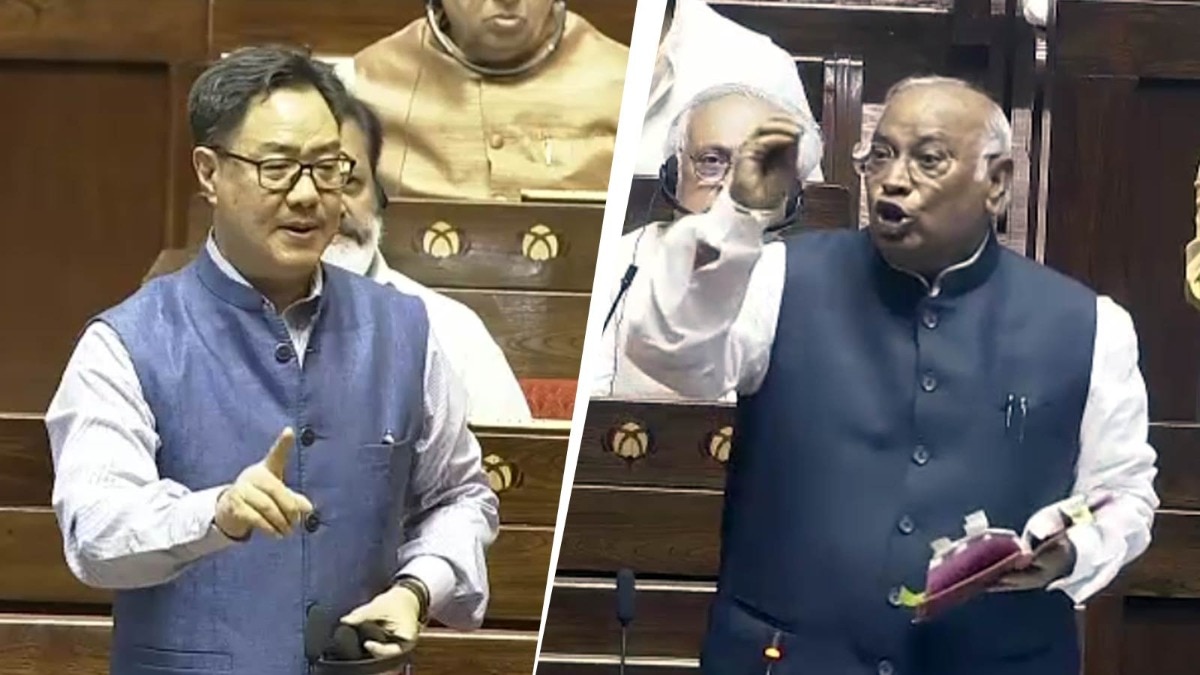
A fierce verbal confrontation erupted in the Rajya Sabha between Union Minister Kiren Rijiju and Congress leader Mallikarjun Kharge regarding the manner of opposition demands.
Key Takeaways
- High-voltage debate between the Treasury and Opposition benches.
- Kiren Rijiju criticized the tone of opposition demands.
- Focus on maintaining parliamentary decorum and etiquette.
The upper house of the Indian Parliament, the Rajya Sabha, witnessed a significant confrontation today as Union Minister Kiren Rijiju and senior Congress leader Mallikarjun Kharge engaged in a sharp exchange of words. The tension centered on the distinction between making legitimate parliamentary demands and attempting to dictate policy to the government.
Demand vs. Dictate: The Core Conflict
During the heated session, Kiren Rijiju asserted that while the opposition has every right to hold the government accountable, they cannot cross the line into commanding the executive. 'You can demand, not dictate,' Rijiju stated, addressing the aggressive stance taken by the opposition during the proceedings.
Why This Matters: BozokMedia Analysis
BozokMedia analysis shows that this confrontation is indicative of the widening ideological and procedural gap between the ruling party and the opposition. As the opposition intensifies its scrutiny, the government is increasingly adopting a firm stance on parliamentary protocols, leading to frequent stalemates.
The shift from constructive debate to confrontational rhetoric poses a challenge to the sanctity of parliamentary proceedings.
The exchange highlights a growing trend where procedural disagreements often escalate into personal and political volleys, potentially stalling critical legislative work.
Historical Background
Parliamentary debates in India have historically been the crucible of democracy. However, recent years have seen a marked increase in disruptions, which experts suggest may impact the efficiency of law-making processes in the country.
Frequently Asked Questions
1. What was the specific trigger for the argument?
The argument was triggered by the manner in which the opposition presented their demands and challenged the government's authority during the session.
2. How do such debates affect the functioning of Parliament?
Frequent heated exchanges can lead to adjournments, reducing the time available for discussing crucial bills and national issues.