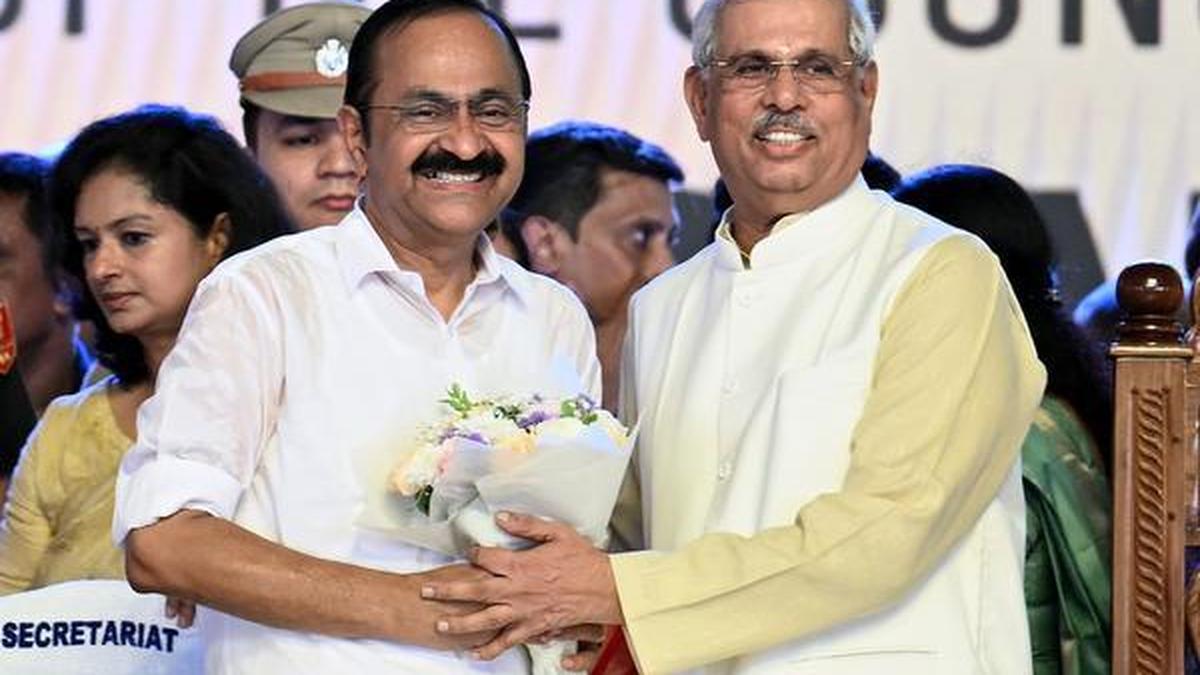
The recital of the complete version of Vande Mataram during the UDF government's swearing-in in Kerala has triggered a massive political debate between the CPI(M) and the RSS.
Key Takeaways
- The full version of Vande Mataram was recited during the UDF swearing-in ceremony in Kerala.
- CPI(M) claims the move undermines secularism and pluralism.
- RSS-backed outlets have hailed the recital.
- The Constituent Assembly historically prescribed only the first eight lines as the national song.
The recitation of the full version of Vande Mataram during the swearing-in ceremony of the United Democratic Front (UDF) government in Kerala on Monday has ignited a fierce political controversy. While the ceremony was intended to mark a new beginning for the government, the musical choice has instead drawn intense criticism and support from opposing ideological camps.
The Ideological Divide
The Communist Party of India (Marxist) [CPI(M)] issued a sharp statement on Tuesday, asserting that singing the entire six-stanza version is unsuitable for a pluralistic society. The party argued that such a move threatens the secular fabric of the nation. Conversely, the Rashtriya Swayamsevak Sangh (RSS) and its ideological allies have lauded the decision, viewing it as an act of patriotic fervor.
The choice of national symbols in official ceremonies often becomes a litmus test for a government's ideological stance.
Historical and Constitutional Context
To understand the gravity of this dispute, one must look at the historical precedents. The CPI(M) pointed out that the Congress Working Committee had previously resolved on October 30, 1937, to trim certain parts of the song. Furthermore, on January 24, 1950, the Constituent Assembly clarified that only the first eight lines of Vande Mataram should be performed as the national song to maintain its inclusive spirit.
Why This Matters: BozokMedia Analysis
BozokMedia analysis shows that this incident is more than just a musical disagreement; it is a reflection of the deep-seated ideological battleground in Kerala. As political entities use national symbols to define their identities, the line between cultural heritage and political signaling becomes increasingly blurred, potentially affecting social cohesion in the state.
Frequently Asked Questions
1. Why is the CPI(M) protesting the recital?
The CPI(M) argues that the full version is not compatible with the pluralistic and secular values of India.
2. What was the decision of the Constituent Assembly?
The Constituent Assembly clarified that only the first eight lines of the song should be recognized as the national song.