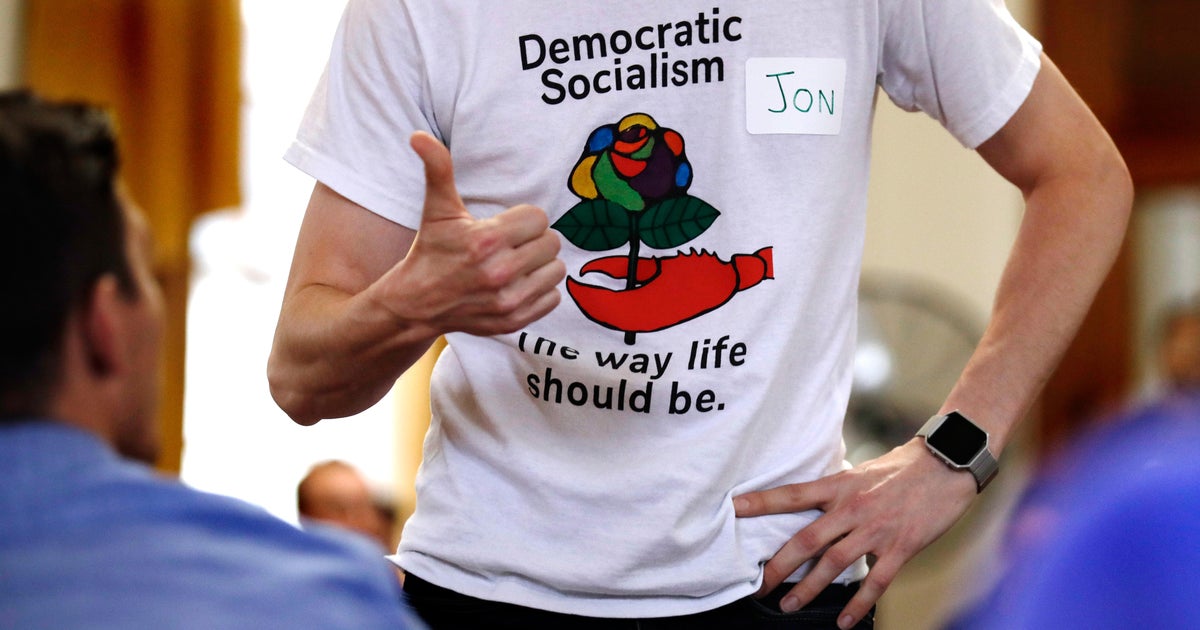
A new CBS News poll highlights a growing ideological rift within the Democratic Party regarding socialism, driven by widespread economic anxiety and perceived unfairness in the U.S. system.
Key Takeaways
- Most Americans favor capitalism over socialism, but Democrats are increasingly embracing socialist ideals.
- Economic insecurity—difficulty in buying homes and raising families—is driving political shifts.
- Younger Americans feel significantly fewer opportunities exist compared to previous generations.
- Voters view Republicans as 'extreme' and Democrats as 'weak' and ineffective.
A comprehensive CBS News/YouGov poll has unveiled a significant ideological shift in the American political landscape. While the broader American public maintains a preference for a free-market capitalist system, a distinct divide is emerging within the Democratic Party, where socialism is gaining positive traction.
Economic Anxiety and the Fairness Gap
The data suggests that the current U.S. economic system is facing a crisis of confidence. Americans report that achieving milestones like homeownership and financial security has become significantly more difficult than it was for previous generations. This perceived lack of 'fairness' is a primary driver of political discontent, particularly among younger demographics who feel the ladder of opportunity is being pulled up.
Why This Matters: BozokMedia Analysis
BozokMedia analysis shows that the rise in socialist sentiment among Democrats is not merely an ideological whim but a direct response to economic stagnation. When the 'American Dream' feels unattainable, voters gravitate toward systemic critiques. The definition of socialism itself is polarizing: Republicans view it through the lens of government control, while Democrats associate it with equality and public services.
Economic inequality is no longer just a social issue; it has become the primary engine of political realignment.
The Democratic Party is currently grappling with internal pressure to be more progressive. Roughly half of the party's members feel the leadership is not moving fast enough, demanding systemic overhauls rather than incremental changes. Meanwhile, the Republican Party faces criticism for being perceived as 'extreme,' while Democrats are often dismissed as 'weak' and ineffective.
Historical Context
Historically, 'socialism' was a political taboo in the United States due to Cold War era associations. However, the modern iteration discussed in these polls focuses more on social safety nets and wealth redistribution, reflecting a generational shift in how economic justice is defined.
Frequently Asked Questions
1. Does the average American support socialism?
No, most Americans still view capitalism more positively than socialism, though the gap is narrowing within specific political subgroups.
2. How do voters perceive the two major parties?
Voters tend to label the Republican Party as 'extreme' and the Democratic Party as 'weak,' with both parties struggling to be seen as truly effective.