An analytical exploration of India's independence, contrasting the grandeur of Red Fort celebrations with the lived realities of marginalized communities fighting for dignity.
- Independence in India is a dual experience of national pride and ongoing systemic struggle.
- For marginalized groups, 'freedom' is often measured by basic needs like food security and education rather than abstract political concepts.
- The State acts as a paradox—simultaneously a provider of welfare and an instrument of dispossession.
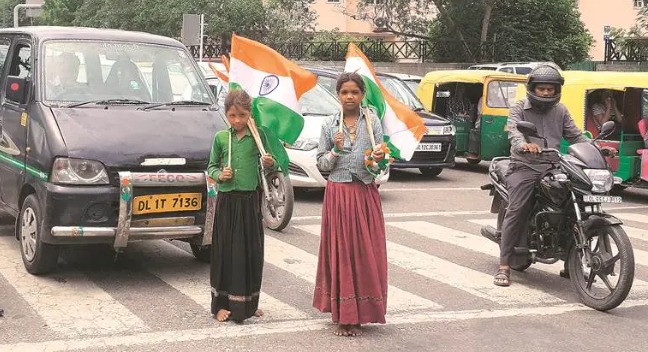
Every August 15, India finds itself locked in a profound internal debate. On one side is the narrative of national glory, characterized by the Prime Minister's address from the Red Fort and a surge of patriotic fervor. On the other is the stark image of a child in tattered clothes selling tricolour flags at a traffic signal. This contradiction highlights what social psychologist Michael Billig calls "banal nationalism," where national identity is reinforced through daily rituals and symbols, often masking deep-seated inequalities.
The discourse on India's progress is often split between two extremes: one citing rising incomes and social mobility, and the other focusing on "dark anthropology"—the study of domination and exclusion. However, a more nuanced view reveals that marginalized groups, particularly Dalits and Adivasis, have not been passive victims. They have actively negotiated their freedom through state institutions and grassroots resistance.
The Paradox of the State
Fieldwork in southern Odisha reveals a harrowing history of starvation and mud huts from the 1970s. Today, the arrival of regular rations is viewed not just as a welfare statistic, but as a concrete freedom. Yet, the state remains a double-edged sword. While it provides hostels for students and food security, it has also been the engine behind displacement projects and the protector of feudal practices.
The law in India can be an instrument of exclusion in one instance and a powerful weapon to challenge caste hegemony in another.
Why This Matters
BozokMedia analysis shows that the true measure of independence lies in the 'ordinary' assertions of dignity. When a Dalit laborer migrates from Bihar to Kerala for better wages, or when a community demands the protection of the Constitution over religious mobilization, they are redefining freedom. These are not mere economic shifts but assertions of self-respect against historical oppression.
The 2024 general elections further illustrated this complexity. While Hindutva politics attempted to mobilize voters through religious identity, a significant section of Dalit voters prioritized the Constitution and reservations. This proves that marginalized citizens are active political agents who interpret governance through the lens of their own survival and aspirations.
Comparison of Freedom Perceptions
| Perspective | Definition of Freedom | Primary Indicators |
|---|---|---|
| Nationalist Narrative | Sovereignty & Global Power | GDP Growth, Military Might, Red Fort Speech |
| Marginalized Reality | Dignity & Basic Rights | Food Security, Education, Legal Protection |
Frequently Asked Questions
Q1: Why is the contrast between the Red Fort and traffic signals significant?
It symbolizes the gap between the state's official narrative of success and the ground reality of poverty and exclusion.
Q2: How do marginalized groups view the Indian Constitution?
They view it as a critical safeguard for their democratic rights and reservations, often prioritizing it over religious or ethnic identities.