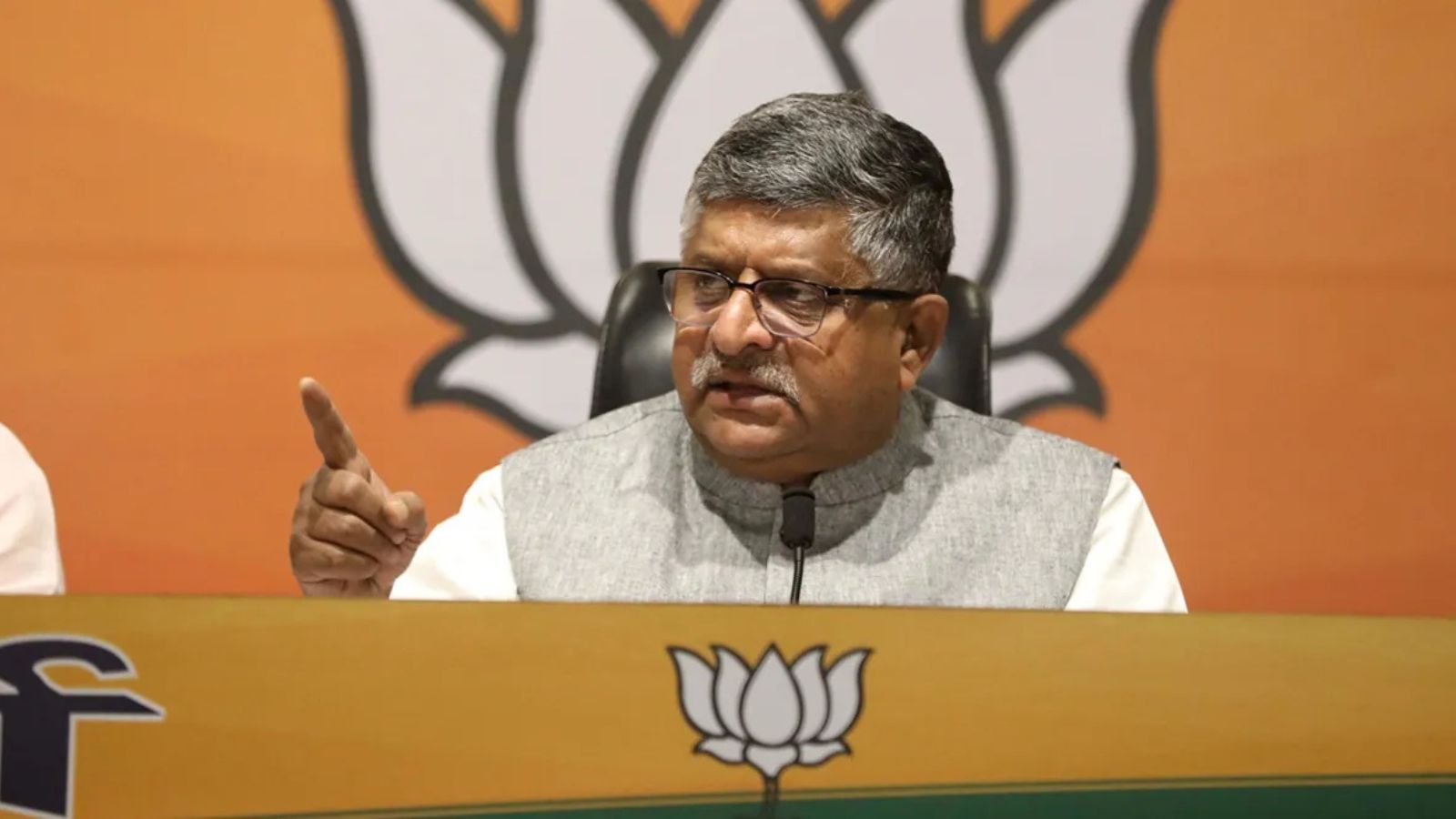
Senior BJP leader Ravi Shankar Prasad has launched a scathing attack on the Congress party, alleging they are compromising national interests for vote-bank politics, reminiscent of their 1930s pact with the Muslim League.
- Ravi Shankar Prasad accused Congress of suffering from a mindset that prioritizes appeasement over national symbols.
- The controversy stems from allegations regarding the incomplete recitation of 'Vande Mataram' at a Congress event.
- BJP claims Congress is moving beyond opposition to outright hatred of PM Narendra Modi.
- Historical references to the 1936-37 Lucknow Pact were used to draw parallels.
In a sharp political escalation, senior Bharatiya Janata Party (BJP) leader and Lok Sabha MP Ravi Shankar Prasad alleged on Tuesday that the Congress party is operating under the same ideological framework that led to its controversial alliance with the Muslim League in the 1930s. The remarks follow an incident on August 15, where Sonia Gandhi reportedly appeared to oppose the full recitation of the national song, 'Vande Mataram'.
Prasad asserted that instead of evolving, Congress leaders are becoming "symbols of anarchy." He claimed that the party’s agenda has shifted from mere political opposition to a deep-seated hatred for Prime Minister Narendra Modi, ultimately compromising national integrity for the sake of vote-bank politics.
Why This Matters
BozokMedia analysis shows that this confrontation signifies a deepening ideological rift in Indian politics regarding the interpretation of national symbols. By linking current events to the 1936-37 pact, the BJP is attempting to frame the Congress as a party that historically and currently prioritizes communal appeasement over the sanctity of national identity.
The political narrative is shifting from policy debates to a fundamental battle over the custodianship of India's national symbols.
The BJP leader provided deep historical context, noting that during the 1936-37 period, the Muslim League pressured the Congress to limit the recitation of 'Vande Mataram' to only two stanzas to avoid offending religious sentiments. Prasad reminded the house that India's first President, Dr. Rajendra Prasad—himself a Congress stalwart—formally declared 'Vande Mataram' as the National Song in the Constituent Assembly on January 24, 1950.
Prasad also took aim at Congress President Mallikarjun Kharge, who recently commented on the recitation of stanzas in Goa. The BJP leader argued that if Congress mocks the BJP's connection to the freedom struggle, they must answer for the legacy of leaders like Dr. Rajendra Prasad, who established the status of national symbols long before the current political era.
| Feature | BJP's Allegation | Congress's Position (Per BJP) |
|---|---|---|
| National Symbols | Protecting sanctity | Selective recitation/Appeasement |
| Ideology | Nationalism | Vote-bank politics |
| Historical Link | 1936-37 Pact mindset | Claiming sole custodianship |
Frequently Asked Questions
1. What is the core of the Vande Mataram controversy?
The controversy involves allegations that Congress leaders are not supporting the full recitation of 'Vande Mataram', which the BJP views as an affront to national pride.
2. How did the BJP connect Congress to the Muslim League?
Ravi Shankar Prasad claimed that the current reluctance to sing the full national song mirrors the pressure exerted by the Muslim League during the 1936-37 pact.