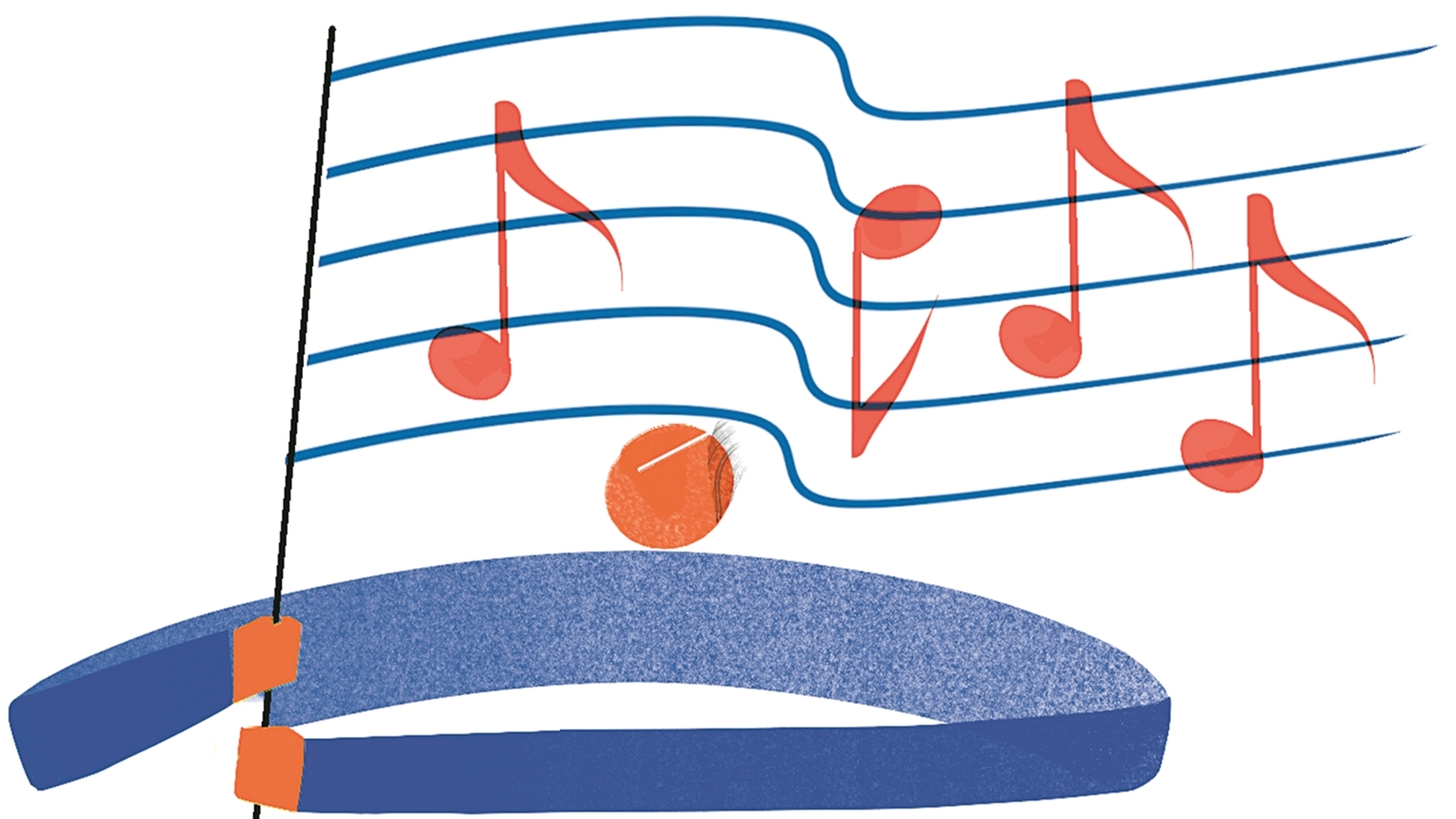
Political analyst Yogendra Yadav explores the evolution of patriotic songs in India, contrasting the humane nationalism of the past with the muscular nationalism of the present, while discussing Gulzar's call for a new anthem.
- Lyricist Gulzar has called for a new 'qaumi tarana' to reflect the aspirations of modern young Indians.
- Historical patriotic songs focused on inclusive nation-building and universal human values.
- There is a noticeable shift from 'humane nationalism' toward a more 'muscular' and aggressive form of patriotism.
In a profound reflection on the state of the nation, Yogendra Yadav discusses the void in India's current sonic landscape of patriotism. He references Gulzar, who has challenged the new generation to create an anthem that supplements 'Jana Gana Mana' and 'Vande Mataram'. Gulzar's own recent composition, 'Ek akela Hidustani, do bane to Hindustan', serves as a subtle critique of divisive politics and an invocation of the diversity that defines India.
Yadav recalls an era where songs like 'Saare Jahan Se Achchha' and 'Saathi Haath Badhana' were not just musical pieces but invitations to a collective project of nation-building. During the 1960s and 70s, nationalism was characterized by an openness to the universe and a commitment to a 'republic of virtues,' where serving humanity was the highest form of honoring the motherland.
Why This Matters
BozokMedia analysis shows that the transition in patriotic music is a mirror to the transition in political ideology. The shift from songs of longing and sacrifice to songs of dominance and muscularity suggests a narrowing of the 'imagined community.' When the music of a nation shifts from inclusive harmony to aggressive assertion, it reflects a deeper societal struggle with identity and belonging.
The author contrasts the grief-stricken yet non-jingoistic songs following the wars of 1962, 1965, and 1971—such as 'Ae Mere Watan Ke Logon'—with contemporary tracks. He argues that while the former focused on the cost of war and the value of peace, modern cinematic patriotism often leverages a 'jaded language of devotion' to fuel a more aggressive national identity.
A true national anthem is not one that demands obedience, but one that evokes a sense of belonging for the most marginalized citizen.
Yadav's journey also takes him through the lens of political poetry, mentioning figures like Raghuveer Sahay and Dushyant Kumar, who questioned hollow nationalist symbolism. He notes that while globalized sounds like 'Maa Tujhe Salaam' were contemporary, they often lacked the grounded, humane essence of earlier patriotic expressions.
Frequently Asked Questions
Q1: Why does Gulzar believe we need a new patriotic song?
Gulzar argues that most patriotic songs used today are dated—some by a century—and fail to capture the complexities and identity of the modern Indian youth.
Q2: What is 'Muscular Nationalism' according to the context?
It refers to a form of patriotism that emphasizes strength, military power, and superiority over others, as opposed to 'Humane Nationalism' which emphasizes compassion and inclusivity.