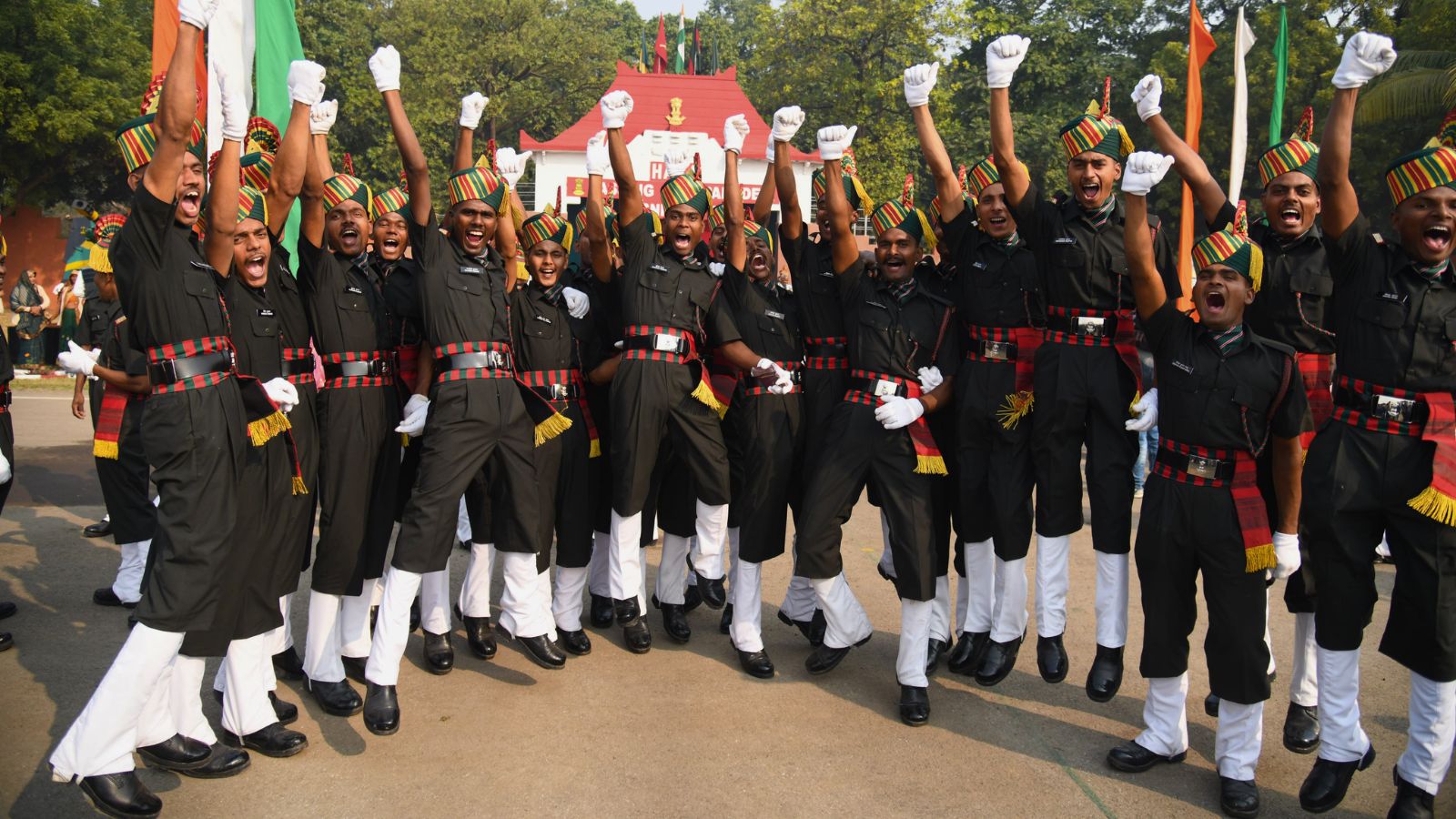
As thousands of Agniveers prepare to complete their four-year tenure in December 2026, questions arise regarding the employment readiness of Punjab, Haryana, and Himachal Pradesh.
- Thousands of Agniveers will return to civilian life in December 2026.
- Haryana has implemented a robust 20% horizontal reservation policy.
- Punjab and Himachal Pradesh face uncertainty with pending implementation details.
- Punjab needs to find jobs for approximately 1,100 discharged soldiers.
December 2026 is approaching a critical juncture. Thousands of young men and women who signed up for a four-year term under the Agnipath scheme will return to their families. Since the Bharatiya Janata Party launched this scheme in June 2022, the central debate has remained consistent: what happens to these soldiers once their service ends?
The primary concern is 'employment limbo.' Critics have long argued that without specialized skill sets, these returning soldiers might struggle in an increasingly competitive job market. To mitigate this, various state governments promised 'Agniveer quotas' in law enforcement and other state services. Now, the clock is ticking to see if these promises translate into reality.
Why This Matters
BozokMedia analysis shows that the reintegration of Agniveers is not merely a military administrative task but a significant socio-economic challenge. For states like Punjab and Haryana, where military service is a traditional career path, failure to provide post-service employment could trigger widespread social unrest and political volatility.
The success of the Agnipath scheme will ultimately be measured by the economic reintegration of its soldiers into civilian life.
State-wise Preparedness: A Comparative Look
Haryana appears to be the most prepared among the three states. Under Chief Minister Nayab Singh Saini, the BJP-led government has rolled out a detailed policy providing 20% horizontal reservation for government posts. This includes roles in the Home, Prisons, Forest, and Mining departments, with specific provisions for economically weaker sections and scheduled castes.
In contrast, Punjab's situation remains murky. While Chief Minister Bhagwant Mann of the Aam Aadmi Party (AAP) approved extending reservation benefits in May, the specific modalities have not been made public. Data indicates that out of 2,242 Agniveers recruited from Punjab, roughly 1,100 will require state-level employment after their discharge.
Himachal Pradesh is also experiencing a form of 'decision paralysis.' Although Home Secretary Amarjeet Singh mentioned plans for a 20% reservation in state government jobs, no official notification has been issued to date, leaving many in wait.
| State | Readiness Level | Key Policy Details |
|---|---|---|
| Haryana | High | 20% Horizontal Reservation (Police, Forest, etc.) |
| Punjab | Medium | Committee formed; implementation details pending |
| Himachal Pradesh | Low | 20% reservation proposed; no notification yet |
Historical Background
The Agnipath scheme was introduced in June 2022 to restructure the recruitment process of the Army, Navy, and Air Force. The goal was to reduce the financial burden of pensions and salaries while maintaining a younger, more technologically adept force. While the original plan involved a 25% retention rate, there have been ongoing discussions to increase this to 50%.
Frequently Asked Questions (FAQ)
Question 1: What is the Agnipath scheme?
Answer: It is a short-term recruitment model for the Indian military where soldiers serve for four years.
Question 2: Will Agniveers get preference in state jobs?
Answer: Many states, including Haryana, have announced reservation quotas, but implementation varies by state.