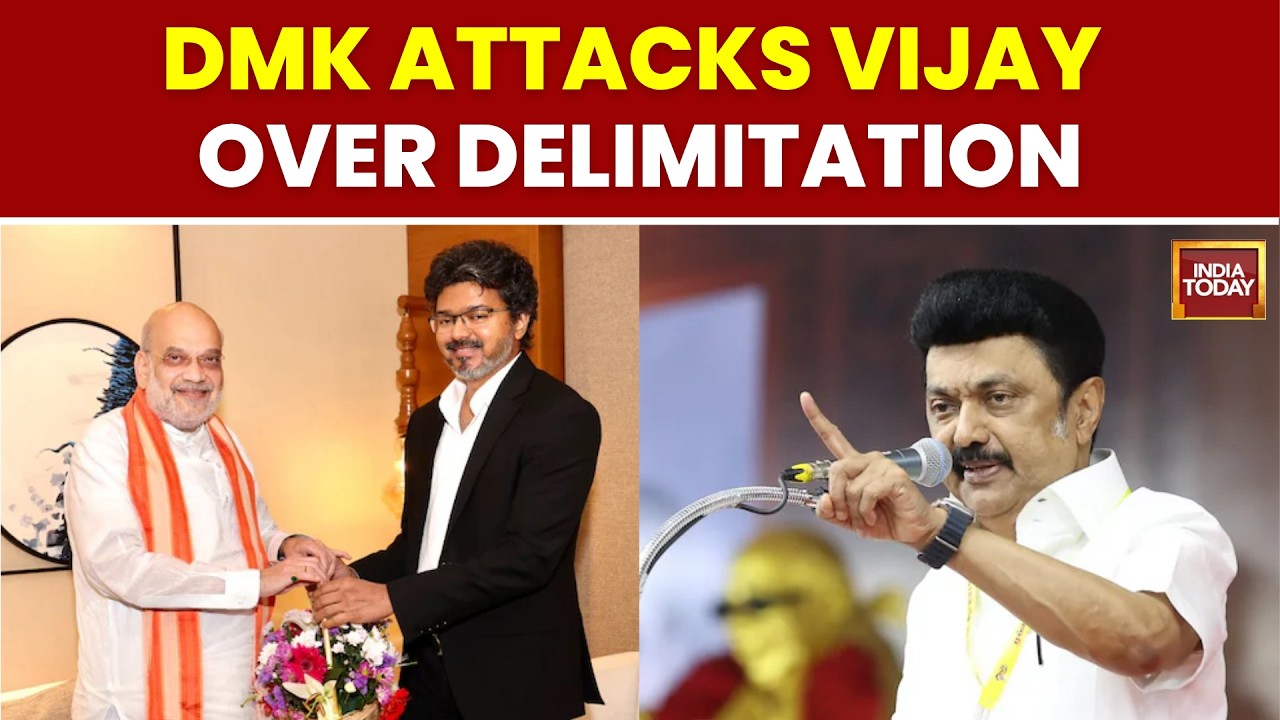
The Indian government has kept the option of a special Parliament session open for the pending Delimitation Bill. This move has ignited a fierce political battle in South India, with DMK and TVK clashing over future Lok Sabha representation.
- The government retains the option to call a special session for the Delimitation Bill and the 131st Constitution Amendment Bill.
- Political tensions are escalating in South India between DMK and TVK regarding parliamentary seat distribution.
- The monsoon session has not yet been officially prorogued, allowing for a quick reconvening.
A major political storm is brewing in India as the government prepares for the high-stakes Delimitation Bill and the 131st Constitution Amendment Bill. In a strategic move, the administration has kept the possibility of convening a special session of Parliament or reconvening the current monsoon session on the table. While both houses were adjourned on August 13, the session has not been officially prorogued, providing a procedural window for the Speaker to summon members at short notice.
The crux of the conflict lies in the shifting political landscape of South India. The DMK (Dravida Munnetra Kazhagam) and the newly emerging TVK (Tamilaga Vettri Kazhagam) are locked in a confrontation over the implications of new Lok Sabha representation. The core anxiety in the southern states is that a fresh delimitation, based on current population metrics, may penalize states that have successfully implemented population control measures.
Why This Matters
BozokMedia analysis shows that the delimitation process is no longer just a demographic exercise; it has become a battleground for federalism. The redistribution of parliamentary seats could fundamentally alter the power dynamics between the northern and southern states, potentially marginalizing southern voices in the central legislature.
The delimitation debate is essentially a struggle to define the future political identity of a diverse India.
As the government seeks the necessary political support and numbers to pass the legislation, the parliamentary maneuvering is expected to intensify. The ability to reconvene the session depends heavily on the political landscape and the Speaker's discretion once the government secures its majority.
Historical Background: Delimitation in India is the act of redrawing boundaries of Lok Sabha and State Assembly seats to reflect population changes. Since the 42nd Amendment in 1976, the freeze on seats based on the 1971 census has been a cornerstone of Indian politics. The proposed 131st Amendment seeks to address the long-pending need for updated representation, which has remained untouched for decades.
Frequently Asked Questions
Question 1: What is the significance of the 131st Constitution Amendment Bill?
Answer: It is intended to facilitate the process of delimitation and redefine seat allocations in Parliament.
Question 2: Why is there tension in South India?
Answer: Southern states fear a loss of political influence if seats are redistributed based on current population growth trends.