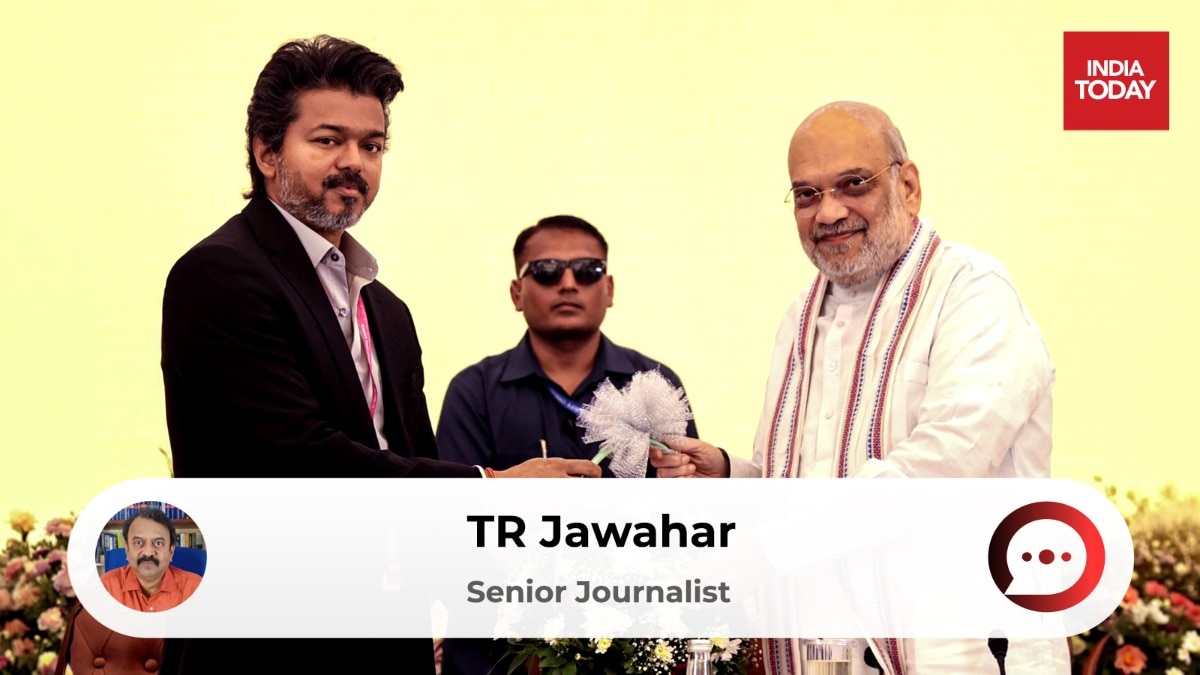
Despite the high-profile meeting between CM Vijay and Amit Shah at the Southern Zonal Council, deep-seated issues like delimitation, NEET, and the Cauvery dispute continue to strain federal ties.
- CM C. Joseph Vijay utilized the Southern Zonal Council to assert Tamil Nadu's stance on critical federal issues.
- Core disputes including Delimitation, NEET, and Cauvery remain unresolved.
- The meeting highlights a shift in political actors but a continuity in structural federal conflicts.
The seaside setting of Kovalam on the outskirts of Chennai served as a dramatic backdrop for the 31st Southern Zonal Council meeting on August 20, 2026. Union Home Minister Amit Shah arrived in Tamil Nadu to engage with a transformed political landscape. Instead of the cinematic icon the center once observed from afar, he was met by C. Joseph Vijay—the elected Chief Minister of India’s second-largest state economy.
The conference table was a gathering of southern heavyweights, including Karnataka's CM DK Shivakumar, Andhra Pradesh's N Chandrababu Naidu, and Kerala's VD Satheesan. While the faces around the table have shifted, the files presented were ancient and deeply contentious: the Cauvery water dispute, the NEET exam controversy, and the looming specter of delimitation.
Why This Matters
BozokMedia analysis shows that this meeting transcends routine bureaucratic coordination. It is a profound inquiry into the state of Indian federalism. When the centralizing impulses of New Delhi collide with a South that has redefined its political leadership, the friction is not merely administrative—it is existential. Delimitation, in particular, is moving from a demographic anxiety to a direct constitutional confrontation regarding political power.
Delimitation is not just about drawing lines on a map; it is about how a nation counts its people and allocates their power.
For Tamil Nadu, the struggle for representation is historical. From the days of the vast Madras Presidency to the modern era, the state has long fought to ensure its political weight matches its socio-economic contributions. The fear is that the success of Tamil Nadu in population stabilization might be used against it during the upcoming delimitation process, effectively penalizing the state for achieving national goals.
| Issue | Tamil Nadu's Position | Union Government's Stance |
|---|---|---|
| Delimitation | Protect seat count despite low population growth | Realigning seats based on current census data |
| NEET | State autonomy in educational standards | Uniform national entrance examination |
| Cauvery | Equitable water sharing rights | Legal frameworks and interstate tribunal oversight |
Frequently Asked Questions (FAQs)
1. What is the core issue with delimitation for Southern states?
Since Southern states have successfully controlled population growth, a seat redistribution based solely on population could reduce their parliamentary representation.
2. What is the purpose of the Southern Zonal Council?
It is a constitutional forum designed to resolve interstate disputes and foster cooperation among southern states before they escalate into political crises.