A deep dive into the news of August 24, 1986, covering the violent confrontation at the Kidwai Bhavan telephone exchange, PM Rajiv Gandhi's economic concerns, and major incidents in Baroda and Kolkata.
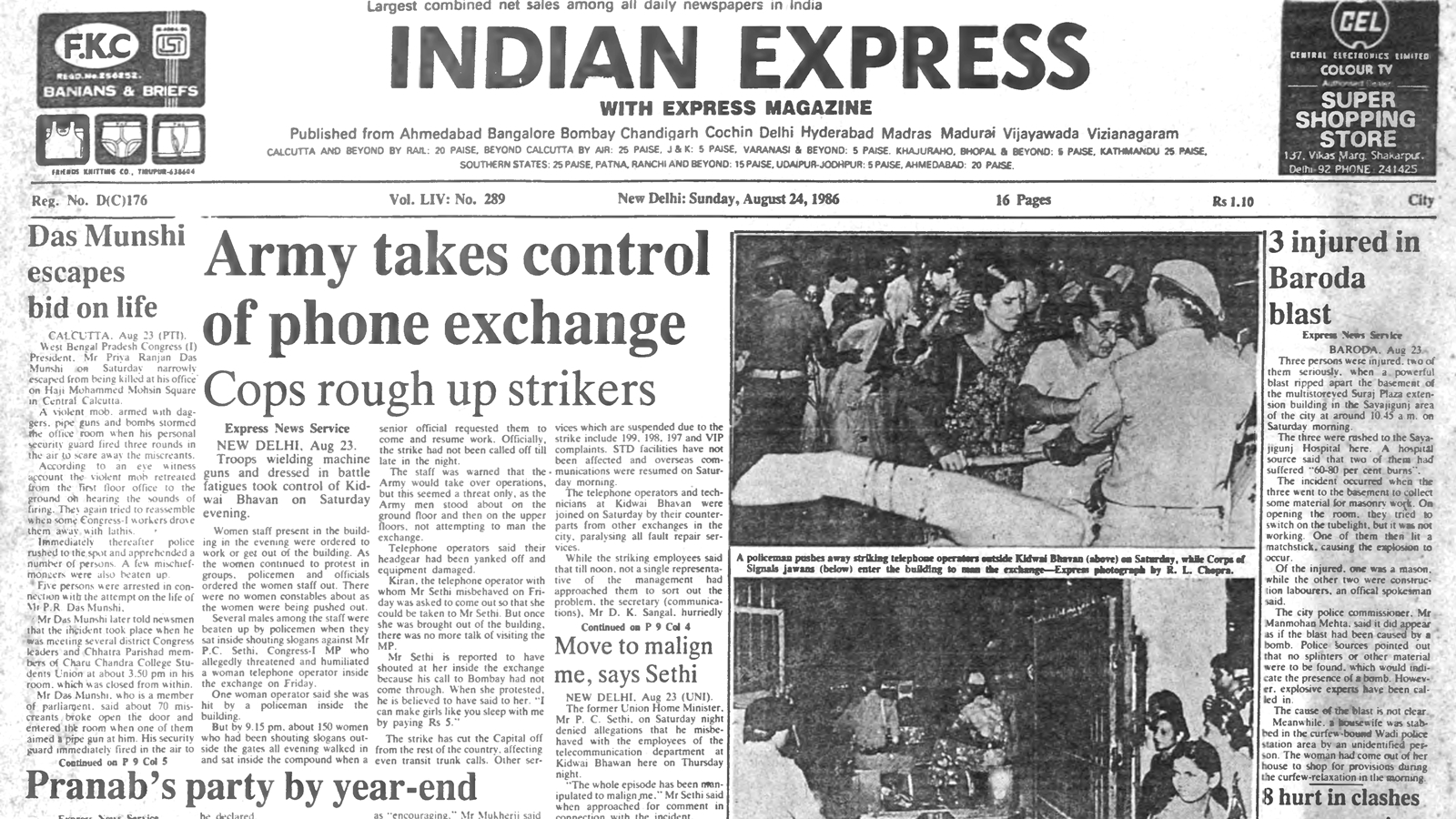
- Violent crackdown at Kidwai Bhavan telephone exchange involving machine-gun-wielding troops.
- Allegations of harassment against MP P.C. Sethi involving a female operator.
- PM Rajiv Gandhi calls for national debate on public sector losses.
- Fatalities and injuries reported in a Baroda building blast and a political attack in Calcutta.
On August 24, 1986, the Indian landscape was marked by intense civil unrest and significant political shifts. One of the most harrowing reports from that day involved the takeover of the Kidwai Bhavan telephone exchange. Troops armed with machine guns and dressed in battle fatigues moved in to take control, leading to a direct confrontation with the staff.
The tension escalated when female employees protested against the alleged humiliation of a woman telephone operator by Congress-I MP P.C. Sethi. The situation turned chaotic as police, lacking female constables, forcibly removed women from the building. Reports indicated that male staff members were also beaten while protesting the treatment of their colleagues, highlighting a significant moment of institutional friction.
Why This Matters
BozokMedia analysis shows that these events reflect the volatile intersection of political power and labor rights in 1980s India. The clash at the telephone exchange was not merely a local dispute but a symptom of the larger struggle for dignity and accountability within public institutions during a period of intense political maneuvering.
The events of 1986 underscore the fragility of public order when political interests collide with the rights of the working class.
Simultaneously, Prime Minister Rajiv Gandhi was addressing the economic landscape of the nation. While inaugurating a training camp for young parliamentarians in Nainital, he voiced deep concern over the mounting losses in the public sector. Gandhi emphasized that while the government aimed to protect workers' wages, the economic drain required a serious national debate to ensure long-term stability.
In other parts of the country, violence and accidents made headlines. A powerful blast ripped through the basement of the Suraj Plaza extension in Baroda, leaving three people injured, with two suffering burns as high as 80%. Meanwhile, in West Bengal, political leader Priya Ranjan Das Munshi narrowly escaped an assassination attempt when a mob stormed his Calcutta office, only to be repelled by his security guard's gunfire.
Historical Background
The mid-1980s were a transformative era for India. The country was navigating the complexities of a socialist-leaning economy while facing internal political pressures and the need for modernization. The reliance on physical telephone exchanges made these sites strategic hubs, explaining why such clashes carried immense weight in the national consciousness.
Frequently Asked Questions
Question 1: What triggered the clash at Kidwai Bhavan?
Answer: The clash was triggered by allegations that MP P.C. Sethi had threatened and humiliated a female telephone operator.
Question 2: What was Rajiv Gandhi's stance on public sector losses?
Answer: He called for a national debate on the issue while maintaining that the government would not allow workers to lose their wages.