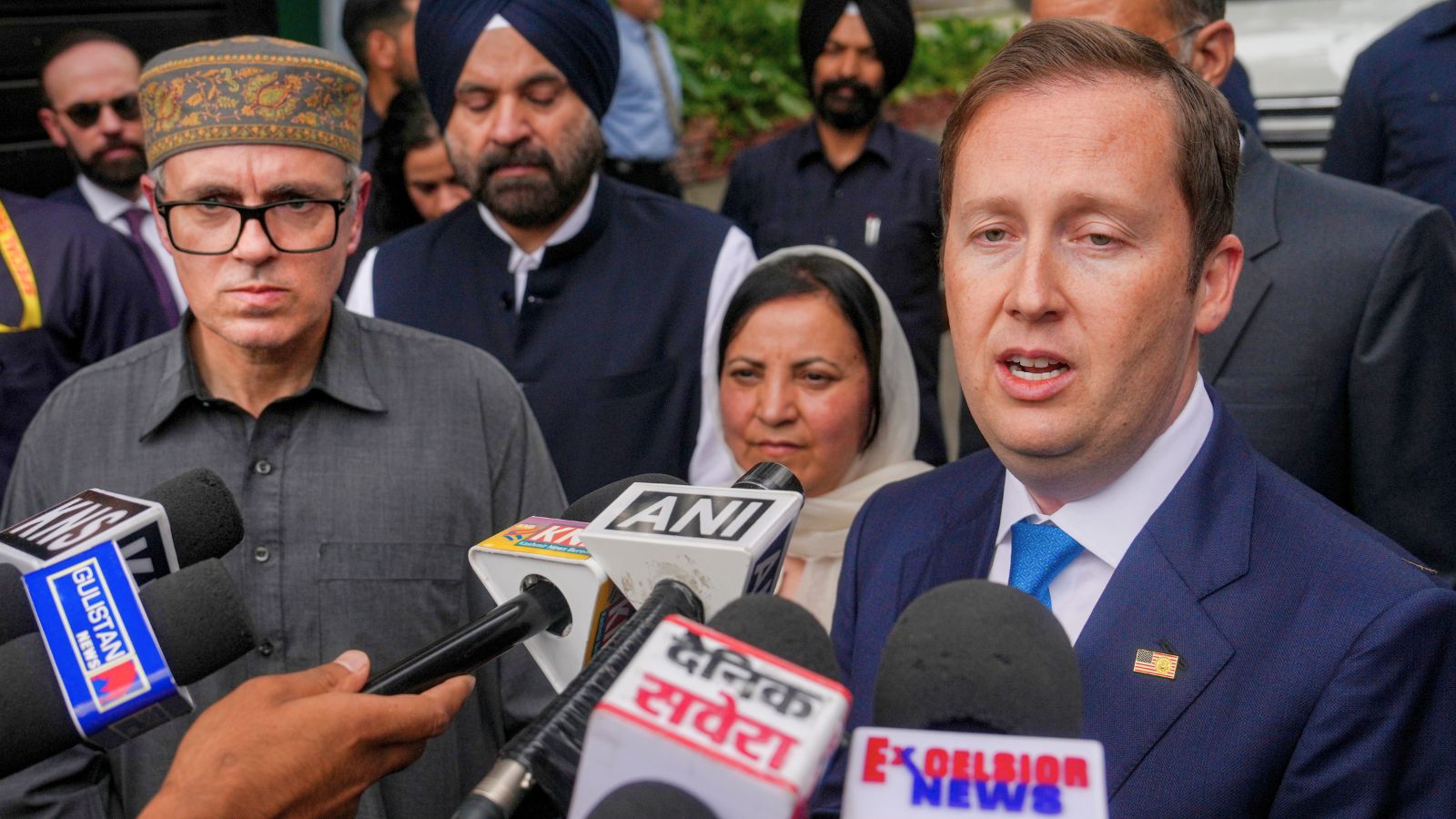
U.S. Ambassador Sergio Gor called Jammu‑Kashmir an "important part of India," but analysts say the wording signals no change in American policy. The statement appears aimed at bolstering U.S.–India ties rather than reshaping the Kashmir stance. Experts caution that the long‑term impact will be limited.
- Gor used "important" instead of the traditional "integral".
- The comment primarily serves to strengthen U.S.–India relations.
- No official shift in U.S. policy on Kashmir was announced.
U.S. Ambassador Sergio Gor described Jammu‑Kashmir as an "important part of India," sparking widespread media coverage across New Delhi and abroad. Indian analysts note that the adjective "important" diverges from the usual "integral" language, indicating no substantive policy change.
Historical Background
U.S. involvement in the Kashmir dispute has oscillated since 1947. Early administrations attempted mediation, while recent decades have seen a more hands‑off approach, encouraging India and Pakistan to resolve the issue bilaterally. In this context, Gor’s phrasing does not constitute a new strategic direction.
Gor’s Role and Influence
Beyond serving as ambassador to India, Gor is also the special envoy for South Asia, granting him considerable sway over both New Delhi and Islamabad. His close ties to the Trump administration amplify his voice, yet his personal remarks should not be conflated with official U.S. policy.
Commercial Motivation
Following his Kashmir visit, Gor invited India to join the "Pax Silica" silicon supply‑chain initiative, a move aimed at deepening commercial cooperation rather than altering territorial narratives. The "important" wording can be read as a diplomatic compliment designed to win over Indian business circles.
Why This Matters
BozokMedia analysis shows that while Gor’s comment generated social‑media buzz, its diplomatic weight is modest. It functions as a soft‑power tool to reinforce the strategic partnership, but it does not rewrite Washington’s stance on Kashmir.
"Calling Kashmir ‘important’ is a diplomatic nicety, not a policy overhaul," says international‑relations scholar Dr. Anita Singh.
Did You Know?
What’s Next?
Pakistan promptly summoned U.S. Charge d’Affaires Nathalie Baker, but the move reflects routine diplomatic protocol rather than a rupture in the burgeoning U.S.–Pakistan partnership, which remains focused on trade and counter‑terrorism.
Frequently Asked Questions
Has Gor’s remark changed U.S. policy on Kashmir?
No. No official policy shift has been announced, and the nuance in wording underscores continuity.
Will this statement affect U.S.–India economic ties?
Potentially, as the positive framing may accelerate initiatives like the Pax Silica supply‑chain project.

