Once the hero of Nepal's Gen Z uprising, Prime Minister Balen Shah now faces scrutiny over whether his growing influence is undermining democratic institutions.
- Balen Shah rose to power following the massive 2025 Gen Z uprising against corruption.
- Critics warn that his growing 'personality cult' may overshadow Nepal's democratic institutions.
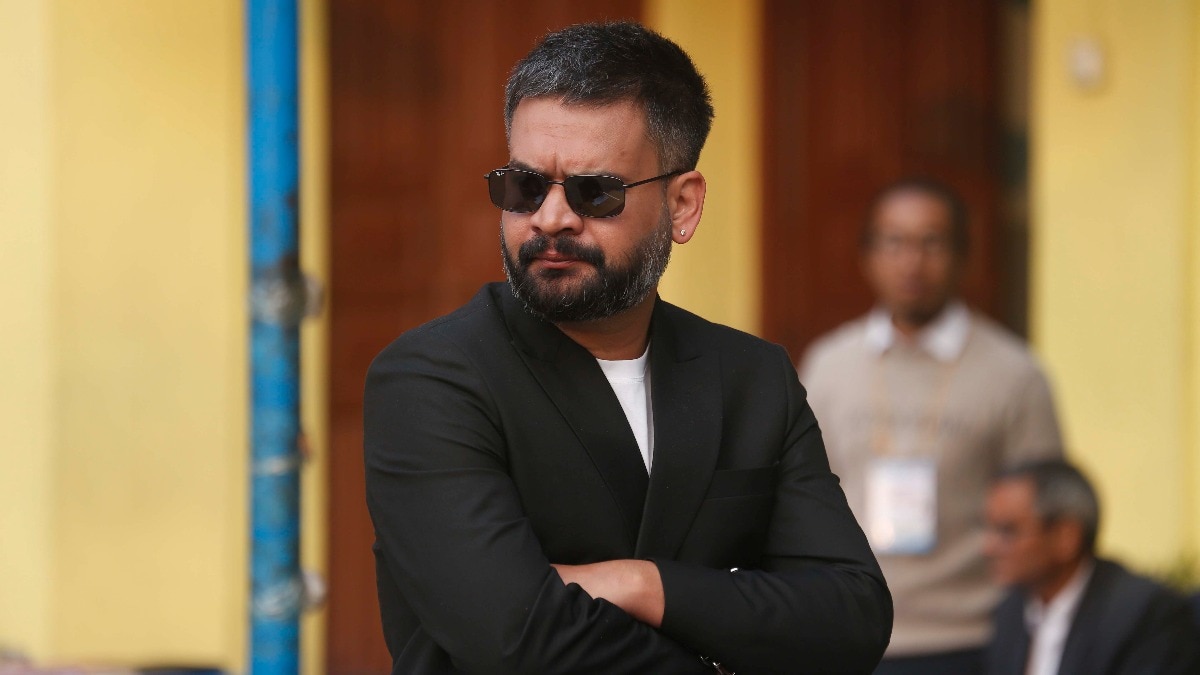
- His frequent absence from Parliament and insistence on wearing sunglasses have sparked political controversy.
The political landscape of Nepal is undergoing a seismic shift. Balendra 'Balen' Shah, the rapper-turned-politician who once symbolized the hope of a disillusioned generation, is now at the center of a profound democratic debate. As his popularity surges, a critical question emerges: Is Shah evolving into a 'Nepali Caesar' whose persona threatens the very institutions meant to check executive power?
From Street Hero to Prime Minister
Shah's ascent was fueled by the 2025 Gen Z revolt, a movement born from deep-seated frustration with corruption, economic stagnation, and the failure of the old political guard. As the former Mayor of Kathmandu, Shah became the face of this rejection. His party, the Rastriya Swatantra Party (RSP), capitalized on this momentum, securing a massive mandate in the March snap elections and propelling Shah from city hall to the Prime Minister's office.
The Rise of a Personality Cult
BozokMedia analysis shows that the transition from a grassroots leader to an establishment figure has been fraught with tension. Analysts argue that the campaign's heavy emphasis on Shah's persona—rather than just policy—has laid the groundwork for a personality cult. Phrases like "dukkha hunus" (rest assured) used on social media are seen by some as encouraging blind faith rather than democratic accountability.
Democracy in Nepal will be measured by the creation of stronger institutions, not by relying on a Nepali Caesar to save the country.
This shift poses a significant risk to a young democracy. When citizens look to a single individual as a savior, constitutional bodies and Parliament can begin to be viewed as obstacles to progress rather than essential safeguards of liberty.
Parliamentary Friction and the 'Sunglasses' Controversy
The tension between the executive and the legislature has reached a boiling point. House Speaker Dol Prasad Aryal recently directed Shah to appear before the House to address lawmakers frustrated by his frequent absences. Furthermore, Shah's insistence on wearing black sunglasses during parliamentary proceedings—citing medical reasons—has become a flashpoint, symbolizing his perceived disdain for traditional political decorum.
Institutional Integrity at Stake
The core of the criticism, as highlighted by analysts like Samar SJB Rana, is that Nepal risks replacing one old political order with a new one that is equally dependent on a single individual. The ultimate test for Shah's administration will be whether he strengthens Nepal's democratic frameworks or continues to operate through the lens of personal charisma.
Frequently Asked Questions
1. Why are people comparing Balen Shah to Caesar?
The comparison stems from concerns that his immense popularity is creating a personality cult that could undermine democratic institutions and the rule of law.
2. What is the controversy regarding his sunglasses?
His refusal to remove them in Parliament has been interpreted by critics as a sign of disrespect toward the legislative institution.