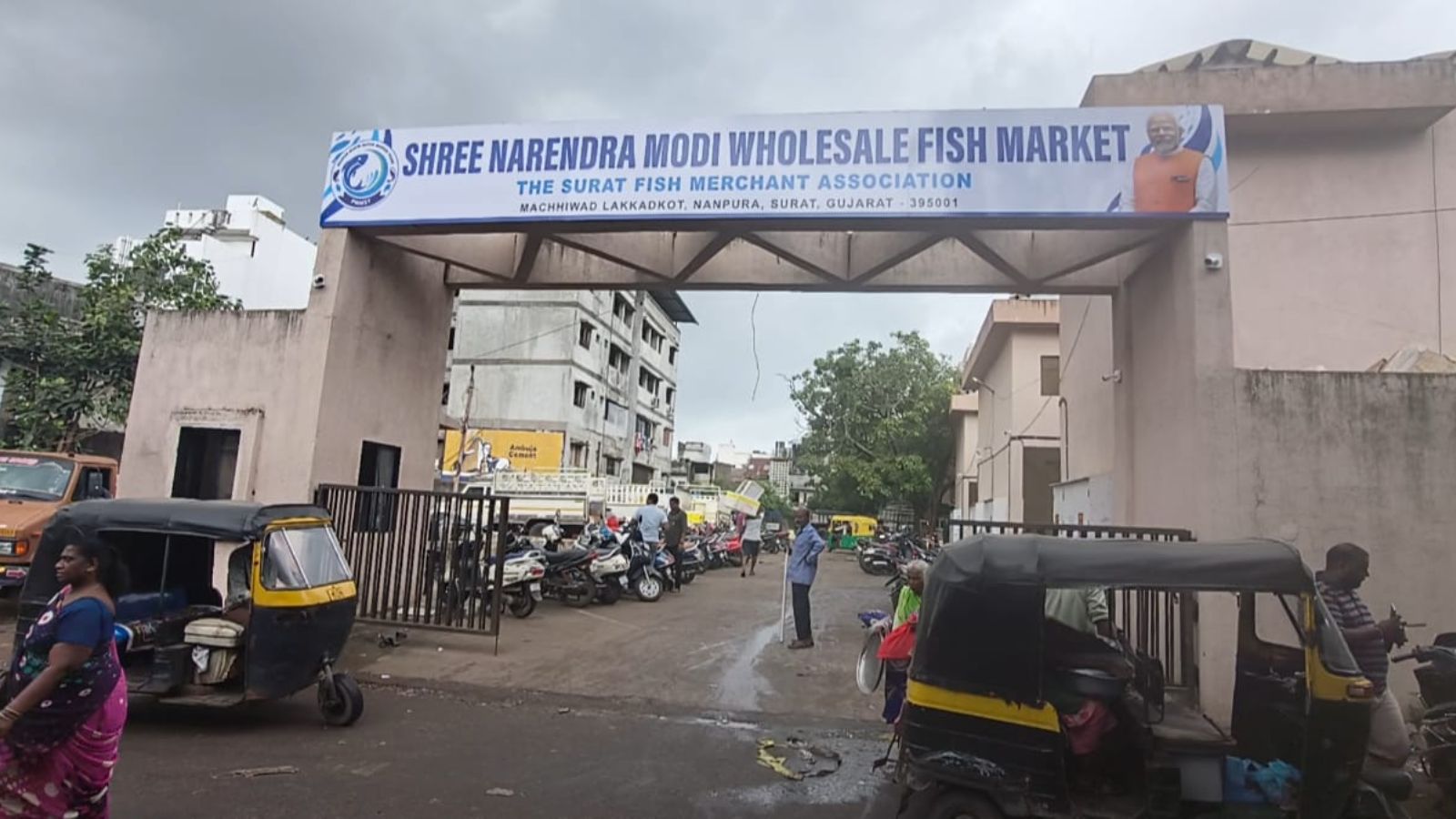
Surat’s first municipal wholesale fish market, named after Prime Minister Narendra Modi, has ignited opposition from some traders who argue the naming is inappropriate. The clash highlights political sensitivities, economic interests, and cultural considerations.
- New municipal wholesale fish market in Surat named after PM Modi
- Some traders demand removal of the name
- Cultural committee review pending for the naming decision
In Gujarat’s bustling commercial hub of Surat, the newly inaugurated municipal wholesale fish market—officially titled Shri Narendra Modi Wholesale Fish Market—has become the center of a heated debate. Built with funding from the Pradhan Mantri Matsya Sampada Yojana, the market houses 80 outlets and was intended to showcase the Prime Minister’s push for a “Blue Revolution.”
The inauguration, led by the Surat Fish Merchant Association, featured a banner displaying Prime Minister Narendra Modi’s portrait. However, a faction of traders, most notably fish dealer Surendra Lashkari, objected, arguing that a vegetarian leader’s name should not adorn a fish market. Lashkari covered the banner with a white sheet the following day, escalating the controversy.
Association president Kalpesh Navsariwala defended the decision, stating, “The market was funded through the Prime Minister’s fisheries scheme, and naming it after him reflects our pride in his Blue Revolution initiatives.” He added that the name was discussed with members before the proposal was submitted.
The Pradhan Mantri Matsya Sampada Yojana, a five‑year, ₹20,050‑crore initiative launched in 2020, aims to modernise India’s fisheries sector through sustainable development. Its mandates include creating modern wholesale fish markets, supermarkets, retail outlets, and mobile fish markets to ensure quality and hygienic fish for consumers.
Surat Municipal Corporation’s executive engineer Rajesh Ganjawala explained that the naming proposal was forwarded to the city’s cultural committee for review. The committee’s recommendation must be approved by the standing committee before it reaches the corporation’s general board for final approval.
Why This Matters
BozokMedia analysis shows that naming controversies not only affect local trade dynamics but also spark broader discussions about the use of political symbols in public infrastructure. Balancing political homage with stakeholder interests becomes a delicate act that can influence public perception and economic outcomes.
"Naming infrastructure after political figures can polarise stakeholders, especially when the figure’s personal preferences clash with the project’s nature."
Frequently Asked Questions
Q1: Is there any legal barrier to changing the market’s name?
A: Currently, the decision rests solely on the cultural committee’s recommendation; there is no statutory obstacle.
Q2: What benefits will the market bring to local fish traders?
A: Modern facilities and hygiene standards are expected to fetch better prices and increase consumer confidence for traders.