Karnataka CM DK Shivakumar outlines a strategic vision centered on ending factionalism, empowering women in the cabinet, and protecting the rights of southern states.
- DK Shivakumar explicitly rejected 'camp politics' and emphasized party unity.
- Strong indications of upcoming cabinet expansion to include women ministers.
- Advocated for the rights of southern states regarding financial allocation and delimitation.
- Committed to fixing Bengaluru's infrastructure and traffic challenges.
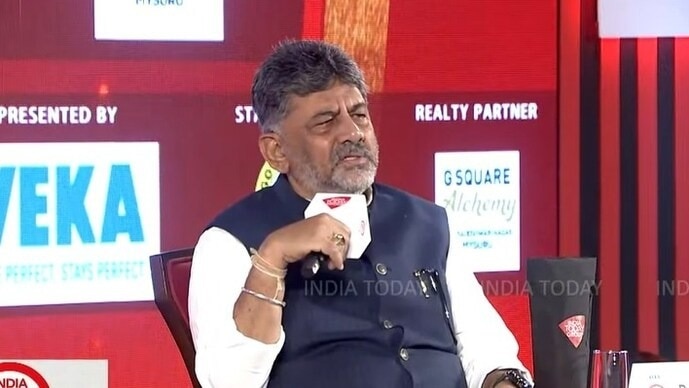
Karnataka Chief Minister DK Shivakumar has outlined a transformative governance model during the 'India Today Karnataka Roundtable.' Addressing long-standing political rumors, he emphasized that his leadership style will focus on inclusivity rather than factionalism. He made it clear that he does not believe in 'camp' politics and intends to work with all MLAs and leaders to move the party forward.
Addressing the perceived divide between the Siddaramaiah and Shivakumar camps, the CM stated that his priority is not to strengthen a specific group but to serve the entire state. He described himself as a 'soldier of the party,' suggesting that leadership should function within constitutional boundaries while ensuring every member feels heard.
Why This Matters
BozokMedia analysis shows that Shivakumar's attempt to distance himself from factionalism is a calculated move to project stability. By positioning himself as a unifying figure, he aims to mitigate internal dissent that could otherwise hinder the Congress government's performance in Karnataka.
"A Chief Minister does not belong to a single party or region; the government must look at every section of the state equally."
On the critical issue of gender representation, Shivakumar acknowledged the current lack of female ministers in the Karnataka cabinet. He hinted that a cabinet expansion is on the horizon, which would align with the Congress party's commitment to women's empowerment and Rahul Gandhi's broader political agenda.
The Chief Minister also took a strong stance on federalism, arguing that the central government should not discriminate against states governed by opposition parties. He emphasized that development and financial assistance should be distributed based on need and constitutional rights, not political affiliation.
A major point of contention raised was the economic contribution of southern states. Shivakumar pointed out that southern states successfully implemented population control policies decades ago, and they should not be penalized in terms of resource allocation or parliamentary seat delimitation because of their success.
Regarding the delimitation of Lok Sabha seats, he expressed concern that a disproportionate increase in seats for northern states could diminish the political voice of the South. He suggested that the implementation of women's reservation should precede major changes to seat distribution to maintain political equilibrium.
Finally, addressing the urban crisis in Bengaluru, Shivakumar admitted the challenge of the city's 'pothole' reputation. He noted that with a population of 1.4 crore and nearly 1.35 crore vehicles, the infrastructure is under immense pressure, necessitating urgent and systematic improvements.
Frequently Asked Questions
1. Will there be more women in the Karnataka Cabinet?
Yes, the CM has signaled that women's representation will be a key feature of the upcoming cabinet expansion.
2. What is Shivakumar's stance on the 'Two Camps' in Congress?
He has explicitly stated that he does not believe in factionalism and aims to lead a unified party.