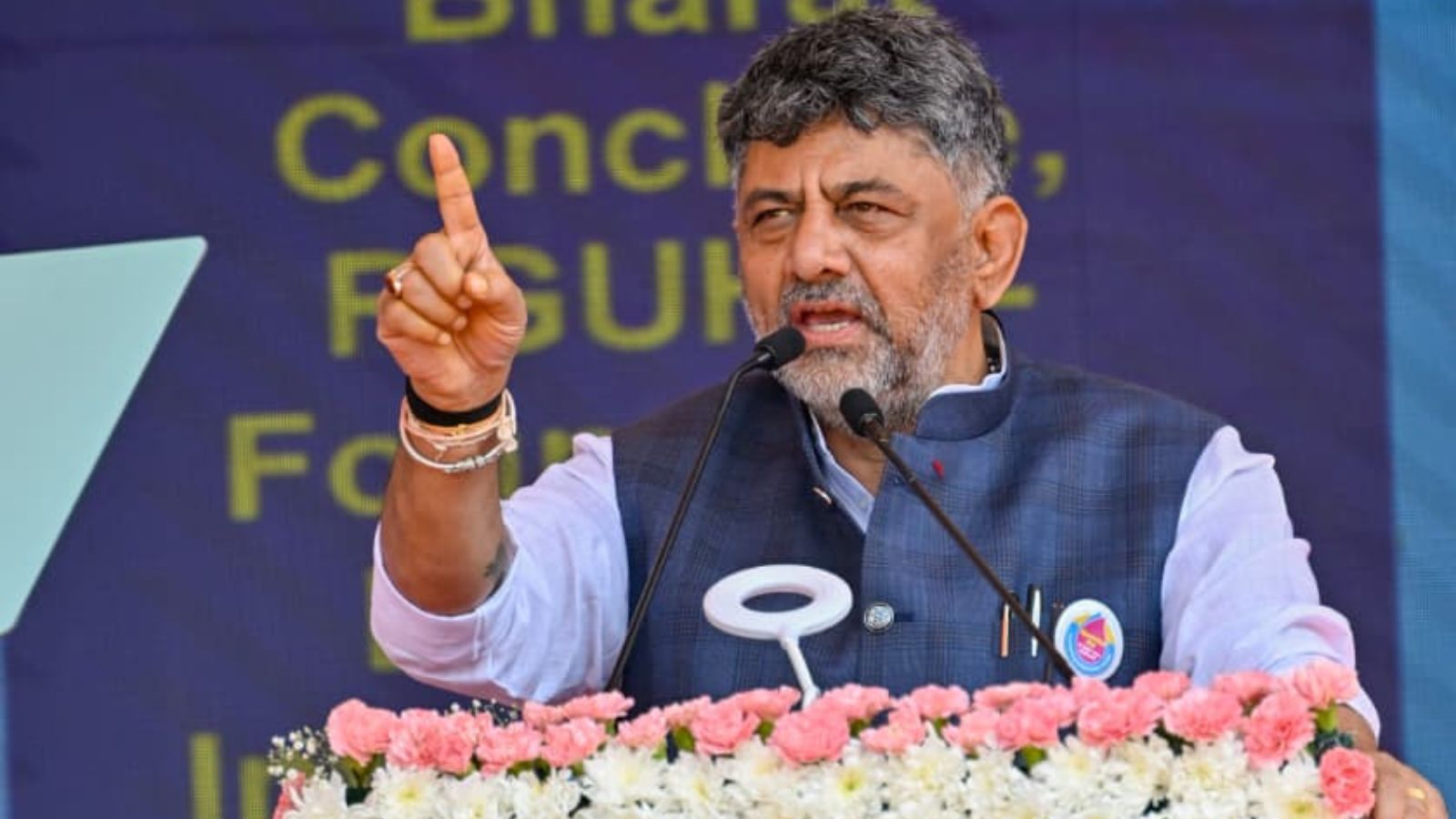
Karnataka CM DK Shivakumar has urged the Election Commission to extend the claims window after 1.08 crore voters were flagged in the state's draft electoral rolls.
- 1.08 crore out of 5.54 crore Karnataka voters flagged as ASDDO (Absent, Shifted, Dead, Duplicate, Others).
- Bengaluru alone accounts for 46.88 lakh flagged voters.
- CM Shivakumar seeks an extension beyond 45 days for 'logical discrepancy' notices.
- The issue arises from mismatches with the 2002 electoral roll data.
Bengaluru: In a significant development regarding electoral integrity, Karnataka Chief Minister DK Shivakumar has formally approached the Election Commission (EC) to seek an extension for the claims-and-objections period. This move comes after the Special Intensive Revision (SIR) flagged a staggering 1.08 crore voters in the state as being in the 'ASDDO' category—which includes those marked as absent, shifted, dead, duplicate, or others.
The scale of the discrepancy is particularly massive in Bengaluru, where 46.88 lakh electors have been placed under this category. Shivakumar warned that if these voters do not successfully submit claims for continuation or fresh inclusion, nearly 1.5 crore voters across the state could face potential deletion from the rolls.
Why This Matters
BozokMedia analysis shows that the sheer volume of flagged voters suggests a massive administrative challenge. If the Election Commission does not provide sufficient time for verification, it risks disenfranchising millions of legitimate citizens, including migrant workers and the elderly, thereby undermining the democratic process in Karnataka.
"The objective must be an electoral roll that the people of Karnataka can trust: one in which every eligible citizen is included, and no citizen is deprived of the franchise merely for want of adequate time."
Beyond the ASDDO category, approximately 43.8 lakh voters are facing notices due to "logical discrepancies." These discrepancies primarily stem from mismatches when comparing current data with the 2002 electoral rolls. The Chief Minister argued that the current window to respond to these notices is "highly compressed" and places an unreasonable burden on working-class citizens and migrants who may struggle to procure documents quickly.
Historical Background
Electoral roll revisions in India are periodic processes managed by the Election Commission to ensure accuracy. However, the Special Intensive Revision (SIR) is a more rigorous audit. The current friction in Karnataka arises because the revision relies heavily on cross-referencing data with 2002 records, a period that predates modern digital verification methods used today, leading to significant mismatches.
| Category | Number of Voters Flagged | Primary Concern |
|---|---|---|
| ASDDO (Total State) | 1.08 Crore | Deletion risk due to status mismatch |
| ASDDO (Bengaluru) | 46.88 Lakh | High concentration of urban migrants |
| Logical Discrepancies | 43.8 Lakh | Mismatches with 2002 data |
Frequently Asked Questions
1. What is the ASDDO category?
It stands for Absent, Shifted, Dead, Duplicate, and Others, used to flag voters whose status needs verification.
2. Why is the 2002 data being used?
The current revision process uses the 2002 electoral roll as a baseline to identify discrepancies and ensure the continuity of voter records.