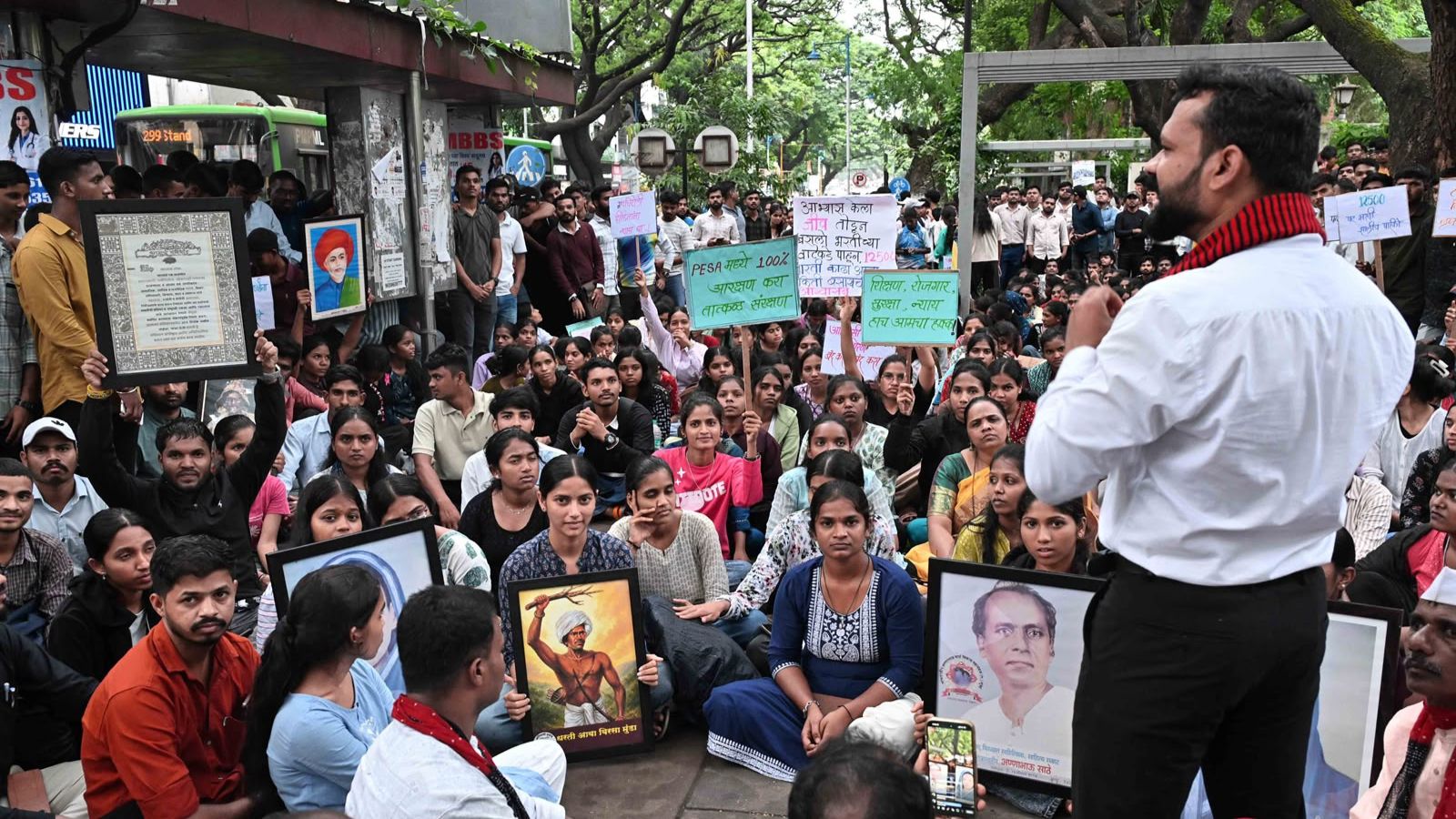
Following a massive 13-day agitation by tribal students in Maharashtra, the state government has scrapped the 30-year age limit for hostel admissions and paused controversial new rules.
- The Maharashtra government has removed the age restriction for tribal hostel admissions.
- Protesting students alleged that female students were forced to undergo pregnancy tests.
- Leader of Opposition Rahul Gandhi intervened, expressing shock at the allegations.
- The agitation was triggered by a new Government Resolution (GR) affecting facilities and entry rules.
In a significant victory for student activists, the Maharashtra government on Tuesday decided to scrap the age limit for admissions to tribal hostels. This decision comes as the intense 13-day protest led by tribal students in Pune continues to put immense pressure on the administration. The move follows high-level political intervention, including concerns raised by Lok Sabha Leader of Opposition Rahul Gandhi.
The Catalyst of Unrest: Dignity and Access
The agitation was ignited by an August 5 Government Resolution (GR) that introduced several contentious rules. Among the most disturbing allegations brought forward by the students was that female hostel residents, upon returning from extended leaves, were being subjected to pregnancy tests and other invasive medical examinations to prove their 'fitness.'
Furthermore, the initial imposition of a 26-year age limit for hostel admissions was seen as a direct barrier to higher education for many tribal youths who might enter academic programs later in life. While the government has since revised this to 30 years, students argue the core issues remain unresolved.
Why This Matters: A Crisis of Trust
BozokMedia analysis shows that this is not merely a dispute over administrative rules, but a profound crisis of trust between the state and its most vulnerable populations. The intersection of gender-based indignity and educational barriers has transformed a local hostel issue into a significant political movement.
The allegations of forced medical testing represent a catastrophic failure of institutional safeguarding for female students.
Historical Context and Safety Concerns
The unrest is compounded by recent tragedies in the region. The recent deaths of three tribal girl students due to snake bites at a residential school in Gadchiroli have highlighted the dire state of infrastructure in government-aided institutions. Students are now demanding that tribal hostels be modernized to match the standards of Eklavya Model Residential Schools (EMRS).
Comparison of Demands vs. Government Action
| Issue | Original GR Provision | Current Status/Student Demand |
|---|---|---|
| Age Limit | 26 Years | Revised to 30 (Students want complete removal) |
| Student Rights | Barred from protests | Restrictions lifted (Students want separate law) |
| Facilities | Standard amenities | Demand for EMRS-style modernization |
Despite the government's decision to pause the GR and relax age norms, the protesters remain steadfast. Their demands now include inflation-linked allowances, mandatory insurance for every student, and a dedicated hostel facility for tribal students in Delhi.
Frequently Asked Questions
Question 1: What was the most controversial allegation in the protest?
Answer: The most controversial allegation was that female students were being forced to undergo pregnancy tests after returning from leave.
Question 2: Has the government addressed all student demands?
Answer: No, while the age limit was adjusted and protest bans lifted, students are still demanding modernized facilities and insurance coverage.