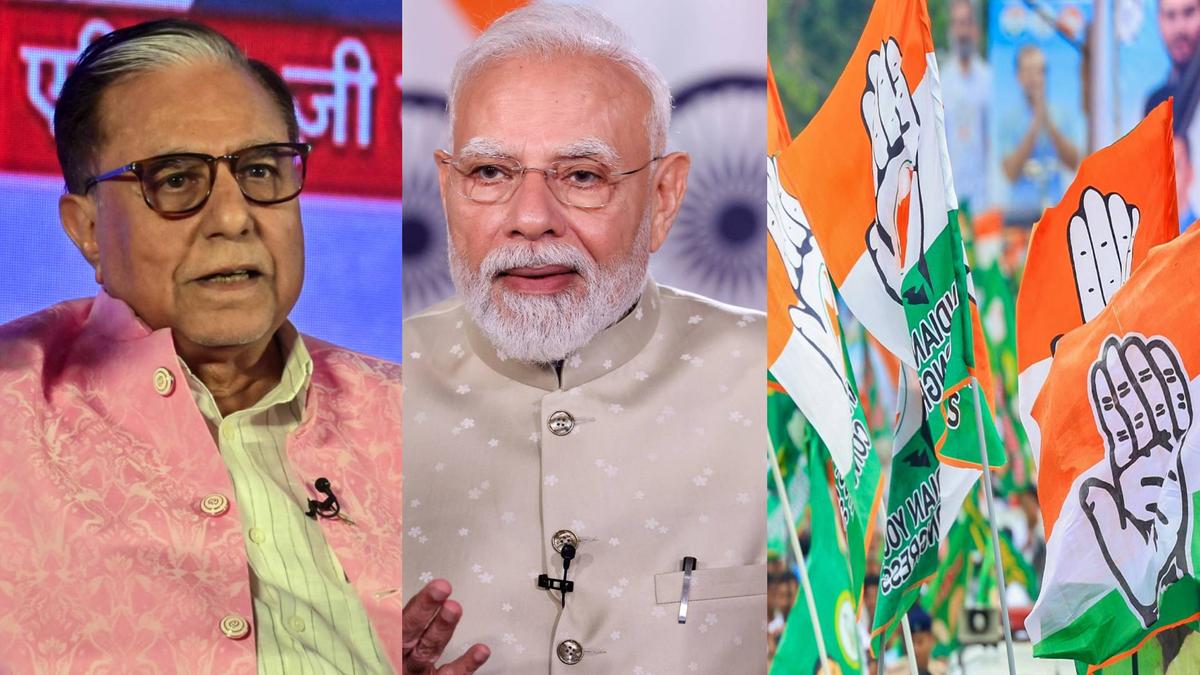
A massive controversy has erupted following an NCLT ruling allowing Essel Group founder Subhash Chandra to settle a ₹22,006 crore debt for just ₹6.5 crore. The Congress party has leveraged this to accuse the Modi government of institutionalizing corruption through the IBC.
- NCLT allowed Essel Group founder Subhash Chandra to settle a ₹22,006 crore liability with a payment of just ₹6.5 crore.
- Congress has accused the PM Modi government of using the IBC to facilitate massive loan write-offs for corporates.
- The controversy highlights an old critique by Arun Shourie regarding promoters buying back companies after debt write-offs.
- Subhash Chandra defended himself, stating he was a personal guarantor rather than the direct borrower.
The Indian corporate and political landscape is currently reeling from a massive controversy involving Subhash Chandra, the founder of Essel Group and a former BJP Rajya Sabha MP. A recent order from the National Company Law Tribunal (NCLT), which permits the settlement of a staggering ₹22,006 crore debt with a mere ₹6.5 crore payment, has ignited intense debate regarding financial ethics and legal loopholes.
The crux of the matter lies in the implementation of the Insolvency and Bankruptcy Code (IBC), introduced in 2016. While the IBC was intended to protect asset value and ensure timely repayment to creditors, critics argue it is being manipulated. The Congress Party has launched a scathing attack, claiming that the code is being used as a tool to allow large corporate houses to write off nearly 99.97% of their loans and subsequently reclaim their businesses through proxies or relatives.
Why This Matters
BozokMedia analysis shows that this case strikes at the very heart of India's banking stability and the credibility of its regulatory frameworks. If major defaulters can escape massive liabilities through nominal settlements, it undermines the recovery efforts for Non-Performing Assets (NPAs) and creates a moral hazard that could destabilize the entire financial ecosystem.
Legal analysts suggest that such a microscopic settlement percentage sets a dangerous precedent for future insolvency proceedings in India.
In its critique, Congress Kerala shared a clip of an interview with veteran journalist Arun Shourie. In the video, Shourie explains a systemic flaw where loans turn into NPAs, leading to insolvency proceedings. After significant portions of the debt are written off, the company is often acquired by the original promoters or their associates, aided by relaxed definitions of 'related parties.'
Subhash Chandra, however, has hit back at the allegations. He clarified that he was acting solely as a personal guarantor and was not the direct borrower of the entire ₹22,000 crore. He further claimed that the actual claim against him is only ₹3,992 crore and that the companies he guaranteed have already repaid approximately ₹43,000 crore to various institutions.
Frequently Asked Questions
1. What is the core of the NCLT controversy regarding Subhash Chandra?
The controversy revolves around the NCLT allowing a settlement of ₹6.5 crore against a total outstanding debt of over ₹22,000 crore.
2. What is the Congress party's stance on this issue?
Congress alleges that the IBC is being weaponized to facilitate massive loan write-offs for corporate giants, which they term as 'institutionalized corruption.'
| Parameter | Original Debt Claim | Proposed NCLT Settlement |
|---|---|---|
| Total Amount | ₹22,006 Crore | ₹6.5 Crore |
| Settlement Percentage | 100% | ~0.03% |