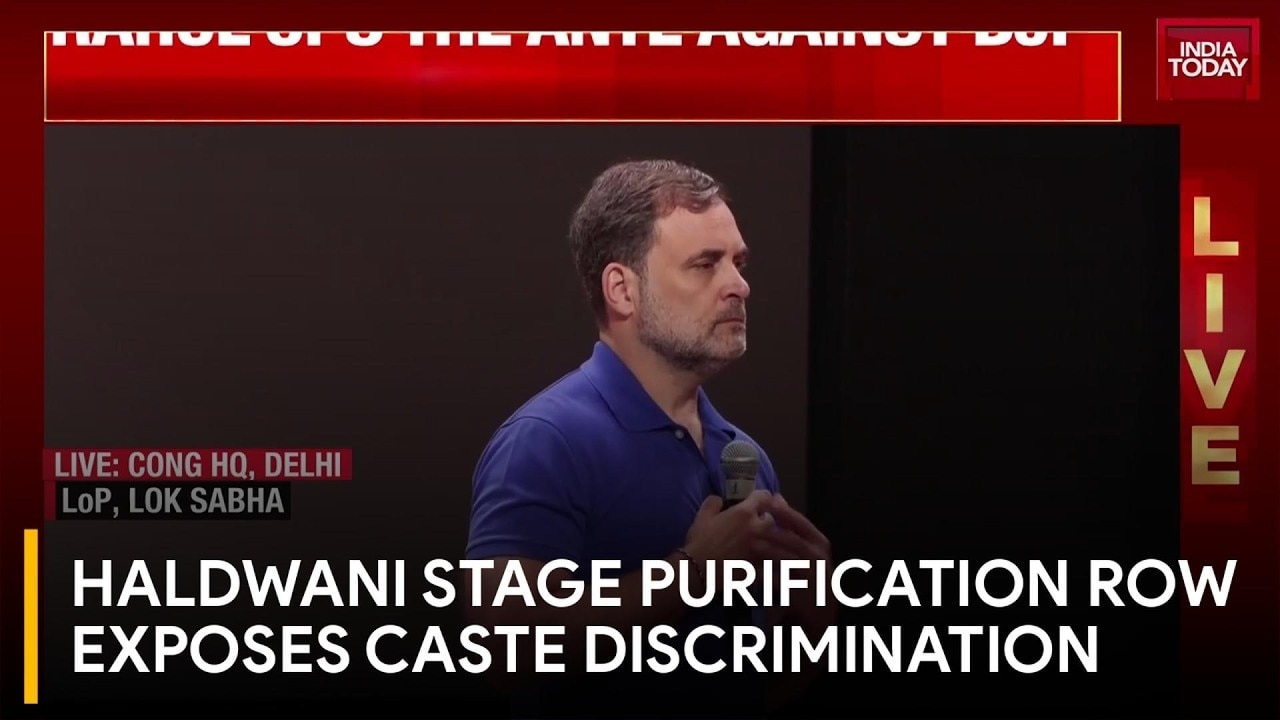
A major political storm has erupted in Haldwani following a 'purification ritual' performed on a stage after a public address. Opposition leaders are demanding strict legal action under the SC-ST Act, labeling the act as untouchability.
- Purification ritual conducted at a Haldwani venue triggers massive controversy.
- Opposition leaders allege the act constitutes 'untouchability' and violates the Constitution.
- Demands for immediate FIR under the SC-ST Prevention of Atrocities Act.
A significant political controversy has erupted in Haldwani following a purification ritual conducted at a venue immediately after a public address. The incident has ignited a fierce debate regarding caste-based discrimination and the persistence of regressive social practices in modern India.
Opposition leaders have vehemently condemned the ritual, describing it as a blatant violation of constitutional principles. They argued that the act of 'purifying' a public stage used for community discourse is a direct manifestation of untouchability, a practice strictly prohibited by the Indian Constitution.
Why This Matters
BozokMedia analysis shows that this incident is more than just a local political dispute; it reflects the deep-seated ideological conflict between constitutional equality and entrenched discriminatory mindsets. Such incidents threaten the social fabric and the dignity of marginalized communities striving for societal inclusion.
The fight remains a fundamental struggle between constitutional rights and discriminatory ideologies that seek to marginalize.
Critics have alleged that the ritual was not merely a religious act but a calculated attempt to humiliate certain communities. The escalation of the controversy has led to widespread calls for the central and state governments to intervene and ensure accountability.
The opposition has demanded that a formal police report be filed against those responsible for organizing the ritual. They emphasize that allowing such practices to go unpunished would set a dangerous precedent for social justice in the region.
Historical Background
Under Article 17 of the Indian Constitution, untouchability is abolished and its practice in any form is forbidden. To support this constitutional mandate, the Scheduled Castes and the Scheduled Tribes (Prevention of Atrocities) Act, 1989, was enacted to prevent crimes against these communities and to provide for special courts for the trial of such offences.
Frequently Asked Questions
1. What is the legal status of untouchability in India?
Untouchability is illegal and unconstitutional under Article 17 of the Indian Constitution.
2. What specific law is being invoked in the Haldwani case?
Opposition leaders are demanding action under the SC-ST (Prevention of Atrocities) Act.