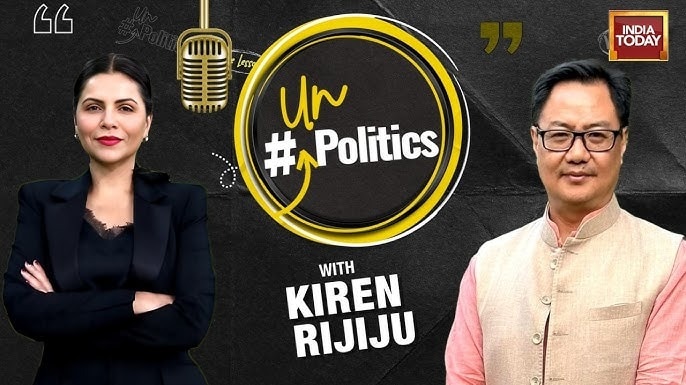
Union Minister Kiren Rijiju has drawn a sharp line between debating religious beliefs and making calls to dismantle the nation, emphasizing that questioning faith is not a crime.
- Kiren Rijiju distinguishes between religious critique and anti-national rhetoric.
- He stated that questioning religious tenets does not inherently constitute a crime.
- Calls to divide or break India were condemned as separate and serious offenses.
Union Minister Kiren Rijiju has made a significant distinction regarding the boundaries of free speech and national security. In a recent statement, he clarified that questioning religious practices or beliefs is not a crime in itself, but he drew a firm line against any rhetoric aimed at undermining the unity of India.
The Minister's comments come at a time of heightened sensitivity surrounding religious discourse in the country. By separating intellectual or skeptical inquiry into religion from secessionist movements, Rijiju is attempting to navigate the complex intersection of constitutional rights and national stability.
Why This Matters
BozokMedia analysis shows that this stance is crucial for defining the legal parameters of free speech in a multi-religious democracy like India. It addresses the growing tension between individual liberty to critique social structures and the state's duty to prevent communal disharmony and secessionism.
Questioning faith is a matter of discourse; calling to break the nation is a matter of law.
Historically, the debate over the limits of religious criticism has been a cornerstone of Indian jurisprudence. The Supreme Court has often balanced the right to propagate religion with the necessity of maintaining public order. Rijiju's remarks align with the principle that while dissent is a democratic necessity, sedition and anti-national activities remain strictly prohibited.
The implications of this distinction are profound. It provides a framework where ideological debates can exist without necessarily triggering legal action, provided they do not cross the threshold into inciting violence or threatening the territorial integrity of the country.
Frequently Asked Questions
1. Does this mean anyone can criticize any religion?
While questioning is not a crime, any criticism that incites communal violence or disrupts public peace remains punishable under Indian law.
2. What did the Minister say about anti-national calls?
Rijiju emphasized that calls to break or divide India are entirely different from religious debates and are treated as serious offenses against the state.