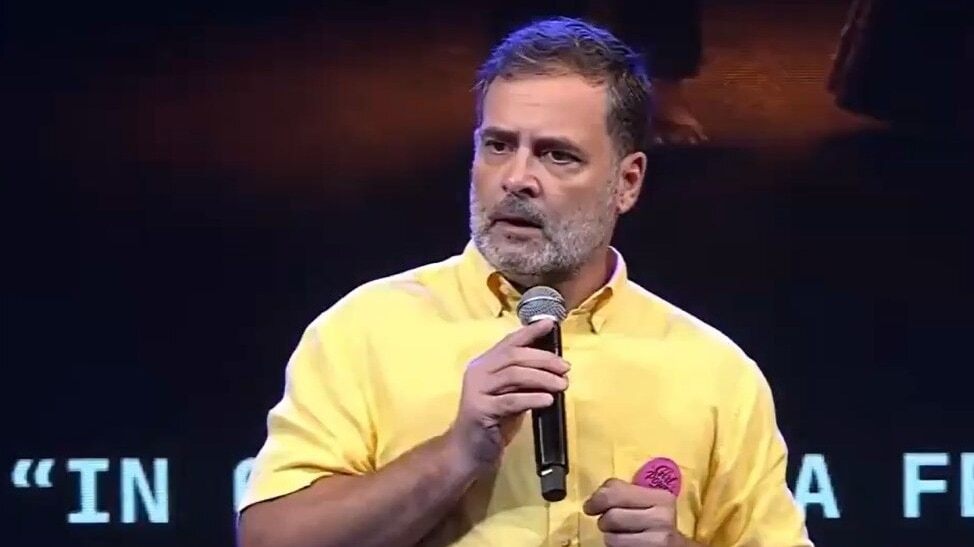
Congress leader Rahul Gandhi faces an FIR in Haldwani, Uttarakhand, following allegations of hurting the sentiments of the Scheduled Caste community regarding his comments on a 'Shuddhikaran Yagna'.
- FIR registered against Rahul Gandhi at Haldwani कोतवाली.
- Charges include sections of BNSS and the SC/ST Prevention of Atrocities Act.
- The controversy stems from his description of a 'Shuddhikaran Yagna' as 'anti-Dalit'.
In a significant legal development, an FIR has been registered against the Leader of the Opposition in the Lok Sabha and senior Congress leader Rahul Gandhi in Haldwani, Uttarakhand. The complaint was lodged by Amit Kumar, a youth belonging to the Scheduled Caste community, alleging that Gandhi's recent remarks have deeply hurt the sentiments of the Scheduled Caste community.
The police have registered the case under sections 196 and 299 of the Bharatiya Nagarik Suraksha Sanhita (BNSS). Crucially, the FIR also includes Section 3(1) of the Scheduled Castes and the Scheduled Tribes (Prevention of Atrocities) Act, 1989, highlighting the gravity of the allegations regarding social discrimination and communal sentiments.
Historical Context of the Controversy
The incident traces back to August 8, following a Congress rally held in Haldwani. Post-rally, a Hindu organization conducted a 'Shuddhikaran Yagna' (purification ritual) at the Ramlila Maidan. The organizers claimed the ritual was intended to 'purify' the grounds from filth and alleged communal slogans used during the event.
However, the Congress party, led by figures like Mallikarjun Kharge, interpreted the ritual as a targeted move against the Dalit identity. Rahul Gandhi subsequently escalated the political discourse by labeling the ritual as 'anti-Dalit', a statement that has now become the cornerstone of this legal complaint.
Why This Matters
BozokMedia analysis shows that this incident underscores the volatile intersection of religious rituals and identity politics in modern India. As political leaders navigate the complexities of caste-based mobilization, legal interventions like this FIR can significantly alter the political landscape, especially in sensitive regions like Uttarakhand.
The legal scrutiny of political rhetoric regarding religious ceremonies marks a critical juncture in how free speech is balanced against social protections in India.
The Haldwani police have initiated a formal investigation into the matter. While the Congress party views this as an attempt to stifle political dissent, the complainants maintain that it is a necessary step to protect the dignity of marginalized communities.
Frequently Asked Questions
Question 1: What specific laws are invoked in this FIR?
Answer: The FIR invokes sections of the BNSS and the SC/ST (Prevention of Atrocities) Act, 1989.
Question 2: What triggered the complaint against Rahul Gandhi?
Answer: His comments describing a local 'purification ritual' as being 'anti-Dalit' triggered the legal action.