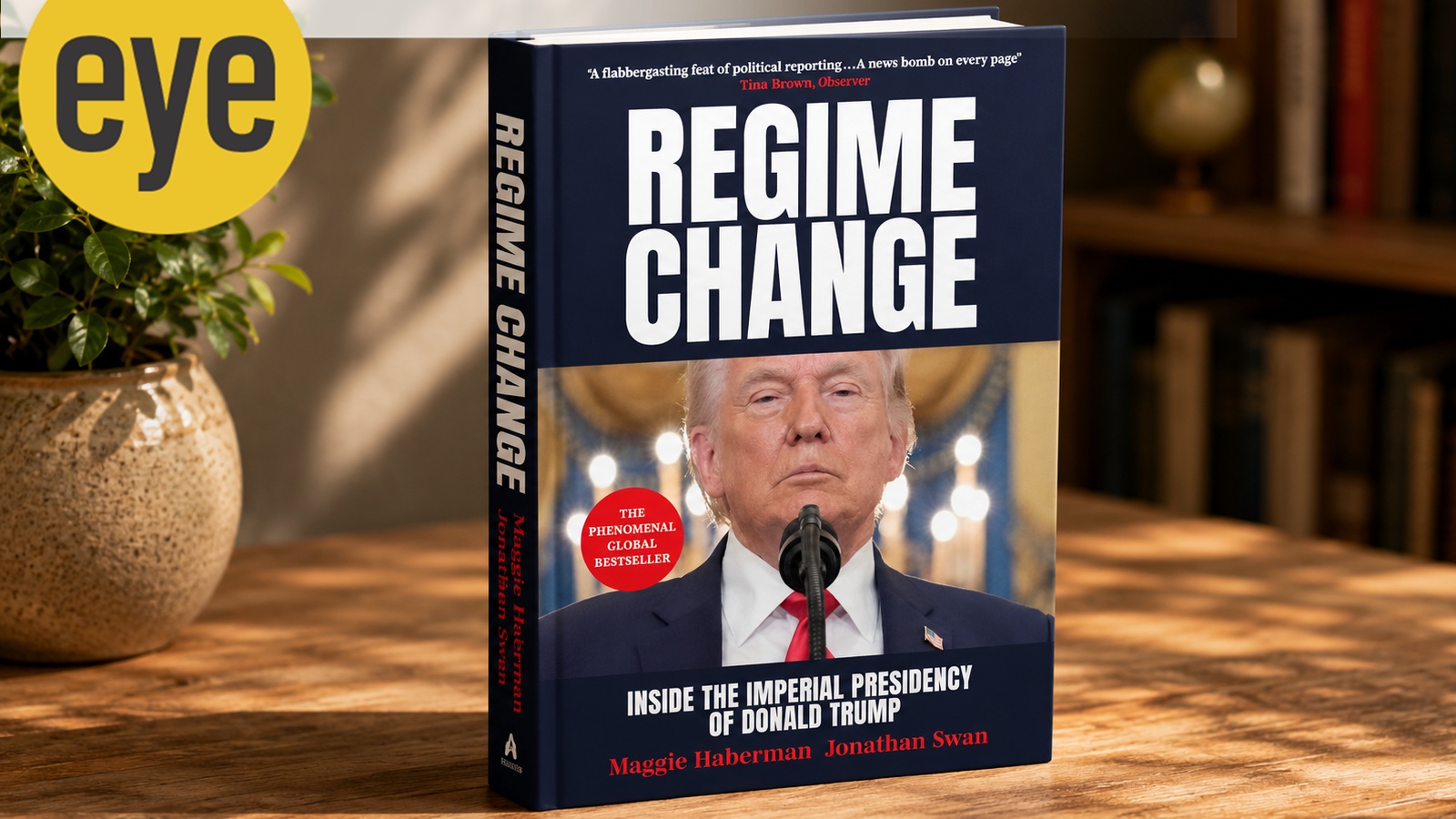
Maggie Haberman and Jonathan Swan's 'Regime Change' provides a startling look at the authoritarian and corrupt workings of Donald Trump's second term, detailing how institutions were bent to his will.
- The book 'Regime Change' offers unprecedented access to the inner workings of the Trump administration.
- It details how personal grievances were transformed into institutional policies of retribution.
- The narrative covers critical moments, including decisions regarding Iran and the monetization of the presidency.
If journalism is indeed the first rough draft of history, Maggie Haberman and Jonathan Swan’s 'Regime Change: Inside the Imperial Presidency of Donald Trump' is a chillingly detailed manuscript. Spanning over 450 pages, the book provides a granular, almost fly-on-the-wall account of the authoritarian and morally degraded workings of the Trump administration since his re-election. It captures a pivotal moment in American history, where the nation's 250th-year institutions faced unprecedented tests.
The reporting goes far beyond public pronouncements. The authors have secured deep access to the President's inner circle, including advisors, friends, and high-level government officials. From the early instances of corporate 'grovelling' to the high-stakes tension in the Situation Room, the book reconstructs private conversations in the Oval Office that have shaped global geopolitics.
Why This Matters
BozokMedia analysis shows that the implications of this book extend far beyond the borders of the United States. The shift from governing through consensus to governing through 'whirlwind' executive actions and personal retribution sets a global precedent for how modern democracies can be hollowed out from within by a single leader.
The book reveals a presidency where the line between public service and personal vendetta has effectively vanished.
The book is structured into four thematic pillars: 'Whirlwind,' 'Retribution,' 'The Enemy Within,' and 'Plunder.' The 'Whirlwind' section describes Trump's strategy of overwhelming the media and opposition with a relentless stream of executive orders. 'Retribution' explores his campaign against those he deemed enemies, including prosecutors and media figures, effectively turning personal grudges into state policy.
Perhaps most significantly, 'The Enemy Within' posits that Trump views internal political opposition—specifically the American Left—as a greater threat than foreign adversaries like China or Russia. This internal focus marks a radical departure from traditional national security doctrines. Finally, 'Plunder' investigates the monetization of the presidency, spanning from cryptocurrency to international land deals.
| Section | Core Theme | Key Focus Area |
|---|---|---|
| Whirlwind | Speed of Governance | Executive orders, tariffs, and immigration |
| Retribution | Personal Vendettas | Targeting political and legal opponents |
| The Enemy Within | Internal Threats | Domestic political opposition and institutions |
| Plunder | Monetization | Crypto, Middle East land deals, and oil |
Frequently Asked Questions
1. Who are the authors of 'Regime Change'?
The book is written by renowned journalists Maggie Haberman and Jonathan Swan.
2. What is the main criticism addressed in the book?
The book criticizes the erosion of democratic institutions and the use of presidential power for personal retribution and financial gain.