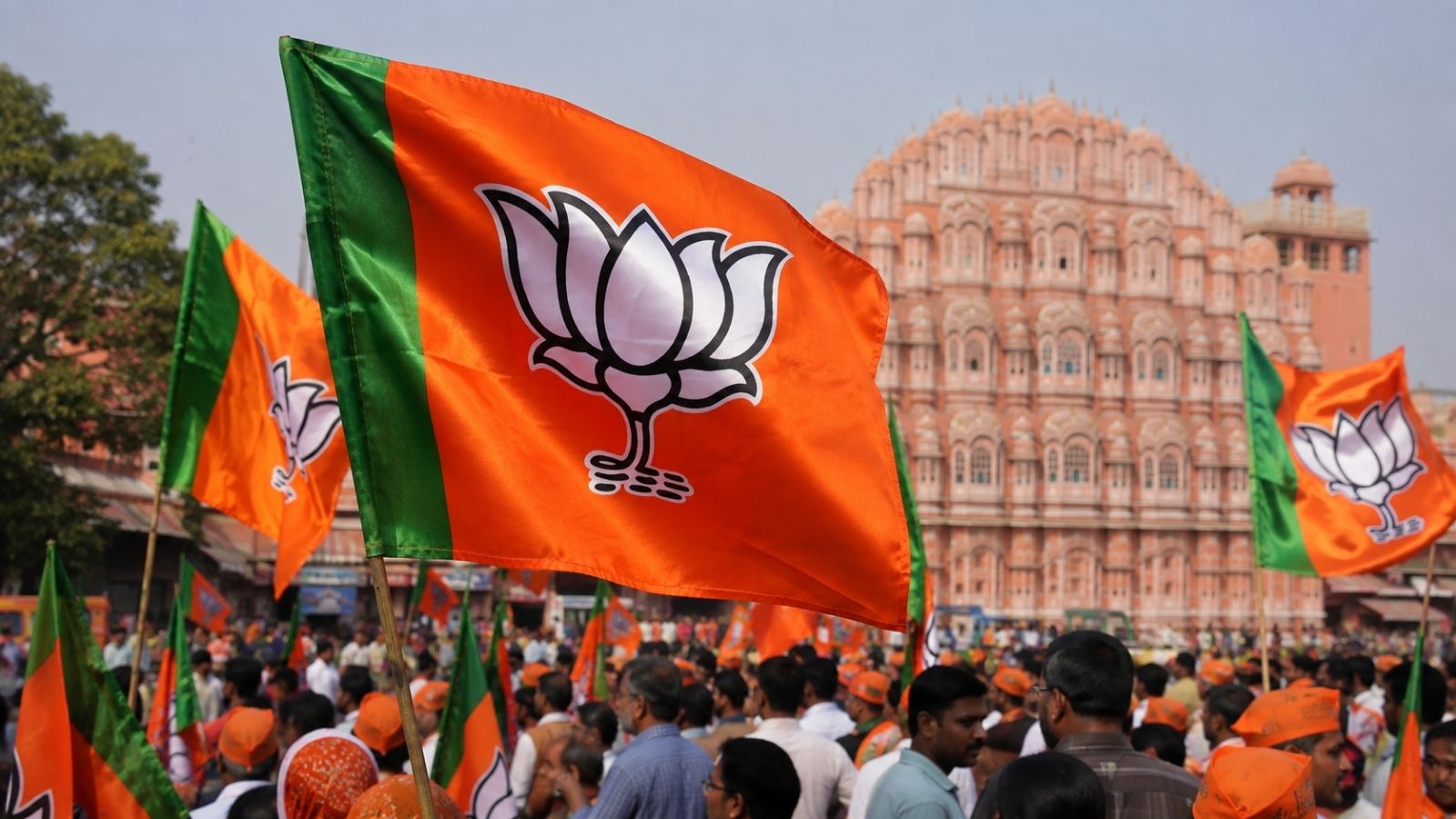
In a significant departure from recent election trends, the BJP has nominated eight Muslim candidates for the Jaipur municipal polls. This move aims to broaden the party's appeal and leverage welfare schemes to attract minority voters.
- BJP nominated 8 Muslim candidates for Jaipur municipal elections, breaking a trend from 2023 and 2024 polls.
- Shabab Jahan, the only Muslim candidate in 2020, has been renominated for Ward 117.
- The party is emphasizing 'development' and central welfare schemes like Ujjwala and PM Awas Yojana to attract minority support.
- A total of 146 candidates have been fielded in Jaipur, including 52 women.
The Bharatiya Janata Party (BJP) has sparked political debate in Rajasthan by fielding eight candidates from the Muslim community for the upcoming Jaipur Municipal Corporation elections. This decision marks a stark contrast to the party's strategy in the 2023 Rajasthan Assembly elections and the 2024 Lok Sabha polls, where no Muslim candidates were nominated.
Among the nominees is Shabab Jahan, who was the party's sole Muslim face in the 2020 civic polls. Despite her previous loss, the BJP has shown confidence in her local influence by renominated her for Ward 117. Other nominees include Afsana, Mizan Mirza, Rahees Mansuri, Majid Pathan, Fariuddin, Zakir Khan, and Shehnawaz Ansari. Polling is scheduled for September 9 and 11, with results expected on September 14.
Why This Matters
BozokMedia analysis shows that this is not merely a local adjustment but a calculated attempt to dismantle the perception of the BJP as a party exclusively for a specific demographic. By fielding minority candidates at the municipal level, the BJP is testing a 'hyper-local' inclusive model. The party is pivoting from ideological rhetoric to 'developmental politics,' banking on the delivery of central government schemes to create a bridge with the minority electorate.
The shift toward fielding minority candidates in local polls suggests a strategic pivot to capture 'silent voters' who prioritize infrastructure and welfare over identity politics.
The candidates themselves believe that government initiatives have paved the way for this acceptance. Majid Pathan noted that schemes like the Pradhan Mantri Awas Yojana and Ujjwala Yojana have benefited Muslims on the ground, making them more open to supporting the BJP. Similarly, Shabab Jahan emphasized that her 15-year association with the party and focus on civic infrastructure would be her primary campaign drivers.
However, the Congress party has viewed this move with skepticism. A senior leader stated that the BJP is simply trying to "soften its image" and change the perception of being anti-Muslim. The rivalry is further intensified by the unusual selection process this year, where candidates were informed via phone to prevent internal rebellion and the filing of independent nominations.
Beyond the minority nominations, the BJP's list reveals other strategic shifts. The party has fielded 52 women and nominated former Mayor Jyoti Khandelwal (who defected from Congress). Notably, outgoing Mayor Kusum Yadav was replaced by state vice-president Sunil Kothari, signaling a potential change in leadership for the mayoral post.
Frequently Asked Questions
Q1: Why did the BJP field Muslim candidates now after avoiding them in the general elections?
The party aims to showcase its inclusive development agenda and leverage the success of central welfare schemes to attract minority voters at a local level.
Q2: Who is the key contender for the Mayor's post in the BJP camp?
Sunil Kothari, the BJP state vice-president, is seen as a strong contender for the mayor's position if the party retains control.