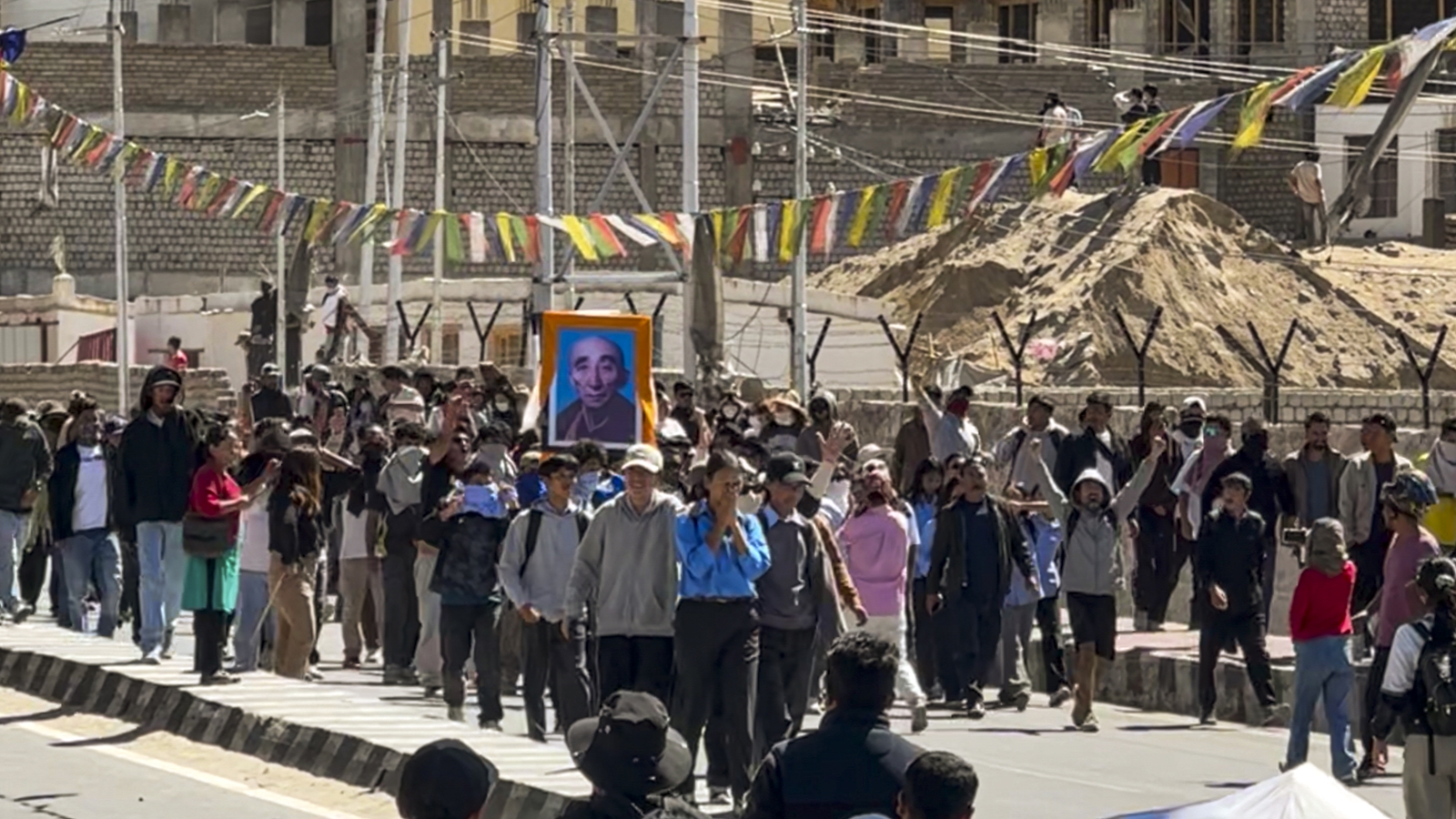
The Kargil Democratic Alliance (KDA) has announced its support for a major citizens' march from Kargil to Leh, aiming to demand statehood for Ladakh and the implementation of the Sixth Schedule.
- Kargil Democratic Alliance (KDA) supports the upcoming march from Kargil to Leh starting September 10.
- The march seeks full statehood for Ladakh and inclusion under the Sixth Schedule.
- The protest commemorates the first anniversary of the deaths of four civilians during last year's Leh protests.
- The movement will conclude on September 24 with a candlelight vigil in Leh.
In a significant escalation of regional political mobilization, the Kargil Democratic Alliance (KDA) has officially extended its support to a massive citizens' march scheduled for next week. The march, set to commence on September 10, will traverse the rugged terrain from Kargil to Leh, serving as a powerful platform to reiterate the long-standing demands of the Ladakhi people.
Core Demands: Statehood and the Sixth Schedule
Organized by the Socialist Party of India in collaboration with various civil and political organizations, the march is centered on two critical constitutional demands: granting full statehood to Ladakh and implementing the Sixth Schedule to protect the region's indigenous culture and land rights. KDA co-chairman Asgar Ali Karbalai emphasized that the alliance is committed to a "peaceful and democratic" struggle to secure the legitimate rights of the Ladakhi populace.
Commemorating the Leh Tragedy
The timing of the march carries deep emotional and political weight. It marks the first anniversary of a violent incident in September last year, where four civilians lost their lives during a protest in Leh. To honor the victims, the march will culminate on September 24 in Leh with a solemn candlelight vigil. Sajjad Kargili, the march's convenor, stated that the event aims to reaffirm solidarity with the grieving families and demand accountability and justice for the tragedy.
The convergence of political demands and the commemoration of civilian loss creates a potent narrative that could redefine Ladakh's relationship with the central government.
Why This Matters
BozokMedia analysis shows that the growing alignment between the Kargil and Leh political bodies suggests a unified front in the region. The demand for the Sixth Schedule is not merely political but is seen as an existential necessity for the protection of Ladakh's unique socio-cultural fabric against rapid external changes.
The Leh Apex Body (LAB) has also signaled its support, assisting in the coordination of the march. KDA leaders have been careful to clarify that the movement is a "peaceful people's movement" and is not directed against any specific individual or political party, but is rather a collective call for democratic engagement and dialogue with the authorities.
Frequently Asked Questions
Question 1: What are the primary objectives of the Kargil-to-Leh march?
Answer: The primary objectives are to demand statehood for Ladakh, the implementation of the Sixth Schedule, and justice for the civilians killed in last year's Leh protests.
Question 2: Who is organizing this movement?
Answer: The march is organized by the Socialist Party of India along with several civil and political outfits, with support from the KDA and LAB.