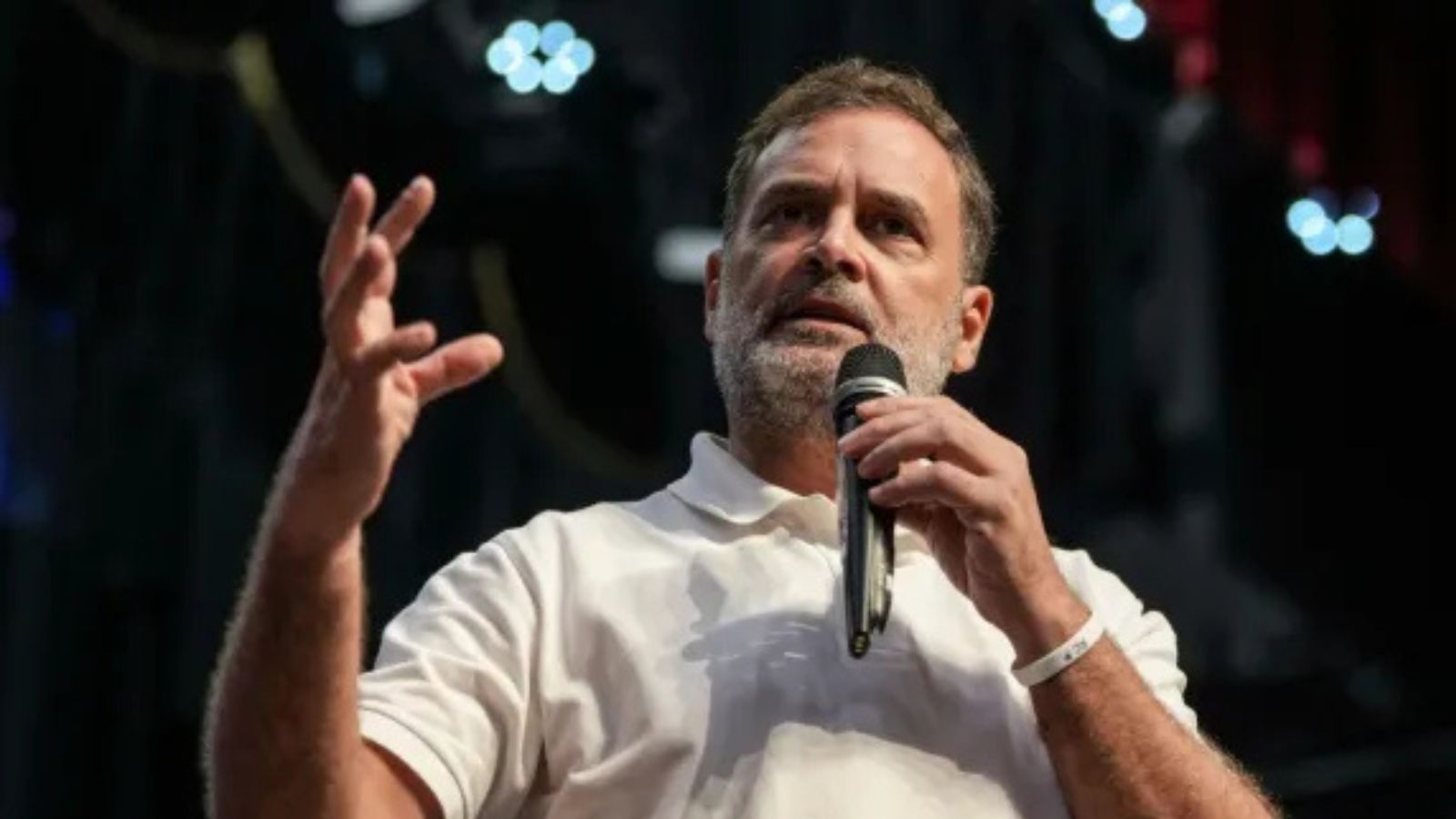
Leader of Opposition Rahul Gandhi has accused the Election Commission and the BJP of undermining democracy after 2.07 crore names were struck off Maharashtra's draft electoral rolls. The controversy centers on the Special Intensive Revision (SIR) process and its impact on voter accessibility.
- Approximately 2.07 crore voters were removed from Maharashtra's draft electoral roll following a Special Intensive Revision (SIR).
- Rahul Gandhi labels the move as 'vote theft,' questioning the consistency of voter numbers across different election cycles.
- The Election Commission clarifies that the current figure is not final and is subject to a month-long claims and objections period.
The political atmosphere in Maharashtra has reached a boiling point following the publication of the draft electoral roll. Rahul Gandhi, the Leader of Opposition in the Lok Sabha, has launched a scathing attack on the Election Commission of India (ECI) and the ruling BJP, alleging a systemic effort to manipulate the democratic process. The controversy erupted when it was revealed that 2.07 crore electors—roughly every fifth voter—were missing from the draft list after the Special Intensive Revision (SIR).
Taking to social media, Gandhi described the situation as a calculated move by what he termed the "Vote Theft Commission." He pointed toward a pattern of inconsistency in the numbers, noting that while the Lok Sabha 2024 rolls showed 9.29 crore voters and the Vidhan Sabha 2024 rolls showed 9.7 crore, the SIR 2026 draft has plummeted to 7.78 crore. This drastic fluctuation has raised serious questions about the accuracy and intent of the revision process.
Why This Matters
BozokMedia analysis shows that this dispute transcends simple administrative errors. In a high-stakes electoral environment, the deletion of millions of voters can fundamentally shift the outcome of an election. By highlighting the discrepancy between various lists, the opposition is attempting to build a narrative of institutional capture, suggesting that the ECI may be functioning as an arm of the ruling party rather than an independent arbiter.
Gandhi further drew parallels with previous exercises in West Bengal, claiming that 91% of names struck off during a similar SIR had to be reinstated after appeals. He argued that such a high error rate suggests that deletions are often arbitrary or targeted, only to be corrected after the electoral cycle has already concluded.
The integrity of the electoral roll is the bedrock of a functioning democracy; any mass deletion without transparent justification risks delegitimizing the eventual mandate.
In response to the outcry, the Election Commission has urged the public not to view the 2.07 crore figure as a final tally. The commission emphasized that the current publication is a draft, and a month-long window for claims and objections is now open for eligible citizens to restore their names to the list. Additionally, the ECI acknowledged technical glitches in the online search facility, promising a resolution within 48 hours.
Historically, the process of electoral roll revision has often been a point of contention in Indian politics. The 'Special Intensive Revision' is designed to remove deceased voters or those who have migrated, but when the scale reaches tens of millions, it inevitably invites scrutiny regarding the methodology used for verification.
Frequently Asked Questions
Q1: What is the Special Intensive Revision (SIR)?
It is a comprehensive process conducted by the ECI to update electoral rolls by removing ineligible voters and adding new eligible ones to ensure accuracy.
Yes, the ECI has opened a month-long claims and objections period where missing eligible voters can apply for re-inclusion.