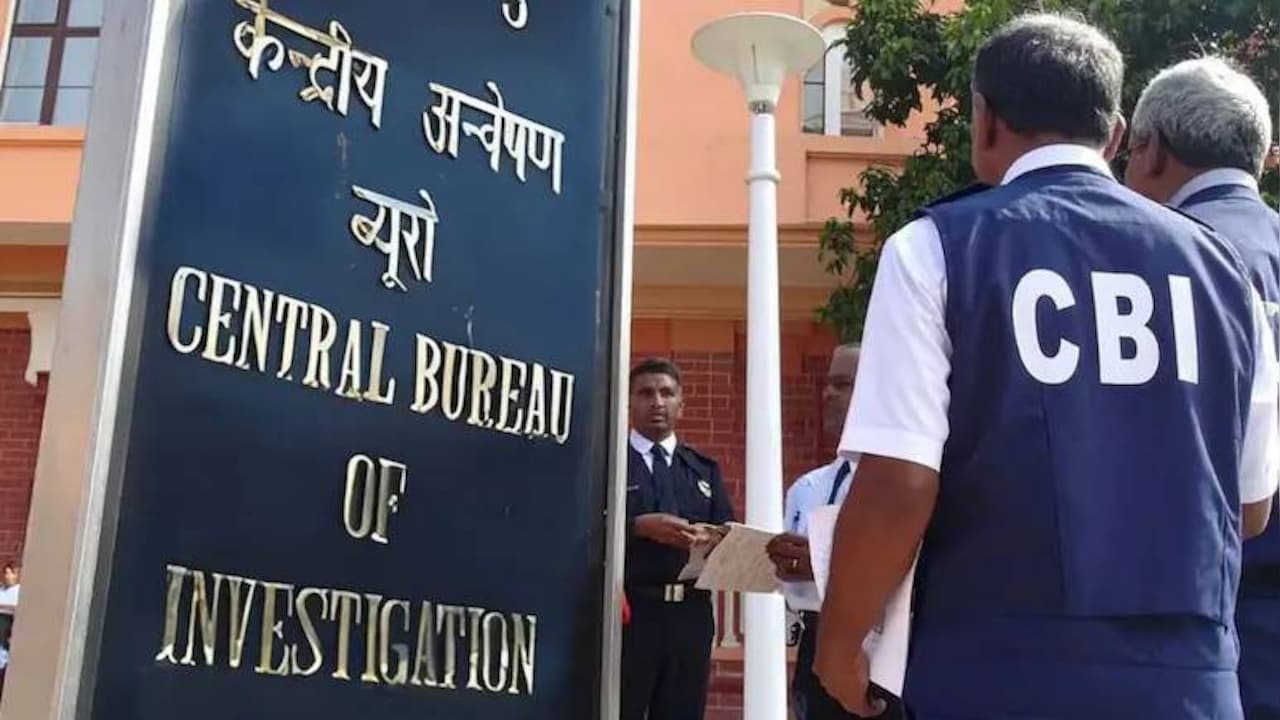
Union Minister Rao Inderjit Singh has demanded a detailed report on encroachments in Gurugram and warned of a CBI investigation into alleged corruption surrounding drainage notices.
- MP Rao Inderjit Singh demanded an action-taken report on illegal encroachments on natural drains.
- A CBI probe has been threatened if corruption regarding drainage notices is proven.
- The focus is on restoring natural drainage systems and maximizing rainwater harvesting.
- Satellite imaging will be used to map historical water-flow routes.
GURUGRAM: Union Minister of State and Gurugram MP Rao Inderjit Singh expressed deep regret on Wednesday regarding the recent severe waterlogging that paralyzed the city. He emphasized that a permanent solution to the recurring crisis requires the restoration of the city’s natural drainage system, maximizing rainwater harvesting, and aggressively recharging groundwater levels.
Strict Action Against Encroachments
During a high-level meeting with senior officials from the Gurugram Metropolitan Development Authority (GMDA), the Municipal Corporation of Gurugram, and the district administration, Mr. Singh sought a formal action-taken report on notices issued by the Irrigation Department to builders. These notices pertain to illegal encroachments on natural drains. Furthermore, he demanded an inquiry into allegations of corruption aimed at suppressing these notices, warning that he would not hesitate to seek a CBI probe if necessary.
Why This Matters
BozokMedia analysis shows that the rapid, often unregulated, urban sprawl in Gurugram has compromised the geological integrity of the region's drainage. Without immediate intervention to clear natural waterways, the city remains highly vulnerable to catastrophic flooding during monsoon seasons.
The destruction of natural drainage routes through unauthorized construction is a primary driver of urban flooding that requires immediate legal and scientific rectification.
Mr. Singh directed Urban Development Adviser and former Chief Secretary D.S. Dhesi to coordinate across various civic bodies to formulate a comprehensive, long-term policy. He specifically requested a detailed report regarding encroachments over nearly half a dozen significant ponds and natural drainage channels.
The Impact of Unplanned Development
The MP highlighted that natural drainage routes have been significantly compromised by development projects, particularly those stemming from licenses issued between 2004 and 2012. He also noted that the dumping of construction and demolition (C&D) waste into existing drains has further crippled their water-carrying capacity.
| Issue | Impact | Proposed Strategy |
|---|---|---|
| Natural Drains | Encroachment & Blockage | Satellite mapping & Restoration |
| C&D Waste | Reduced capacity | Strict waste management enforcement |
| Groundwater | Depletion | Injection tubewells & Harvesting |
To address these challenges, Mr. Singh advocated for a scientific approach. This includes studying the implementation of injection tubewells, utilizing local water bodies, and installing large underground pipelines in areas where natural route restoration is physically impossible. He announced that satellite imaging would be deployed to map historical water-flow routes and natural drains to ensure accuracy in planning.
Frequently Asked Questions
1. What is the MP's stance on illegal encroachments?
He stated that encroachments must be removed regardless of which government was in power when they occurred, and he is prepared to approach the court if officials fail to act.
2. How does the government plan to fix the drainage issue?
The plan involves a combination of restoring natural routes, using satellite mapping, and implementing scientific solutions like injection tubewells and large-scale rainwater harvesting.