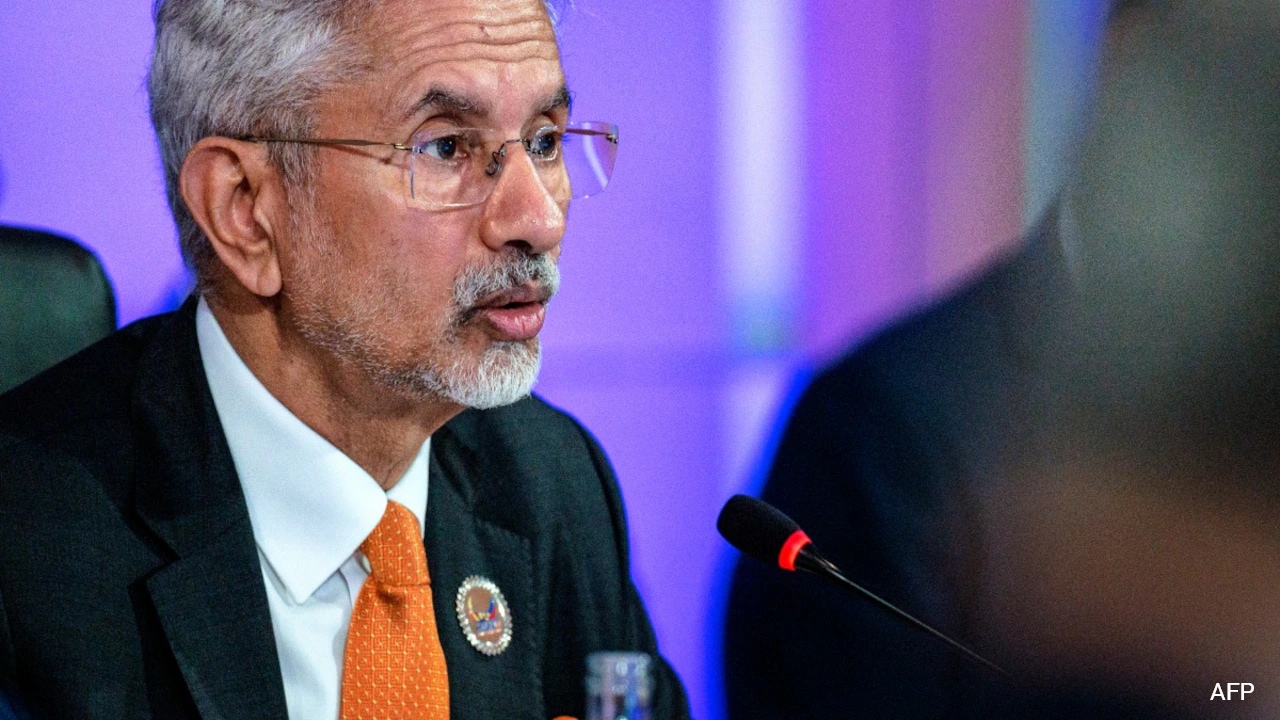
External Affairs Minister S Jaishankar reiterated India's commitment to peace, stating that the nation is prepared to offer "any help" to resolve the ongoing Russia-Ukraine war. He emphasized that the current era is not one of conflict, aligning with India's consistent diplomatic approach.
- India is ready to provide "any help" to end the Russia-Ukraine war.
- EAM S Jaishankar met with Ukrainian President Volodymyr Zelenskyy.
- India advocates for diplomacy and de-escalation, not conflict.
New Delhi: In a significant diplomatic outreach, India has conveyed its readiness to extend "any help" to facilitate an end to the protracted Russia-Ukraine conflict. External Affairs Minister (EAM) S Jaishankar, currently on a visit to Ukraine, made this commitment, underscoring India's long-standing position that dialogue and diplomacy are the only viable paths to resolution.
During his high-level engagements in Kyiv, EAM Jaishankar held a crucial meeting with Ukrainian President Volodymyr Zelenskyy. The discussions reportedly focused on deepening bilateral cooperation between the two nations and exploring avenues for lasting peace. Jaishankar apprised President Zelenskyy of his earlier discussions with his Ukrainian counterpart regarding these matters, signaling a coordinated approach towards finding a peaceful solution.
India's Principled Stance
EAM Jaishankar reiterated India's consistent stance, famously articulated by Prime Minister Narendra Modi, that "this is not an era of war." This statement, made previously at the SCO summit, reflects India's firm belief that military confrontations are counterproductive and detrimental to global stability and economic progress. India has consistently advocated for de-escalation, dialogue, and a return to the path of diplomacy since the conflict erupted.
Bilateral Cooperation and Peace Efforts
The meeting with President Zelenskyy also served as a platform to discuss strengthening India-Ukraine bilateral ties. Beyond the immediate focus on conflict resolution, both sides are understood to have explored opportunities for enhanced cooperation in various sectors. However, the overarching theme of the discussions remained centered on achieving a sustainable peace in the region.
Why This Matters
BozokMedia analysis shows that India's proactive offer of assistance comes at a critical juncture in the conflict. As global fatigue with the prolonged war grows and its economic repercussions continue to be felt worldwide, New Delhi's willingness to play a constructive role highlights its growing influence on the global stage. This move positions India as a potential mediator, leveraging its unique relationship with both Russia and Western nations.
"India's consistent emphasis on dialogue and its practical offer of 'any help' demonstrates a mature foreign policy that prioritizes stability and humanitarian concerns over geopolitical alignments." - Dr. Anya Sharma, International Relations Expert.
Historical Background
India has a long-standing relationship with both Russia and Ukraine, rooted in historical ties and economic partnerships. Post-independence, India maintained a non-aligned foreign policy, fostering strong relations with the Soviet Union. Following the dissolution of the USSR, India continued to build robust ties with Russia while also developing cooperative relationships with newly independent nations, including Ukraine. This nuanced historical context informs India's current balanced approach to the conflict, seeking to preserve its strategic autonomy while advocating for peace.
Frequently Asked Questions
1. What specific forms of 'help' can India offer?
India's offer of "any help" is broad and could encompass diplomatic mediation, humanitarian aid, facilitating peace talks, or providing logistical support for any internationally agreed-upon peace process. The specifics would depend on the evolving situation and the willingness of the parties involved.
2. Has India previously mediated in international conflicts?
While India has not been a primary mediator in major global conflicts recently, it has consistently played a constructive role in international forums like the UN and has actively engaged in multilateral diplomacy to promote peace and stability.