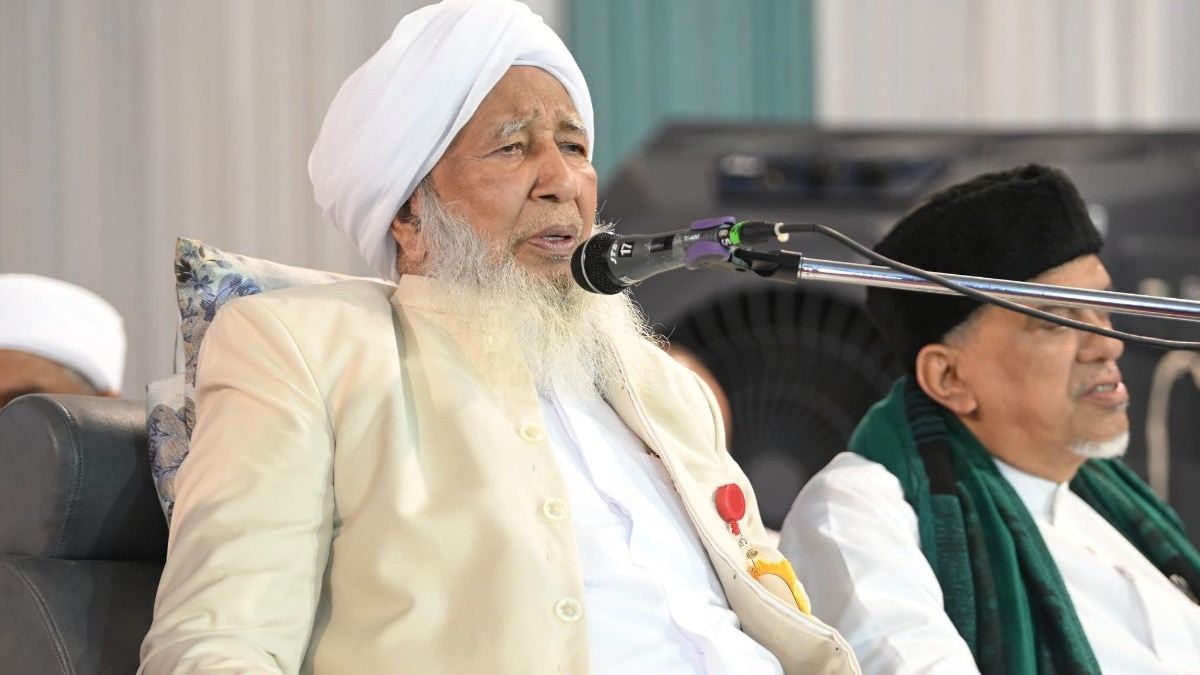
Grand Mufti Kanthapuram AP Aboobacker Musliyar has issued a clarification following intense backlash over his comments suggesting women should remain confined to their homes.
- Kanthapuram Musliyar denied advocating for a subordinate status for women in society.
- He cited women-only educational institutions as proof of supporting female empowerment.
- Kerala CM VD Satheesan strongly rejected the cleric's previous regressive views.
- The controversy has sparked a massive debate on gender equality and constitutional values.
Islamic cleric and Grand Mufti of India, Kanthapuram AP Aboobacker Musliyar, has sought to clarify his controversial remarks regarding women's participation in public life. Amidst a massive outcry, he asserted during a conference in Thrissur that he does not subscribe to the view that women should be relegated to a secondary position in society.
The controversy erupted after the cleric claimed that bringing women into public spaces "causes great destruction" and suggested that the Quran mandates women to remain confined to their homes. These remarks triggered widespread condemnation from women's rights organizations, intellectuals, and political leaders across the spectrum.
Why This Matters
BozokMedia analysis shows that this incident highlights the growing friction between traditional religious interpretations and the progressive, constitutional framework of modern India. In a state like Kerala, known for its high social indicators, such statements test the boundaries of religious freedom versus gender equality.
"Holy Islam is not a religion that buries women. None of us are people who will say women should be buried." — Kanthapuram Musliyar
To defend his stance, Musliyar pointed to the numerous educational institutions run by the Samastha Kerala Jem-iyyathul Ulama faction under his leadership. He highlighted that many of these institutions are exclusively for girls, where women serve as teachers. He further noted that he provides free food, accommodation, and medical care to these students, arguing that his actions contradict the accusation of being anti-woman.
However, the political backlash remains steadfast. Kerala Chief Minister VD Satheesan has categorically rejected the cleric's views, stating that neither the government nor the Congress supports such regressive stances. Satheesan invoked Islamic history to counter the argument, citing Khadija, a successful businesswoman, and Aisha, a prominent leader, as examples of women playing vital public roles in early Islam.
The debate has also drawn sharp criticism from the Left. CPI(M) General Secretary MA Baby stated that such views reflect a reluctance to recognize gender equality and are contrary to the Indian Constitution. Meanwhile, BJP Kerala President Rajeev Chandrasekhar accused the state government of allowing a drift toward a regressive social system.
Frequently Asked Questions
1. What was the core of the controversy?
The cleric suggested that women should not make public appearances and should remain at home to avoid societal destruction.
2. How did the Kerala government respond?
Chief Minister VD Satheesan rejected the remarks, calling them a '19th-century view' that contradicts both history and modern values.