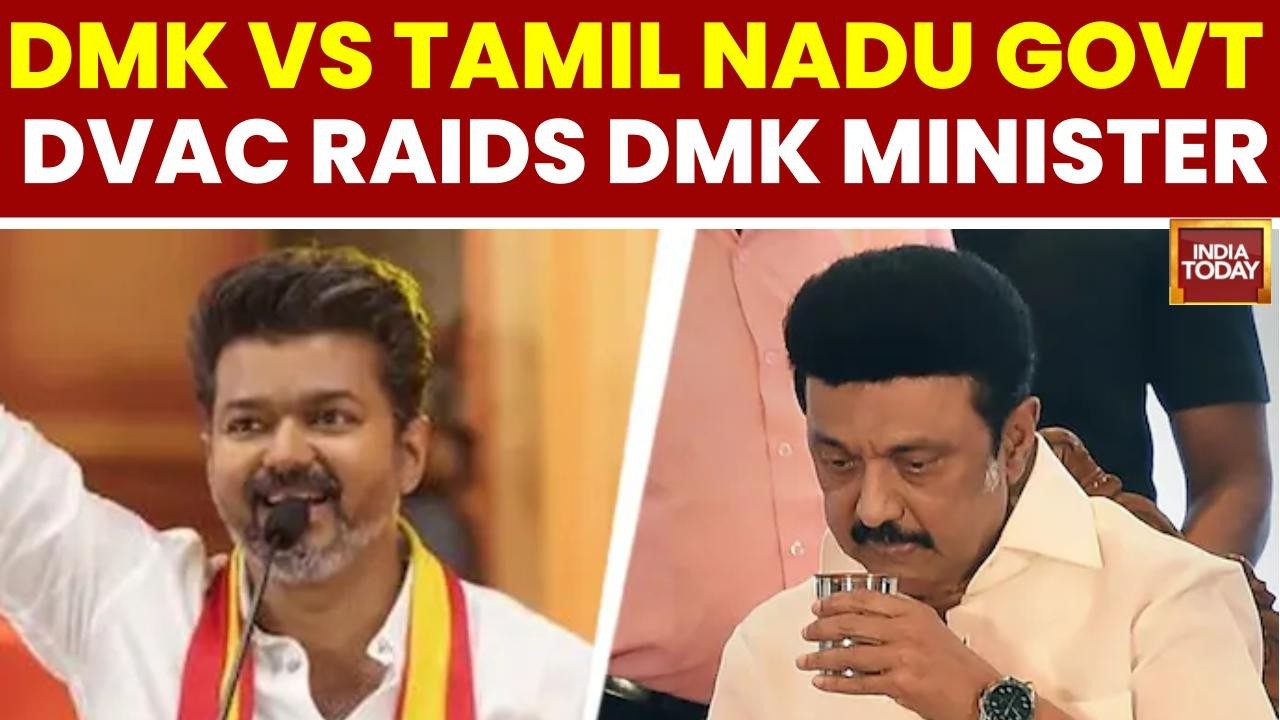
The Directorate of Vigilance and Anti-Corruption (DVAC) launched raids at the residence of former DMK minister K.N. Nehru in Tiruchirappalli, Tamil Nadu. DMK chief M.K. Stalin strongly condemned the action, calling it politically motivated.
- DVAC launched surprise raids at the residence of former DMK minister K.N. Nehru in Tiruchirappalli.
- DMK Chief M.K. Stalin condemned the raids, terming them politically motivated and diversionary.
- Stalin accused the ruling government of horse-trading and failing to conduct preliminary inquiries.
In a major political development in Tamil Nadu, the Directorate of Vigilance and Anti-Corruption (DVAC) launched extensive raids at the residence of former DMK minister K.N. Nehru in Tiruchirappalli. The sudden action has triggered intense political debates across the state, with DMK cadres expressing strong disapproval of the move.
DMK chief M.K. Stalin was quick to launch a scathing attack on the state administration. He criticized the government for executing these raids precisely when the state assembly session is underway and while a related case remains pending before the High Court. Stalin claimed that the timing of the raids clearly indicates an attempt to divert public attention from pressing issues.
Asserting his party's resilience, Stalin declared that the DMK would not be intimidated by such coercive measures. He emphasized that the party would confront these actions strictly through legal channels. Furthermore, he accused the ruling government of resorting to unethical horse-trading to sustain power, without even registering preliminary inquiries into actual complaints.
Why This Matters
BozokMedia analysis shows that anti-corruption raids targeting opposition figures during active legislative sessions often signal deep-seated political maneuvering. Such high-profile actions not only intensify the rivalry between the DMK and the ruling party but also raise critical questions about the independence of state-level investigative agencies during crucial political transitions.
"Executing vigilance raids during active legislative sessions and pending judicial reviews often points toward strategic political pressure rather than routine administrative accountability."
Following the raids, security has been beefed up around Nehru’s residence in Tiruchirappalli to prevent any law and order issues. Supporters of the DMK gathered in large numbers, raising slogans against the ruling government. Political analysts believe this move might consolidate opposition unity and garner public sympathy for the DMK ahead of upcoming political challenges.
| Aspect | DMK's Allegation | State Government / DVAC Action |
|---|---|---|
| Nature of Raids | Politically motivated and diversionary tactics | Routine anti-corruption investigation |
| Timing | Conducted during the active assembly session | Based on pending complaints and legal procedures |
| Legal Stand | Case pending in High Court; will fight legally | Action taken under statutory anti-corruption laws |
Frequently Asked Questions
Q1: Who is K.N. Nehru and why was his house raided?
Answer: K.N. Nehru is a senior leader of the DMK and a former minister. His residence in Tiruchirappalli was raided by the DVAC as part of an ongoing vigilance investigation.
Q2: How did DMK Chief M.K. Stalin react to the DVAC raids?
Answer: M.K. Stalin strongly condemned the raids, calling them a politically motivated diversionary tactic. He stated that the party would fight the matter legally in court.