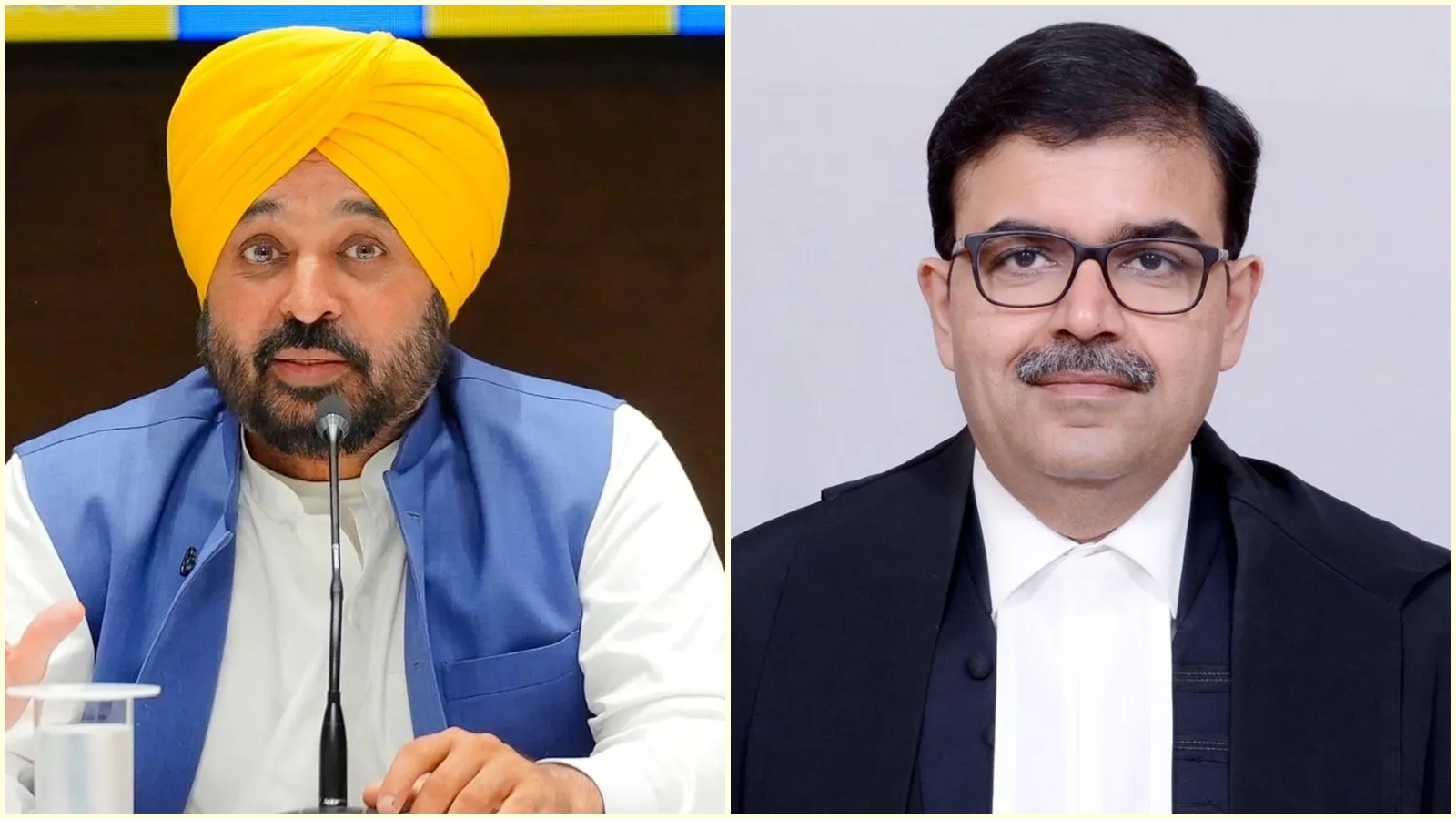
The Punjab Cabinet has passed a resolution demanding the appointment of Justice Ashwani Kumar Mishra as Chief Justice of the Punjab and Haryana High Court be put on hold, alleging a bypass of constitutional norms.
- Punjab Cabinet passed a resolution against the appointment of Justice Ashwani Kumar Mishra.
- CM Bhagwant Mann alleges the Centre bypassed the Memorandum of Procedure (MoP).
- The state demands the administration of oath be stayed until state views are considered.
- The High Court Bar Association has expressed opposition to the state's stance.
Chandigarh: In a significant escalation of the ongoing friction between the state and the central government, the Punjab Cabinet, chaired by Chief Minister Bhagwant Singh Mann, has formally challenged the appointment of Justice Ashwani Kumar Mishra as the Chief Justice of the Punjab and Haryana High Court.
The emergency meeting, held on Sunday, resulted in a unanimous resolution demanding that the appointment and the subsequent administration of oath be put on hold. The state government contends that the Union Government notified the appointment without awaiting the views of the state, a mandatory requirement under the Memorandum of Procedure (MoP) for the appointment of High Court judges.
Why This Matters
BozokMedia analysis shows that this dispute highlights a growing tension regarding federalism and the procedural sanctity of judicial appointments. When a state government feels its constitutional role is being sidelined, it creates a precedent that could affect the perceived legitimacy of judicial leadership in the region.
This appointment represents a direct violation of prescribed procedures and established constitutional norms.
Chief Minister Mann has taken the matter to the highest offices, writing to President Droupadi Murmu, Prime Minister Narendra Modi, and Governor Gulab Chand Kataria. Mann linked this judicial impasse to other ongoing grievances, including the withholding of the Rural Development Fund (RDF) and disputes over the Bhakra Beas Management Board (BBMB) rules.
Justice Mishra, currently serving as the Acting Chief Justice, is expected to be sworn in on Monday. His parent court is the Allahabad High Court. The state government argues that the speed with which the Centre acted—notifying the appointment on September 5 after receiving inputs from other states like Bihar and Maharashtra—contrasts sharply with the perceived delays in other similar processes.
Historical Context and Allegations of Discrimination
The Punjab government drew a parallel to the case of Justice Gurmeet Singh Sandhawalia. In 2024, a proposal for Justice Sandhawalia's appointment as Chief Justice of the Madhya Pradesh High Court remained unnotified for months due to the absence of state recommendations. The Punjab administration claims this inconsistency creates a "feeling of perceived discrimination" in how judges from the Punjab and Haryana High Court are handled by the Centre.
| Feature | Justice Mishra Case | Justice Sandhawalia Case |
|---|---|---|
| State Consent Status | Allegedly bypassed | Delayed/Notified later |
| Central Response | Immediate Notification | Prolonged Delay |
Frequently Asked Questions
1. What is the primary grievance of the Punjab Government?
The government claims the Centre failed to follow the Memorandum of Procedure, which requires consulting the state government before appointing a Chief Justice.
2. How has the High Court Bar Association responded?
The Bar Association has opposed the state's move, warning that political interference in judicial appointments could undermine public confidence in the legal system.