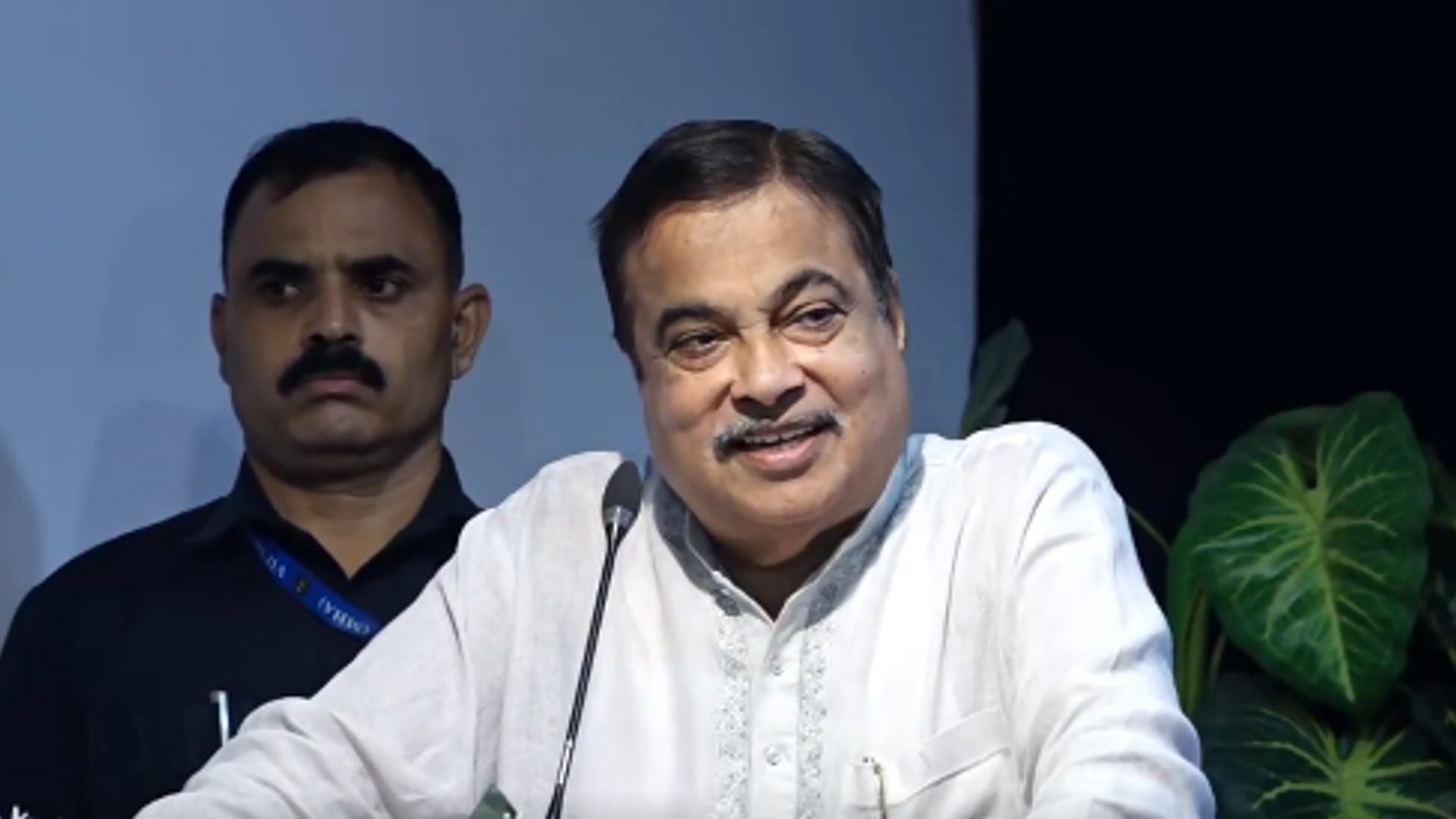
Union Minister Nitin Gadkari has stated that he received significantly more votes from Nagpur's underworld and red-light districts compared to highly educated localities, attributing the support to his development work.
- Nitin Gadkari received up to 92% votes from underworld and red-light areas.
- In highly educated localities, his vote share was around 70-75%.
- He clarified that this support is due to road construction and social welfare, not criminal ties.
- Gadkari emphasized the need to hand over political responsibilities to the new generation.
Union Minister Nitin Gadkari has made a startling revelation regarding his electoral success in Nagpur. Speaking at a recent event, the senior BJP leader stated that he secured a much higher percentage of votes from areas associated with criminals, the underworld, and red-light districts than from the city's more educated and affluent neighborhoods.
Providing specific figures, Gadkari noted that while he received approximately 70 to 75 percent of the votes in highly educated areas, this number surged to nearly 92 percent in localities linked to the underworld and red-light districts. He was quick to clarify that these statistics should not be misconstrued as an endorsement of criminal activities.
Development as a Political Catalyst
Gadkari attributed this overwhelming support to his focus on grassroots development. He explained that his work in building roads and implementing social welfare schemes in these marginalized areas earned him the trust of the residents. "Don’t draw the conclusion that I have relations with them," he remarked, emphasizing that his presence in these areas was strictly through the lens of public service and infrastructure improvement.
Gadkari's remarks highlight a pragmatic political reality: infrastructure and tangible development often bridge the gap between mainstream politics and marginalized communities.
Transitioning to the New Generation
This candid admission comes on the heels of Gadkari's recent comments regarding his political longevity. The 69-year-old minister recently suggested that it is time to pass the torch to the next generation of leaders. He mentioned that after 30 years of continuous public service, his involvement is naturally diminishing, and younger leaders should be given the platform to lead.
Why This Matters: BozokMedia Analysis
BozokMedia analysis shows that Gadkari's comments provide a rare, unvarnished look at the demographics of political loyalty in India. It challenges the conventional wisdom that 'educated' voters are the primary drivers of political mandates, suggesting instead that consistent delivery of basic amenities—like roads and social support—can create an impenetrable voter base even in the most unconventional social strata.
| Locality Type | Estimated Vote Share |
|---|---|
| Highly Educated Areas | 70% - 75% |
| Underworld/Red-Light Areas | ~92% |
Frequently Asked Questions
1. Does Gadkari support criminal elements?
No. He explicitly stated that his high vote share in those areas is a result of his development and social work, not criminal affiliations.
2. Why is Gadkari talking about the 'new generation'?
He believes that after three decades of service, it is time to provide opportunities to younger leaders to take over responsibilities.