From India's political manifestos to the US presidential campaign, the 'freebie' culture is going global. An analysis of how Donald Trump's massive $5,000 dividend promise mirrors the populist tactics once criticized by PM Modi.
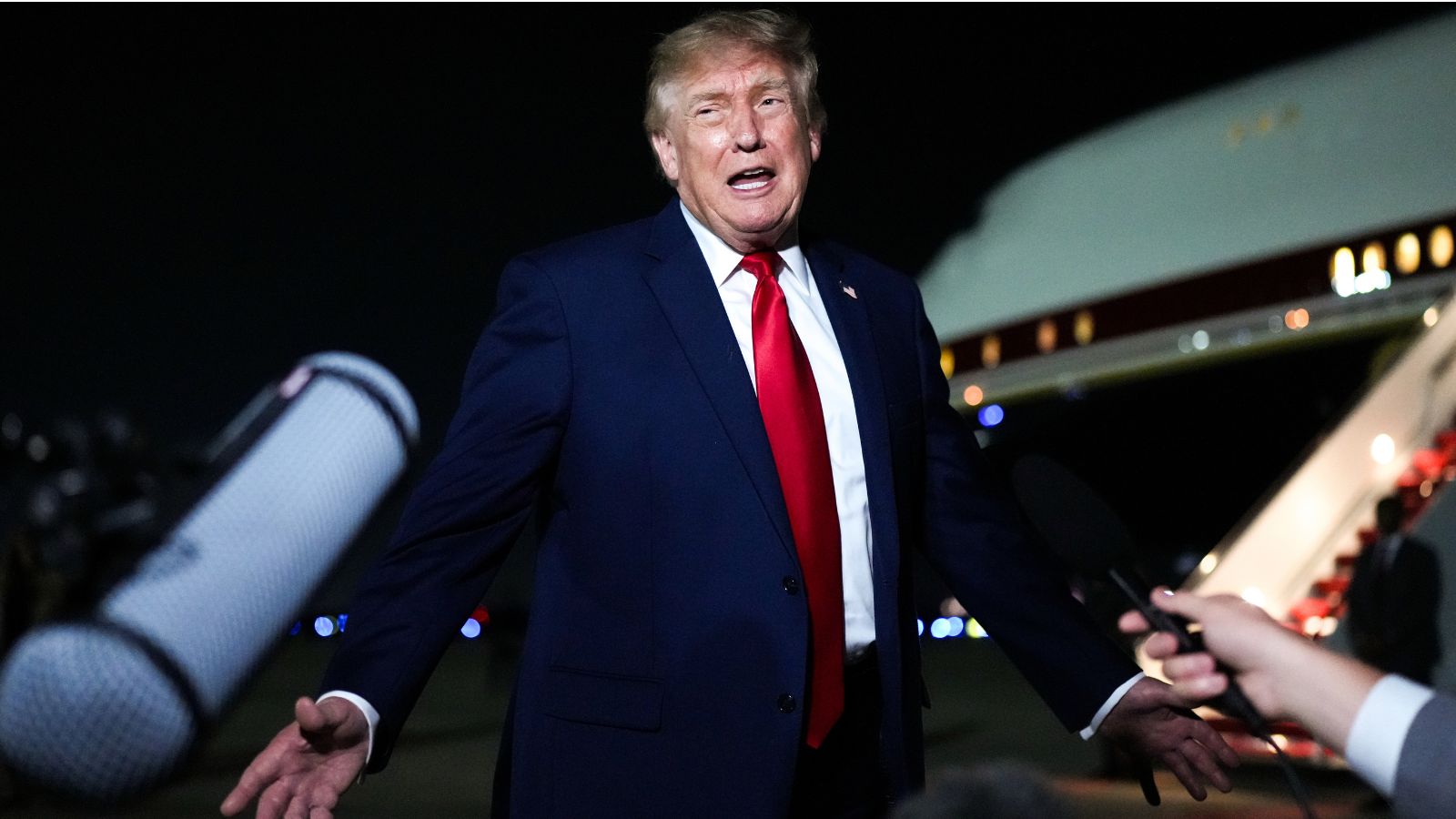
- Donald Trump has promised a $5,000 'dividend' to every adult US citizen if Republicans retain Congress.
- The estimated cost of this populist move is a staggering $1 trillion.
- The concept of 'Revdi' (freebies) is transitioning from developing nations to the developed world.
- State failures in healthcare and education often drive the demand for direct cash transfers.
It is a rare phenomenon when a political strategy travels from a lower-middle-income nation to the heart of the developed world. However, the pursuit of power knows no geographic boundaries. The humble Indian 'Revdi'—a term used to describe populist freebies—has made its way 12,000 kilometers away to the United States. Donald Trump, in a move that echoes the very tactics once criticized by Narendra Modi, has promised a $5,000 'dividend' to every adult citizen in the US, contingent on Republican control of Congress.
The scale of this promise is unprecedented. Based on 2024 US Census Bureau data, with approximately 245 million citizens over the age of 18, this 'Trump Revdi' is estimated to cost the US exchequer at least $1 trillion. To provide perspective, this single political promise is nearly equivalent to one-fourth of India's entire GDP ($3.92 trillion in 2025-26).
Why This Matters
BozokMedia analysis shows that while the US is a wealthy nation with a high per capita income, inequality remains a massive driver of political behavior. For the bottom 20% of Americans, whose mean household income is roughly $17,132, a $5,000 payment represents over 100 days of income. This creates a powerful incentive for voters, making populist cash transfers an incredibly effective, albeit fiscally dangerous, tool for winning elections.
When states fail to provide essential services like health and education, direct cash becomes the ultimate political survival tool.
In India, the journey of the 'Revdi' has been complex. While PM Modi famously warned against this culture during the inauguration of the Bundelkhand Expressway in 2022, the political reality has shifted. The implementation of Direct Benefit Transfers (DBT) through the JAM (Jan Dhan-Aadhaar-Mobile) trinity has become a cornerstone of governance across the political spectrum. From the BJP to the Congress and various regional parties, cash handouts have become an essential ingredient in winning over voters.
Historically, the seeds of this were sown during the UPA government's second term, where the idea of instantaneous fund transfers to voters' accounts became a reality. Today, it has evolved into a 'race to the bottom' where parties compete to offer the most attractive social safety nets, often at the cost of long-term fiscal health.
| Metric | India (Revdi/DBT) | USA (Trump's Promise) |
|---|---|---|
| Core Strategy | Social safety via cash/subsidies | Direct 'dividend' to citizens |
| Estimated Cost | Approx. $20 Billion (State transfers) | $1 Trillion |
| Primary Driver | Inequality and welfare needs | Electoral control and economic populism |
Frequently Asked Questions
1. What is 'Revdi' culture in politics?
It refers to the practice of political parties promising free goods or cash transfers to voters to secure electoral success.
2. Will the US Congress approve Trump's $5,000 promise?
It is highly uncertain, as such a massive expenditure would require significant legislative approval and face immense scrutiny.