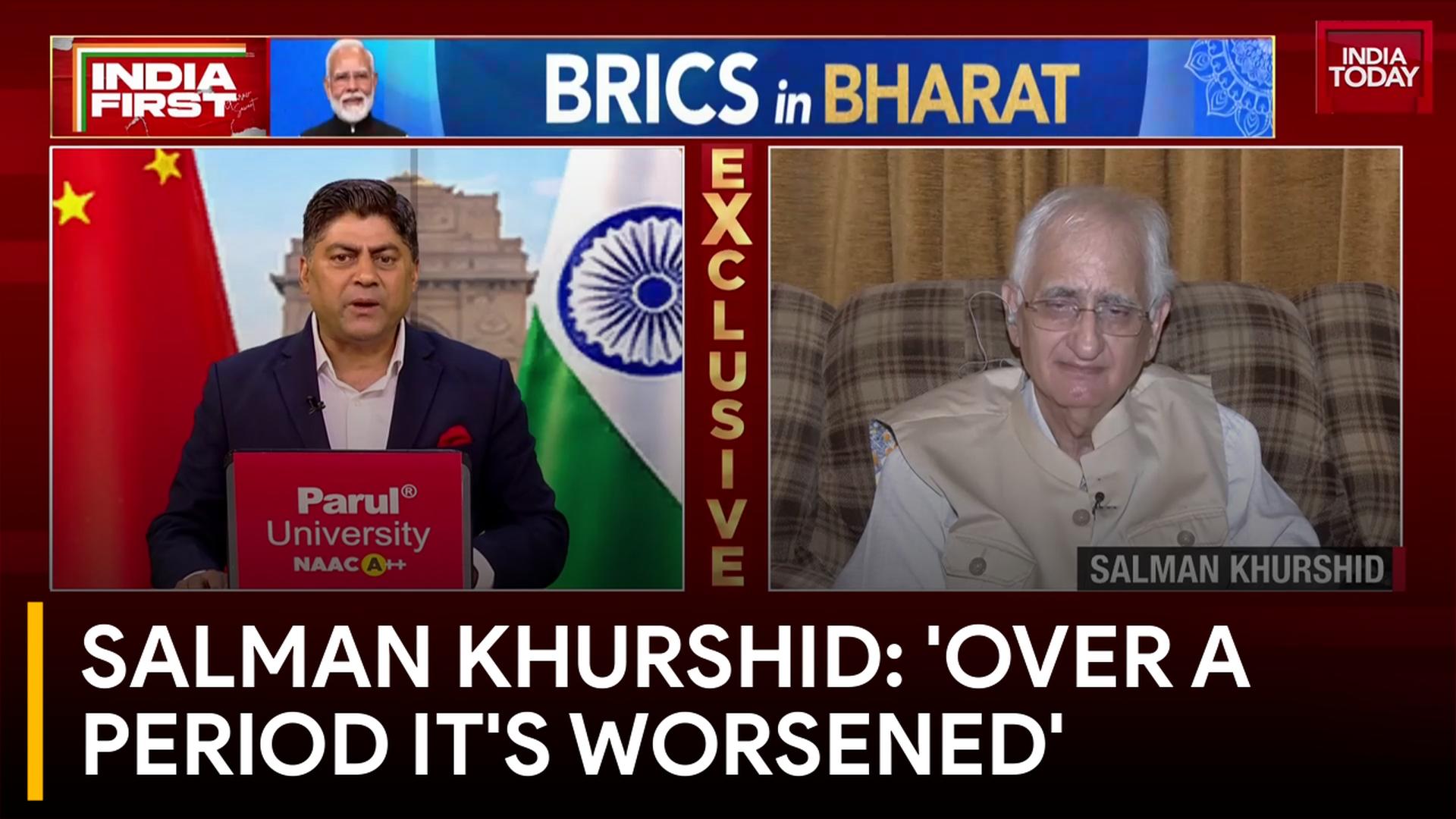
Former External Affairs Minister Salman Khurshid has raised critical questions regarding India's domestic political unity and its impact on handling complex foreign relations, particularly with China.
- Salman Khurshid emphasized that Non-Alignment offers essential strategic freedom.
- He advocated for a stronger voice for the Global South in the UN, IMF, and World Bank.
- Analysis provided on the BRICS Summit and the New Delhi Declaration.
In a recent high-profile interview, former External Affairs Minister Salman Khurshid offered a profound critique of the intersection between domestic politics and international relations. He posed a challenging question to the current administration: if a government struggles to build consensus with the domestic Opposition, how can it expect to navigate the intricate and high-stakes complexities of dealing with China?
Analyzing the outcomes of the recent BRICS Summit, Khurshid noted that while the adoption of the New Delhi Declaration was a significant milestone, India's diplomatic ambitions must extend beyond the current multilateral frameworks. He suggested that India needs a more expansive diplomatic outreach that transcends the immediate confines of BRICS.
Why This Matters
BozokMedia analysis shows that Khurshid’s remarks tap into a growing debate regarding India's 'strategic autonomy.' The ability to project strength abroad is often intrinsically linked to the perception of stability and consensus at home.
'Non-alignment gives nations the strategic freedom to engage as needed without being tethered to specific blocs.'
Addressing the controversy surrounding the omission of Pakistan in terror condemnation statements, Khurshid explained that multilateralism operates on the delicate mechanism of consensus. In global diplomacy, what is left unsaid is often as significant as what is explicitly stated, as nations strive for unanimous declarations.
Historical Background
India's foreign policy has long been anchored in the principle of Non-Alignment. Since its inception, India has sought to avoid entanglement in Cold War-era power blocs to preserve its sovereignty. Khurshid’s emphasis on this principle suggests that in a modern, multi-polar world, the core tenets of strategic autonomy remain vital for India's national interest.
Furthermore, Khurshid highlighted the systemic inequities in global governance. He argued that for institutions like the United Nations, the IMF, and the World Bank to remain relevant, they must undergo structural reforms that empower the Global South, ensuring their voices are not just heard but are decisive.
Frequently Asked Questions
1. What was Khurshid's main concern regarding China?
He suggested that domestic political cohesion is a prerequisite for effective high-level diplomacy with challenging neighbors like China.
2. Why did he mention the IMF and World Bank?
He argued that these global institutions need to represent the interests of the Global South more accurately to maintain global legitimacy.