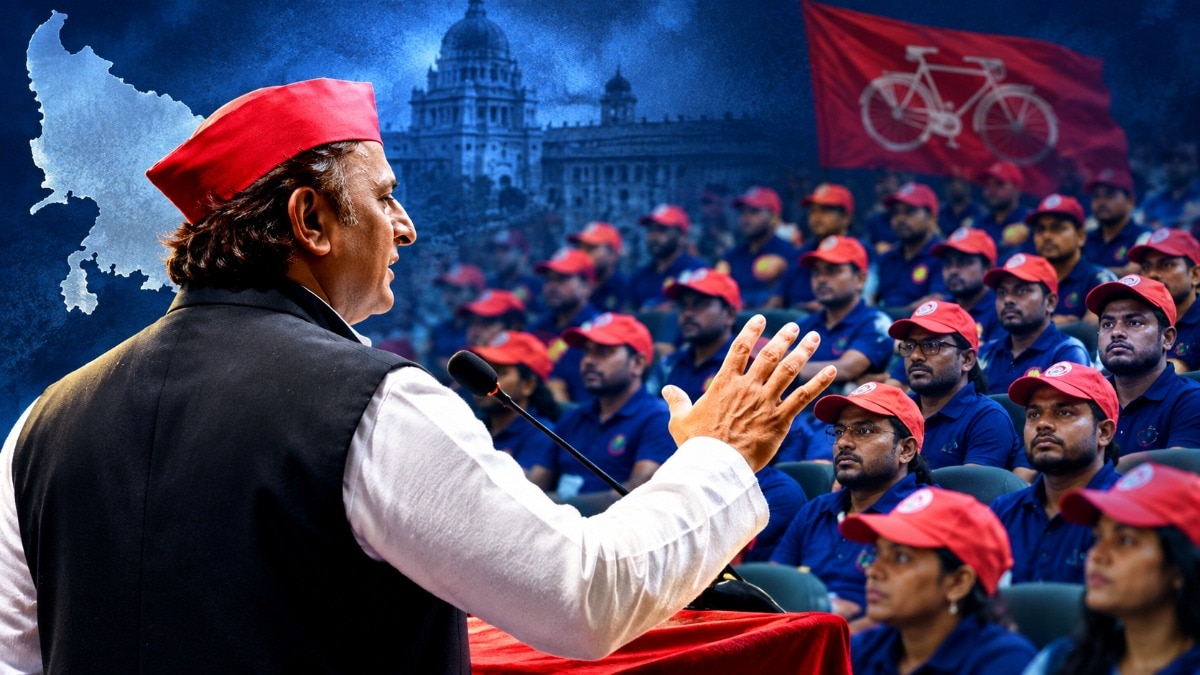
Samajwadi Party chief Akhilesh Yadav is pivoting his political identity using the 'Blue T-Shirt' and a strong Bahujan-centric plank to challenge established power structures in Uttar Pradesh.
- Akhilesh Yadav is adopting the 'Blue T-Shirt' as a symbol of Bahujan identity.
- The strategy aims to bridge the gap between OBC and Dalit vote banks.
- This pivot seeks to disrupt the traditional dominance of the BJP and BSP in UP.
In a significant tactical shift, Akhilesh Yadav, the leader of the Samajwadi Party (SP), has begun signaling a new political direction. By donning the 'Blue T-Shirt' and emphasizing a 'Bahujan plank,' Yadav is attempting to redefine his party's identity in the complex socio-political landscape of Uttar Pradesh.
The Shift Toward Bahujan Identity
For decades, the Samajwadi Party has been viewed primarily as a party representing the Yadav and Other Backward Classes (OBC) communities. However, the math of Uttar Pradesh politics dictates that true power lies in the ability to consolidate a broader coalition that includes Dalit and Bahujan voters. The adoption of blue—a color deeply symbolic of Dalit consciousness and Dr. B.R. Ambedkar—is a calculated move to signal this inclusivity.
Why This Matters
BozokMedia analysis shows that this move is a direct attempt at social engineering. By aligning the SP's traditional OBC base with the aspirations of the Bahujan community, Yadav is attempting to create a massive social bloc that could potentially neutralize the BJP's current dominance in the state.
The transition from a purely OBC-centric party to a broader Bahujan-OBC alliance is the most critical evolution in Yadav's political career.
This strategy is not merely about clothing; it is about messaging. The 'Blue T-Shirt' serves as a visual shorthand for a political realignment, aiming to attract voters who feel marginalized by the current administration and seek a unified voice for social justice.
Historical Background
The history of Uttar Pradesh is defined by the struggle for representation among various caste groups. From the rise of the Mandal movement to the dominance of the Bahujan Samaj Party (BSP), the state has always been a battleground for identity politics. Akhilesh Yadav is essentially attempting to reclaim the space where OBC and Dalit interests intersect.
Frequently Asked Questions
1. Why is the blue color significant for Akhilesh Yadav?
Blue is the color associated with the Dalit movement and Dr. Ambedkar, symbolizing a connection to Bahujan interests.
2. How does this affect the BSP?
This strategy poses a direct challenge to the BSP by attempting to absorb its core voter base into a larger coalition.