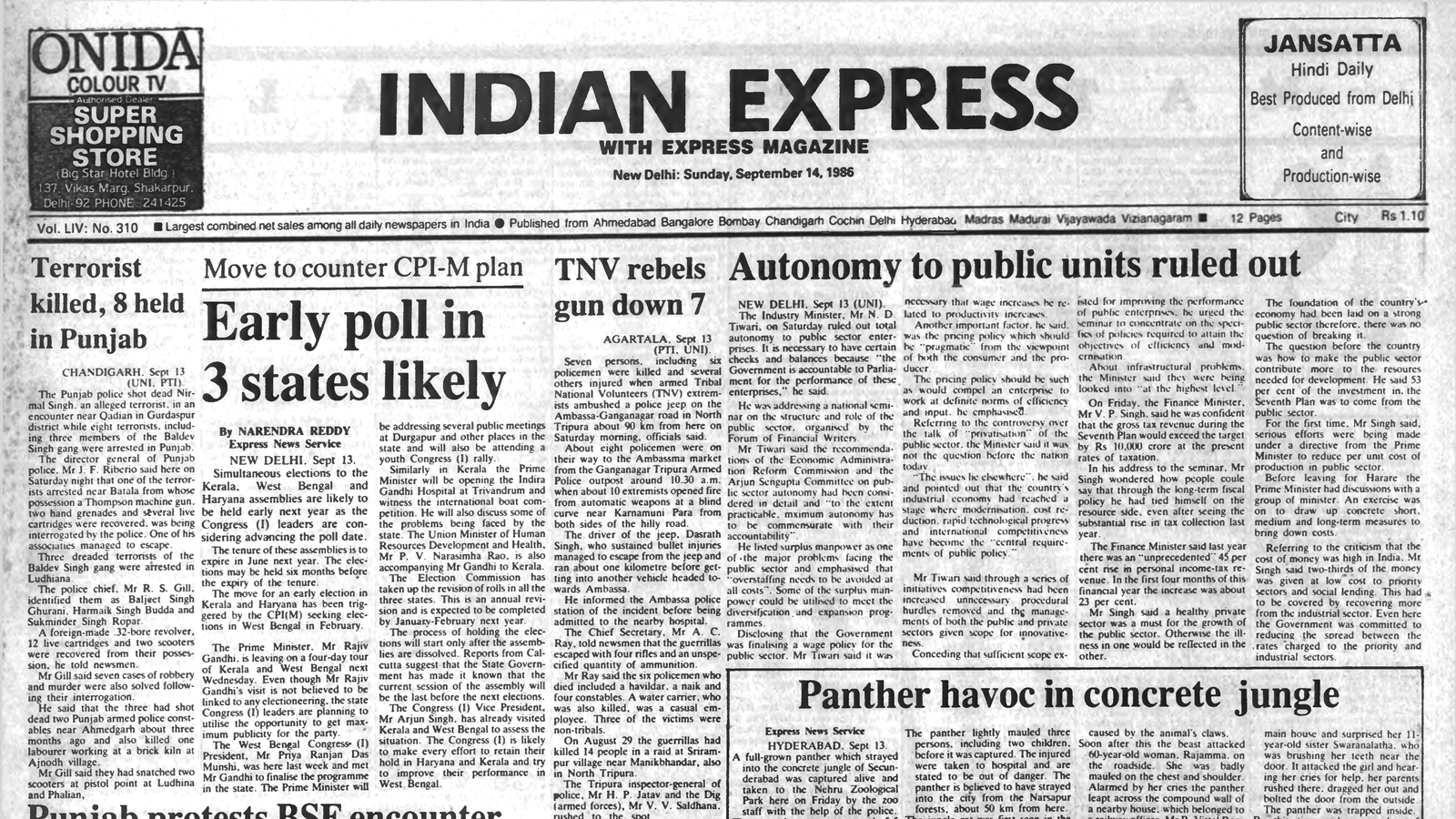
A deep dive into the headlines of September 14, 1986, covering potential early elections in three states and significant security incidents in Tripura and Punjab.
- Potential early assembly elections in Kerala, West Bengal, and Haryana.
- Fatal ambush by TNV extremists in North Tripura, killing seven.
- Punjab CM Surjit Singh Barnala's stance against forced migration and terrorism.
Looking back at the archives of September 14, 1986, the Indian political landscape was on the brink of significant shifts. Reports indicated that the Congress (I) leadership was considering advancing the assembly elections for Kerala, West Bengal, and Haryana. While the official tenures of these assemblies were set to expire in June 1987, political maneuvering suggested that polls could be conducted as early as six months prior to the scheduled expiry.
Security Crises in the Northeast
The news from Tripura was grim, reflecting the volatility of the era. Armed extremists from the Tribal National Volunteers (TNV) carried out a deadly ambush on a police jeep on the Ambassa-Ganganagar road. The attack resulted in the deaths of seven individuals, including six policemen. This incident highlighted the intense struggle between state security forces and insurgent groups in the North-Eastern frontier.
The mid-1980s represented a volatile intersection of democratic transitions and intense internal security challenges across India.
Simultaneously, the state of Punjab was grappling with the fallout of the Khalistan movement. Chief Minister Surjit Singh Barnala, during a public address in Jaipur, issued a stern warning against terrorists attempting to trigger communal migration. Barnala emphasized the government's resolve to encourage displaced Hindu populations to return to their homes, framing the struggle as a fight for social cohesion.
Why This Matters
BozokMedia analysis shows that these historical snapshots are crucial for understanding the evolution of Indian federalism and counter-insurgency strategies. The interplay between early elections and regional instability often dictated the central government's policy priorities during this decade.
Historical Background
The mid-1980s in India were characterized by intense political shifts, the rise of regional identity movements, and a complex security environment. The period following the assassination of Indira Gandhi and the subsequent political transitions created a unique atmosphere of both democratic expansion and deep-seated social unrest.
Frequently Asked Questions
1. Which states were facing early elections in 1986?
Kerala, West Bengal, and Haryana were likely to hold elections ahead of their scheduled term expiry.
2. What happened in Secunderabad according to the report?
A full-grown panther was captured alive and moved to the Nehru Zoological Park in Hyderabad.