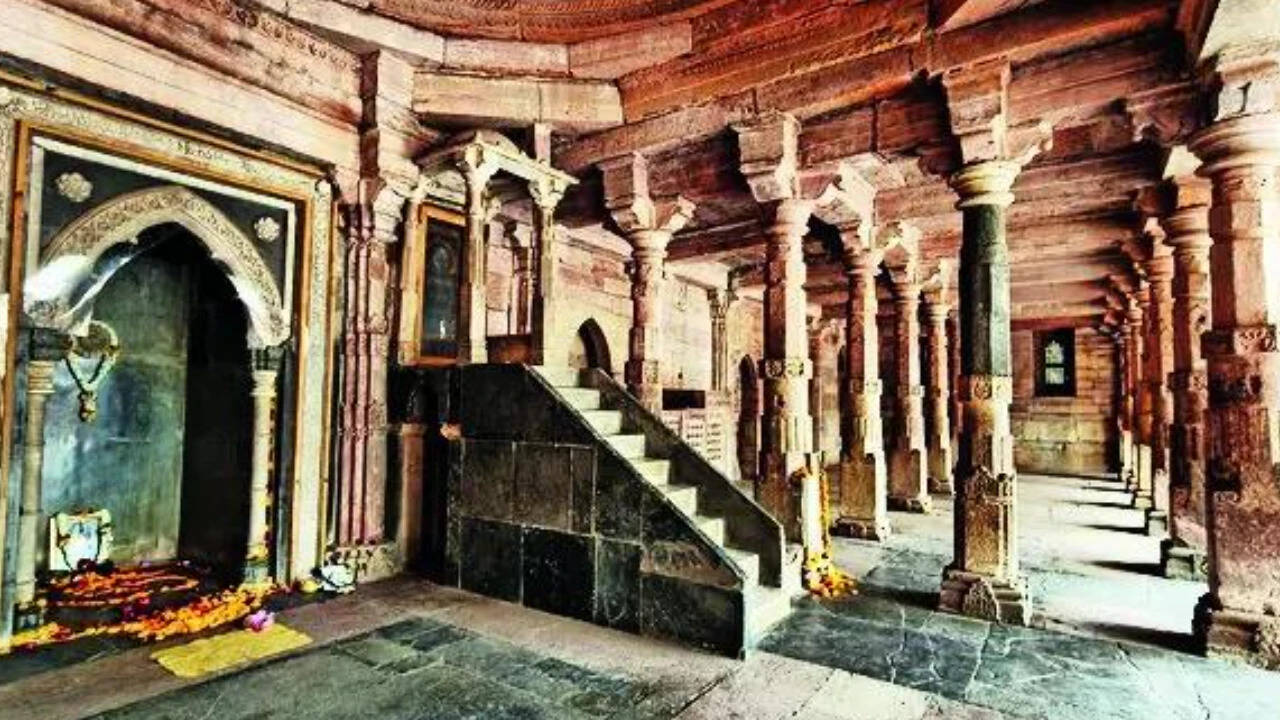
The Supreme Court refused to stay the Madhya Pradesh High Court verdict that declared the Bhojshala‑Kamal Maula Mosque complex a temple, ordering the Dhar administration to find a nearby site for Friday prayers and banning any structural changes without its permission.
मुख्य बिंदु (Key Takeaways)
- The Supreme Court did not stay the High Court's decision labeling the Bhojshala complex as a temple.
- Muslim petitioners were instructed to secure an alternate open space for Friday prayers near the complex.
- No structural alterations to the site may be made without prior approval from the apex court.
New Delhi – On Tuesday, the Supreme Court declined to stay the Madhya Pradesh High Court’s May 15 judgment that declared the Bhojshala‑Kamal Maula Mosque complex a temple and barred Muslims from offering namaz there. However, the apex court agreed to hear three petitions filed by Muslim litigants, who contend that the High Court erased centuries‑old documentary proof of the site’s mosque status and disrupted a 23‑year‑old shared‑use arrangement.
Historical Background
The Bhojshala complex in Dhar district has long been a contested religious space. In 2003, the Archaeological Survey of India (ASI) issued an order permitting Friday prayers for Muslims and Tuesday worship for Hindus, alongside an annual Basant Panchami puja. This informal power‑sharing arrangement persisted for over two decades, but successive litigations brought the site into national focus, culminating in the High Court’s 2025 temple declaration.
Supreme Court’s Directive
Chief Justice Surya Kant, joined by Justices Joymalya Bagchi and V. Mohana, warned that any order creating tension could spark law‑and‑order challenges. “We will not pass any order that might create tension,” the bench said, after Solicitor General Tushar Mehta highlighted the risk of unrest if the High Court’s order were stayed. The court then instructed the Dhar district administration to identify an adjacent open area where Muslims could perform Friday namaz, ensuring unobstructed ingress and egress.
Legal Implications
Senior counsel A.M. Singhvi, Huzefa Ahmadi, Salman Khurshid and Meenakshi Arora argued that the High Court’s verdict violated the Places of Worship (Special Provisions) Act, 1991, which protects the status‑quo of existing religious sites. They labeled the judgment “historically erroneous” and demanded restoration of the pre‑verdict situation. Conversely, the state’s counsel warned that staying the order might disturb the fragile peace that had been maintained after a few isolated incidents following the verdict.
Way Forward
The bench urged patience from both parties, noting that the matter could be concluded within a few weeks. Hindu representatives, led by Guru Krishna Kumar, also consented to a swift hearing. While the court acknowledged the administration’s rapid enforcement of the High Court’s order, it cautioned that any delay beyond a day could have serious repercussions, and it barred any structural modifications without its explicit permission.
