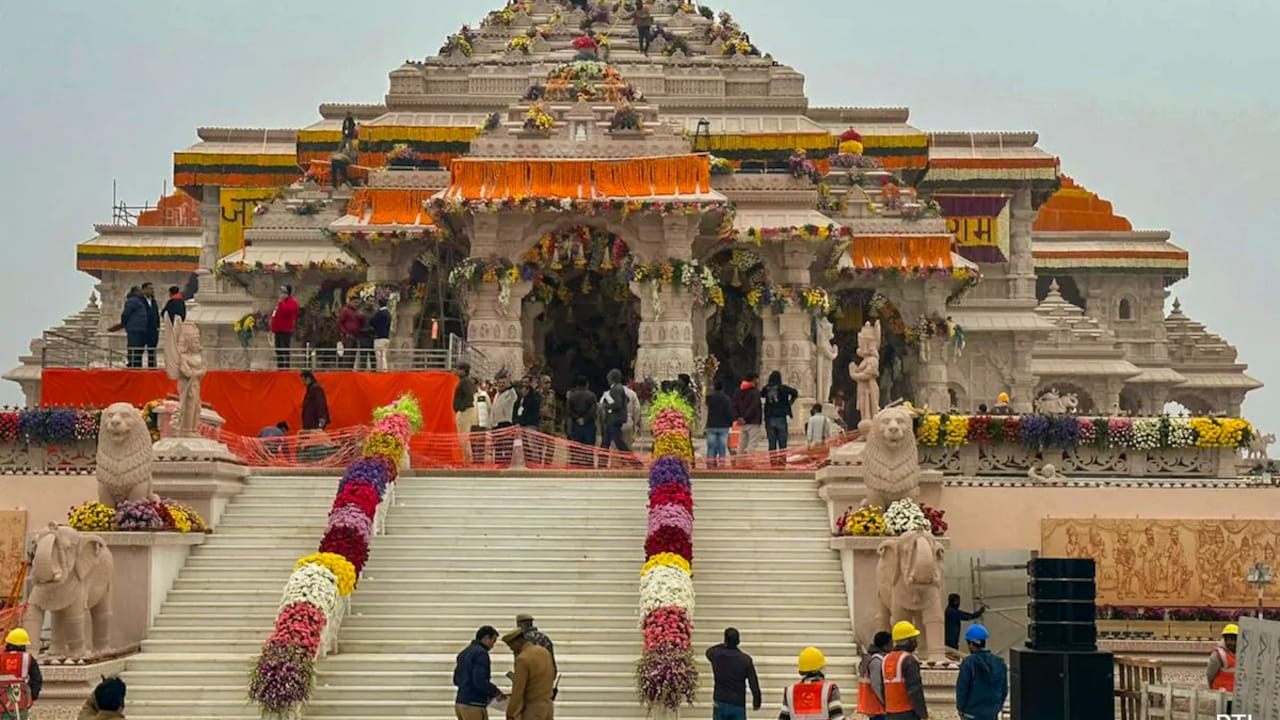
The Nirmohi Akhara argues that the Supreme Court's 2019 verdict has not been fully implemented, especially regarding its representation in the Ram Temple Trust. It has filed a petition demanding the trust’s reconstitution to ensure equitable management.
Key Takeaways
- Nirmohi Akhara petitions the Supreme Court for a reconstitution of the Ram Temple Trust.
- The Akhara claims its representation under the 2019 judgment remains inadequate.
- The case carries far‑reaching legal, social, and political implications.
The Nirmohi Akhara has recently approached the Supreme Court, seeking a fresh composition of the Ram Temple Trust. The core grievance is that, despite the landmark 2019 judgment, the Akhara has not received the level of representation the court envisioned for it in the trust’s governance. According to the Akhara, the current structure marginalises its voice, contravening the spirit of the original order.
Historical Background
The Ayodhya dispute, long‑standing and deeply rooted in Indian history, culminated in the Supreme Court’s 2019 verdict that allotted the contested land for the construction of a Ram temple. The judgment also mandated the creation of a trust comprising government officials, several religious organisations, and community representatives. Nirmohi Akhara, an institution dating back to the 12th century, was explicitly named as a key stakeholder. However, subsequent appointments and internal decisions have progressively reduced its influence, prompting the present legal challenge.
Beyond the immediate religious context, the case underscores broader concerns about the stewardship of public‑funded religious sites. Proper representation in such trusts ensures transparency, equitable distribution of temple revenues, and accountability in community development projects. The Akhara’s demand, therefore, is not merely about ritualistic participation but about safeguarding institutional integrity.
Why This Matters (इसके मायने क्या हैं)
BozokMedia analysis shows that inadequate representation of a historic religious body like Nirmohi Akhara could inflame communal sensitivities, potentially destabilising the delicate social fabric surrounding Ayodhya. A balanced trust structure promotes confidence among devotees, investors, and policymakers, encouraging smooth temple operations and responsible financial management.
Furthermore, the credibility of the judiciary is at stake. When a Supreme Court order remains only partially implemented, public trust in the legal system erodes. Reconstituting the trust as per the original directive would reaffirm the court’s authority, reinforcing democratic norms and the rule of law in matters of faith.
"Representation in religious trusts touches the core of constitutional guarantees under Articles 25 and 26," notes constitutional scholar Prof. Ajay Singh.
Old vs. Proposed Trust Composition
| Aspect | Existing Trust | Proposed New Trust |
|---|---|---|
| Chairperson | Government‑appointed | Rotational chairmanship among five major religious groups, including Nirmohi Akhara |
| Key Members | Two government representatives | Two Nirmohi Akhara members plus three representatives from other prominent sects |
| Decision‑making | Simple majority vote | Consensus (consensus‑based) to ensure equitable participation |
Frequently Asked Questions (अक्सर पूछे जाने वाले प्रश्न)
Q1: What is the current level of representation for Nirmohi Akhara in the trust?
A: Presently the Akhara holds a single seat, whereas the original judgment envisioned two senior representatives to ensure balanced oversight.
Q2: When could a reconstituted trust be operational, and what impact will it have?
A: If the Supreme Court grants the petition, the new composition could be implemented within six months, leading to immediate changes in revenue allocation and temple management practices.