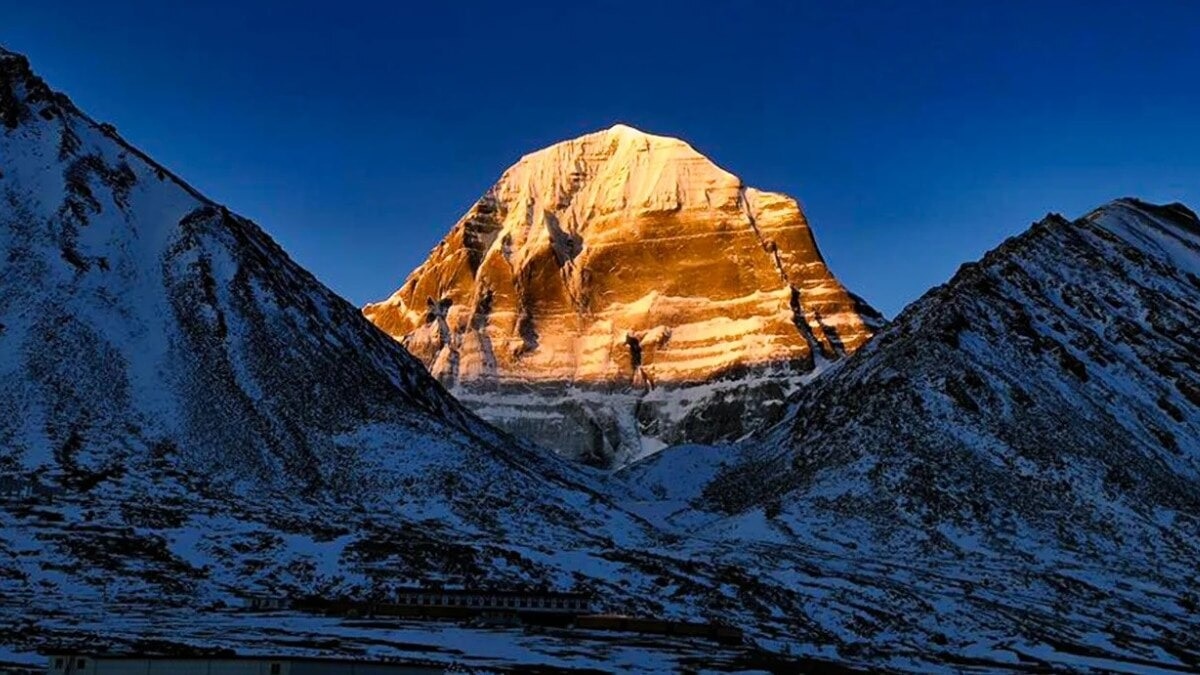
Mount Kailash in Tibet remains one of the world's greatest enigmas. From its pyramid-like structure to claims of rapid aging, discover the secrets of this sacred peak.
Key Takeaways
- Mount Kailash features a unique, pyramid-like geometric shape.
- Travelers report nails and hair growing significantly faster in the region.
- Despite being lower than Everest, no climber has successfully reached its summit.
- It is sacred to Hindus, Buddhists, Jains, and the Bon tradition.
There exists a place on Earth where it is said that time itself alters its pace. Located in Tibet, Mount Kailash is not just a mountain; it is a profound enigma that has baffled scientists and spiritual seekers alike for centuries. While thousands of mountaineers have conquered the world's highest peak, Mount Everest, no one has been able to successfully scale the summit of Kailash, despite it being significantly lower at approximately 6,638 meters.
The Mystery of Rapid Aging and Time Dilation
One of the most spine-chilling claims associated with the Kailash region is the phenomenon of 'Rapid Aging.' Many travelers have reported that their hair and nails grow at an unnaturally accelerated rate while in the vicinity of the mountain. While BozokMedia analysis shows that there is no definitive scientific evidence to prove time dilation, environmental factors such as extreme altitude, low oxygen levels, and intense physiological stress may contribute to these perceptions.
Is Mount Kailash a Man-Made Pyramid?
The physical structure of Mount Kailash is strikingly different from surrounding peaks. Its near-perfect pyramidal shape has led to controversial theories suggesting it might be an ancient, man-made monument or a massive energy structure built by a lost civilization. While mainstream geologists classify it as a natural formation, the mathematical precision of its shape continues to fuel intense speculation.
Mount Kailash is more than a geographical entity; it is a cosmic axis where science and spirituality collide in ways we are yet to comprehend.
From a religious standpoint, Hinduism identifies Kailash as the eternal residence of Lord Shiva. Similarly, Buddhism, Jainism, and the Tibetan Bon tradition revere the mountain as a sacred center of the universe. This spiritual significance often outweighs the desire for conquest, leading many climbers to respect its sanctity rather than attempting to summit it.
Why This Matters
The mysteries surrounding Mount Kailash represent the intersection of human faith and scientific inquiry. It serves as a reminder that despite our technological advancements, the natural world holds secrets that remain beyond the reach of modern instrumentation.
Frequently Asked Questions
1. Has anyone ever climbed Mount Kailash?
While many have attempted, no mountaineer has successfully reached the summit due to extreme weather and spiritual/geographical challenges.
2. Where is Mount Kailash located?
Mount Kailash is located in the Tibet Autonomous Region of China.