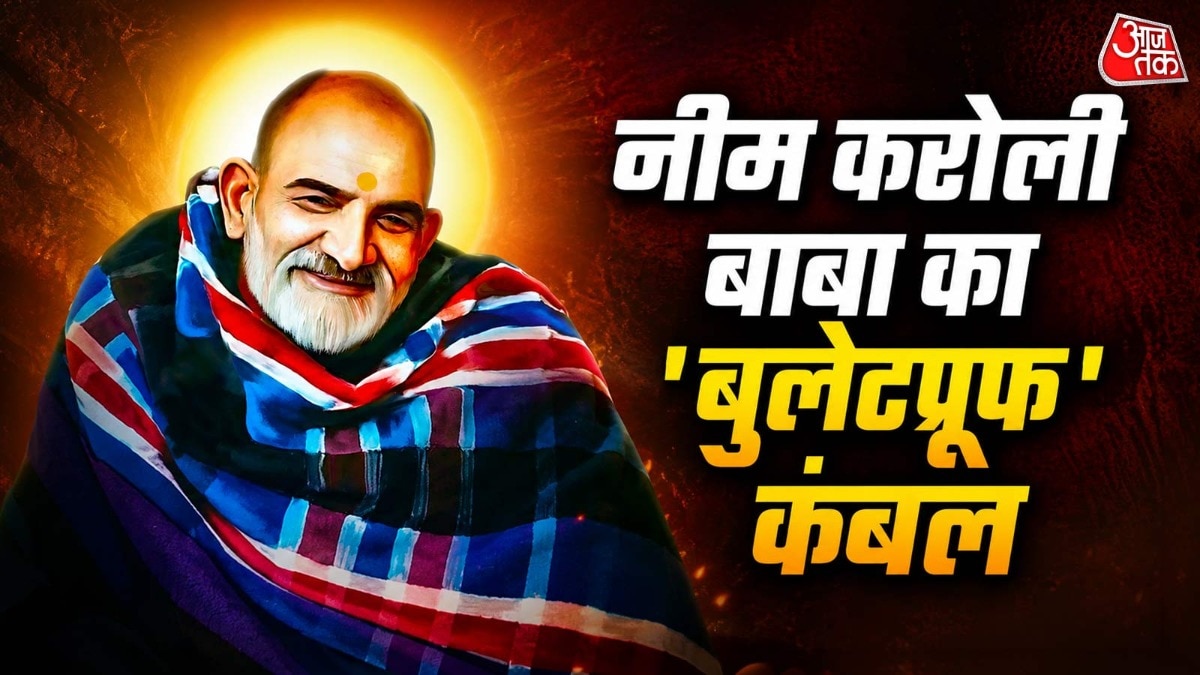
From the halls of Kainchi Dham to global fame, Neem Karoli Baba's constant use of a blanket remains a point of fascination. Explore the spiritual significance and the 'bulletproof' legends associated with it.
- Neem Karoli Baba wore a blanket regardless of the weather, symbolizing detachment and simplicity.
- The book 'Miracle of Love' by Ram Das refers to this blanket as a 'bulletproof' spiritual shield.
- Devotees believe the blanket acted as a medium to absorb the suffering of others.
Kainchi Dham, located in the serene hills of Uttarakhand, has become a global pilgrimage site for those seeking spiritual solace. At the heart of this devotion is Neem Karoli Baba, a saint whose life was defined by an extraordinary blend of simplicity and mystical power. One of the most enduring mysteries of his persona is the blanket he draped over himself in almost every photograph, regardless of whether it was the peak of summer or the depth of winter.
According to close disciples like Dada Mukherjee, this blanket was far from an ordinary piece of clothing. Witnesses claim that the blanket often emitted the fragrance of a newborn baby, symbolizing purity. Furthermore, it was said to exhibit supernatural properties—sometimes feeling impossibly heavy and at other times light as a feather, leaving observers in awe of its divine nature.
Why This Matters
BozokMedia analysis shows that the blanket served as a visual manifestation of Vairagya (detachment). In the realm of high spirituality, such items are often used to mask the saint's internal energy (Siddhis) to prevent followers from becoming overly attracted to the 'miracles' rather than the 'message.' By adopting a humble blanket, Baba redirected the focus from his persona to the path of selfless service (Seva).
"The blanket of Neem Karoli Baba was not a garment of need, but a cloak of compassion that shielded the ego and embraced the suffering of humanity."
Another deeply held belief among devotees is that Baba used the blanket to absorb the pain and ailments of his followers. There are numerous accounts of Baba placing his blanket over sick individuals, who then reported an immediate sense of relief and healing. This transforms the blanket from a simple cloth into a symbol of divine protection and empathy.
The global narrative of the blanket was solidified by Richard Alpert, the American psychologist who later became Ram Das. In his 1979 seminal work, 'Miracle of Love', Alpert described the blanket as a 'bulletproof' shield. This literary reference sparked a tradition that continues today, where thousands of pilgrims visit Kainchi Dham to offer blankets as a mark of respect and faith.
The choice of color—often blue or light hues—also carries significance. Blue is traditionally associated with the infinite, peace, and spiritual stability. For Baba, the blanket was a tool for maintaining equilibrium amidst the chaos of the external world, emphasizing inner realization over outer appearance.
Frequently Asked Questions
Q1: Why do devotees offer blankets at Kainchi Dham?
A: Offering blankets is a symbolic gesture of love and gratitude, mirroring the blanket that was the signature identity of Neem Karoli Baba.
Q2: What is the connection between the movie 'Hanuman Ansh' and Baba?
A: 'Hanuman Ansh' is a cinematic portrayal of Neem Karoli Baba's life and teachings, which has recently gained massive popularity and box-office success.