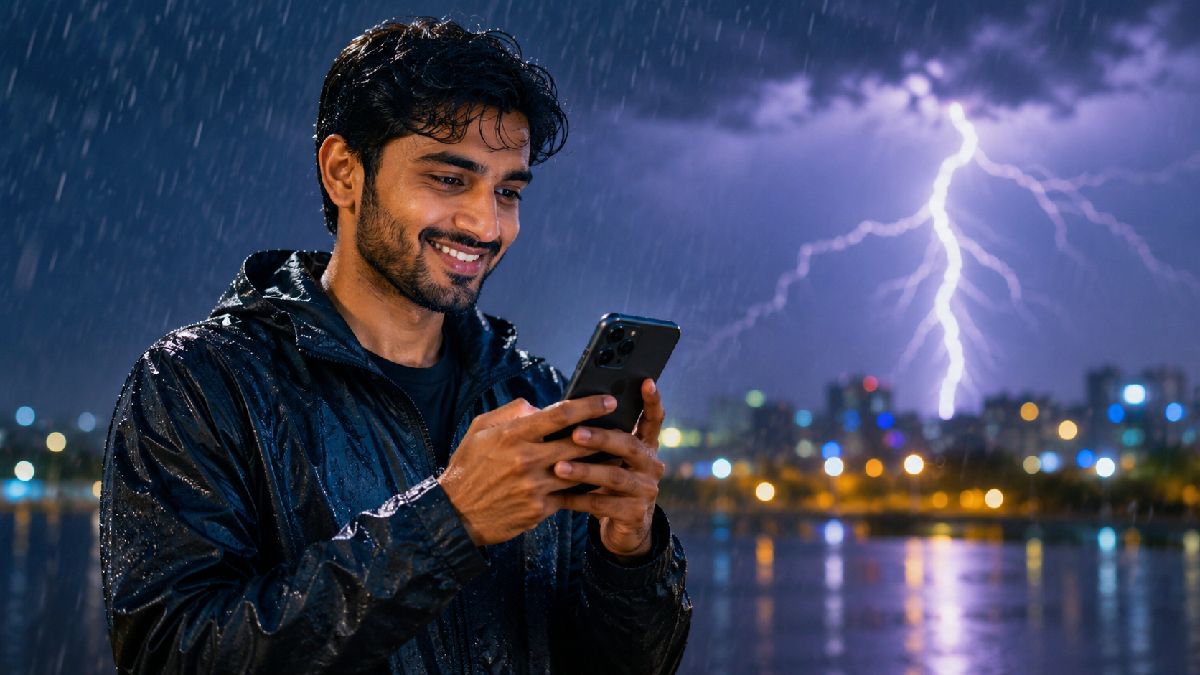
Using a smartphone in rain does not attract lightning, but standing on high ground or under trees poses the real danger. Choose safe locations for essential calls and stay alert.
Key Takeaways
- Using a phone in rain does not draw lightning directly.
- The biggest risk is being on elevated spots or under trees.
- If you must call, avoid open fields and high places.
During thunderstorms many assume that a mobile phone’s metal components will attract lightning. In reality, the limited metal and weak signal strength of smartphones make them poor conductors for lightning strikes.
Phone vs. Landline: Which Is Riskier?
Landline phones have long metal wiring and large antennas, increasing the chance of lightning attraction. Smartphones, with smaller antennas and less metal, present a lower risk.
Fundamental Safety Principles
Lightning seeks the path of least resistance, often targeting tall objects, trees, or metal structures. Hence, standing on elevated ground or under a tree is far more hazardous, regardless of whether you hold a phone.
Why This Matters
BozokMedia analysis shows that misconceptions about mobile safety during thunderstorms lead to unnecessary panic, diverting attention from the real hazards such as standing under trees or on elevated ground.
Dr. Ajay Kumar, Meteorology Expert: "Lightning follows the path of least resistance, not the metal parts of a mobile device."
Frequently Asked Questions
- Is it safe to keep my phone on and make calls during rain? Yes, as long as you are not in an open field, on high ground, or under a tree.
- Why should landline phones be avoided during thunderstorms? Landlines have larger antennas and metal wiring, which increase the likelihood of attracting a lightning strike.