As India ramps up its nuclear energy ambitions, a rare government disclosure reveals the intricate strategy used to manage radioactive waste and ensure environmental safety.
Key Takeaways
- India's nuclear plants generate approx. 0.15 cubic meters of solid radioactive waste per MW annually.
- Waste is categorized into three forms: Gaseous, Liquid, and Solid.
- India utilizes a 'multi-barrier system' for secure disposal in engineered facilities.
- The Atomic Energy Regulatory Board (AERB) strictly monitors all disposal processes.
As India accelerates its transition toward nuclear energy to meet rising electricity demands, a critical but often invisible challenge looms: radioactive waste management. Unlike the ash from coal-fired plants, nuclear waste requires meticulous treatment, monitoring, and long-term storage to prevent any risk to human health or the ecosystem.
Quantifying the Invisible Waste
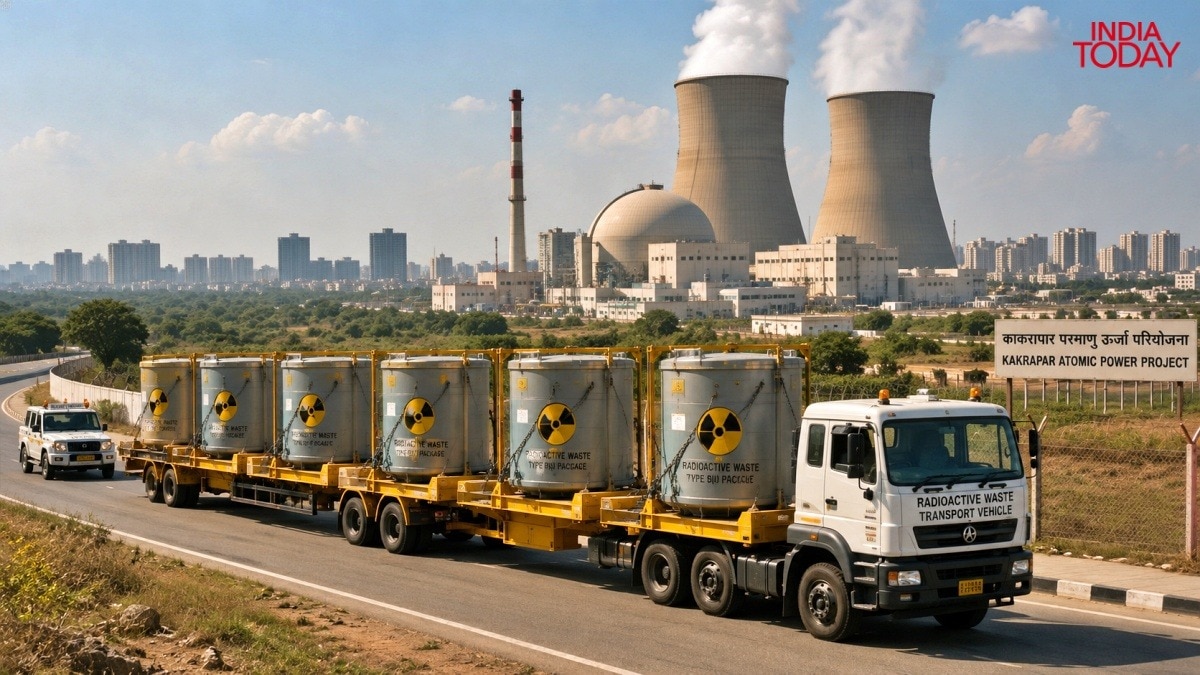
In a rare disclosure to Parliament, the Department of Atomic Energy (DAE) revealed that India's nuclear power plants typically generate about 0.15 cubic meters of radioactive solid waste per megawatt (MW) every year. To visualize this, 0.15 cubic meters is roughly equivalent to one-and-a-half standard household bathtubs for every MW of capacity.
The waste is generated during two main phases: the routine operational life of the plant and the eventual decommissioning process when a reactor is dismantled.
Why This Matters
BozokMedia analysis shows that for India to successfully achieve its net-zero carbon emission goals, the scalability of nuclear power is essential. However, the sustainability of this energy source depends heavily on the public's trust in waste management protocols. As the number of reactors increases, the complexity of handling varying levels of radioactivity will become a core component of India's energy security strategy.
The success of the nuclear era depends not just on how much power we generate, but on how safely we manage the remnants of that power.
Global Comparison: Nuclear Waste Management
| Feature | India's Approach | International Standards (US/Finland) |
|---|---|---|
| Primary Method | Engineered trenches & Multi-barrier systems | Deep Geological Repositories |
| Regulatory Oversight | AERB (Atomic Energy Regulatory Board) | National Nuclear Regulators |
| Waste Focus | Containment & Continuous Surveillance | Long-term geological isolation |
Frequently Asked Questions
1. Is radioactive waste released into the environment in India?
No. As per policy, no radioactive waste is released unless it has been specifically cleared, exempted, or excluded from regulatory control by the AERB.
2. How is solid radioactive waste stored?
It is stored in specially engineered facilities like stone-lined or reinforced concrete trenches within access-controlled areas.