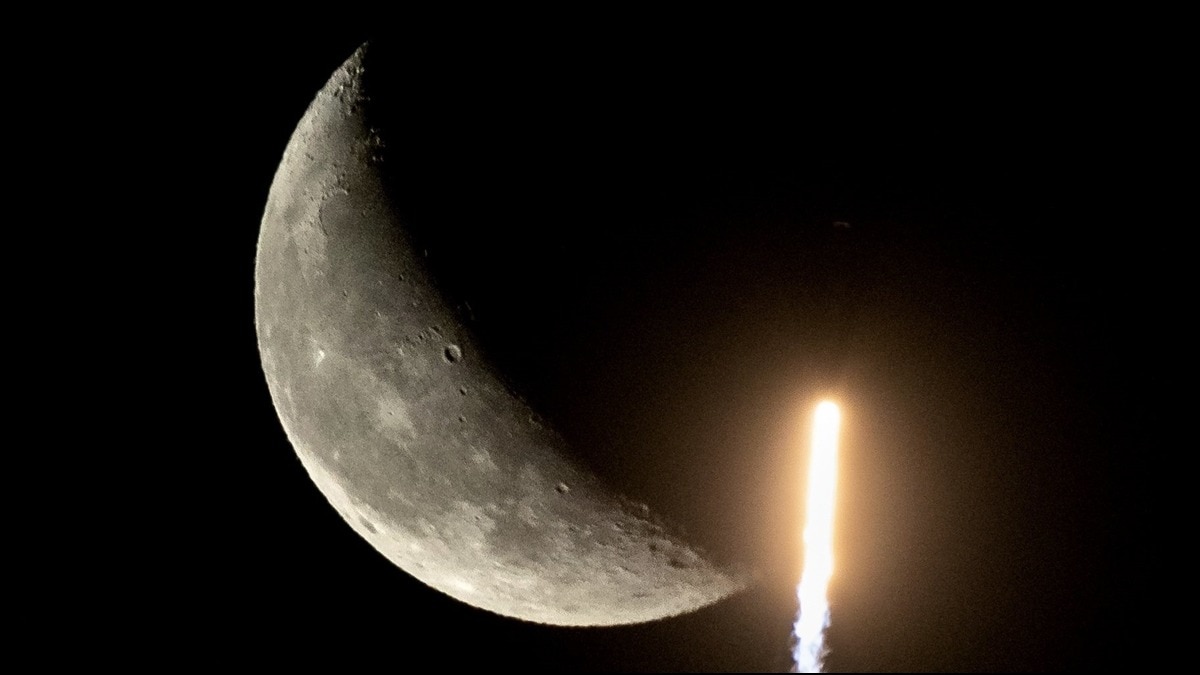
A massive SpaceX rocket fragment, the size of a school bus, is scheduled to impact the lunar surface at a staggering speed of 8,690 km/h.
Key Takeaways
- A large SpaceX rocket component is heading for a lunar impact.
- The fragment weighs approximately 4,000 kg and is the size of a school bus.
- Impact velocity is estimated at 8,690 km/h.
In a significant event for space enthusiasts and scientists alike, a massive fragment of a SpaceX rocket is set to collide with the Moon today. The object, which is comparable in size to a school bus, is hurtling toward the lunar surface, promising to create a noticeable impact on the Moon's landscape.
The Scale of the Impact
The sheer force of this collision is expected to be immense. Weighing roughly 4,000 kg, the fragment is traveling at a velocity of 8,690 km/h—nearly 27 times faster than a high-speed bullet train. Experts predict that the impact will likely create a new crater and send plumes of lunar dust soaring kilometers into the thin lunar exosphere.
Why This Matters: BozokMedia Analysis
BozokMedia analysis shows that while such impacts are becoming more frequent due to the rise of commercial spaceflight, they provide invaluable data regarding lunar geology and the behavior of kinetic impacts in a vacuum. However, it also highlights the growing challenge of managing orbital and lunar debris.
Uncontrolled kinetic impacts underscore the urgent need for international regulations regarding space debris management near lunar orbits.
Historical Background
As private entities like SpaceX and Blue Origin expand their lunar ambitions, the Moon is increasingly becoming a destination for discarded rocket stages. Historically, lunar impacts were caused by asteroids, but man-made debris is now a significant contributor to lunar surface alteration.
Frequently Asked Questions
Question 1: Will we see the crash from Earth?
Answer: While the impact will be significant on the lunar surface, it will likely be too small to be visible to the naked eye from Earth.
Question 2: Is this dangerous for future Moon missions?
Answer: It poses a risk to any hardware currently in low lunar orbit, but the surface impact itself is localized.