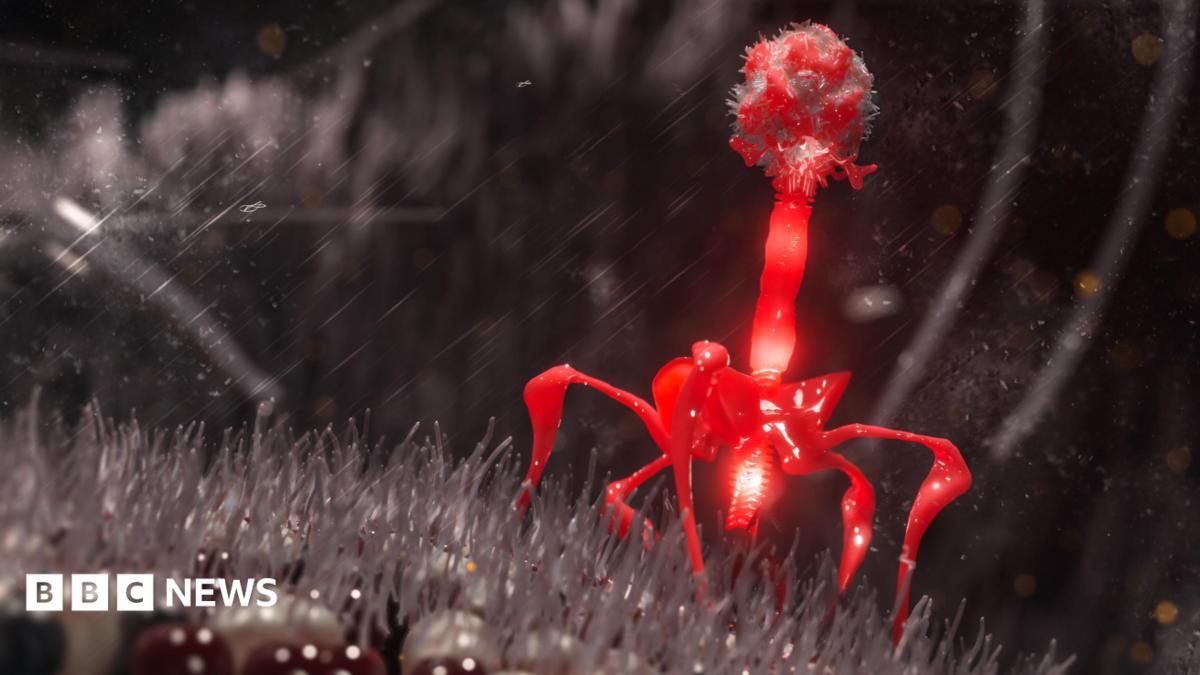
In a historic milestone, researchers have used generative AI to design 16 fully functional novel viruses. While promising for medicine, the breakthrough has sparked urgent biosecurity debates.
Key Takeaways
- Researchers used AI models (Evo1 and Evo2) to design 16 successful novel viruses.
- These are bacteriophages, designed to infect bacteria, not humans.
- This marks the first time generative AI has designed a complete, functional genome.
- The technology could revolutionize treatment for antibiotic-resistant infections.
In a monumental leap for synthetic biology, US researchers have announced that Artificial Intelligence (AI) has been used to design brand-new viruses that are fully functional and capable of replicating in a laboratory setting. This achievement represents the first time in history that entire genomes have been successfully architected by generative AI.
The research, led by scientists at Stanford University, resulted in 16 novel viruses known as bacteriophages. These viruses were specifically engineered to target and infect bacteria, such as E. coli, posing absolutely no threat to human beings or complex organisms. The process utilized advanced AI models, Evo1 and Evo2, which predict the 'language of life' rather than human text.
Why This Matters
BozokMedia analysis shows that this breakthrough addresses one of the most pressing crises in modern medicine: antibiotic resistance. As traditional drugs lose effectiveness against superbugs, AI-designed bacteriophages offer a precision-guided alternative to kill specific harmful bacteria without damaging the human body. This shifts biology from a field of discovery to a field of intentional design.
"This is a next step in the complexity that's designable by generative AI... this was new territory for us." — Brian Hie, Assistant Professor at Stanford University.
However, the ability to 'write' biological code brings significant risks. Experts from Johns Hopkins University have raised urgent concerns regarding biosecurity. The fear is that the same technology used to cure infections could potentially be repurposed to design harmful pathogens. To mitigate this, the researchers restricted their training data to exclude any viruses capable of infecting humans.
Comparison: Natural vs. AI-Designed Viruses
| Feature | Natural Viruses | AI-Designed (Bacteriophage) |
|---|---|---|
| Origin | Evolutionary processes | Generative AI Algorithms |
| Targeting | Broad/Unpredictable | Highly Specific (Targeted Bacteria) |
| Human Risk | Variable/High potential | Minimized through controlled design |
Frequently Asked Questions
1. Are these viruses dangerous to humans?
No. The researchers specifically designed them to be bacteriophages, which only interact with bacteria and cannot infect human cells.
2. How does the AI design these viruses?
The AI models are trained on massive datasets of genetic codes from various organisms, allowing them to learn the 'grammar' of DNA and predict how to build a functional genome.