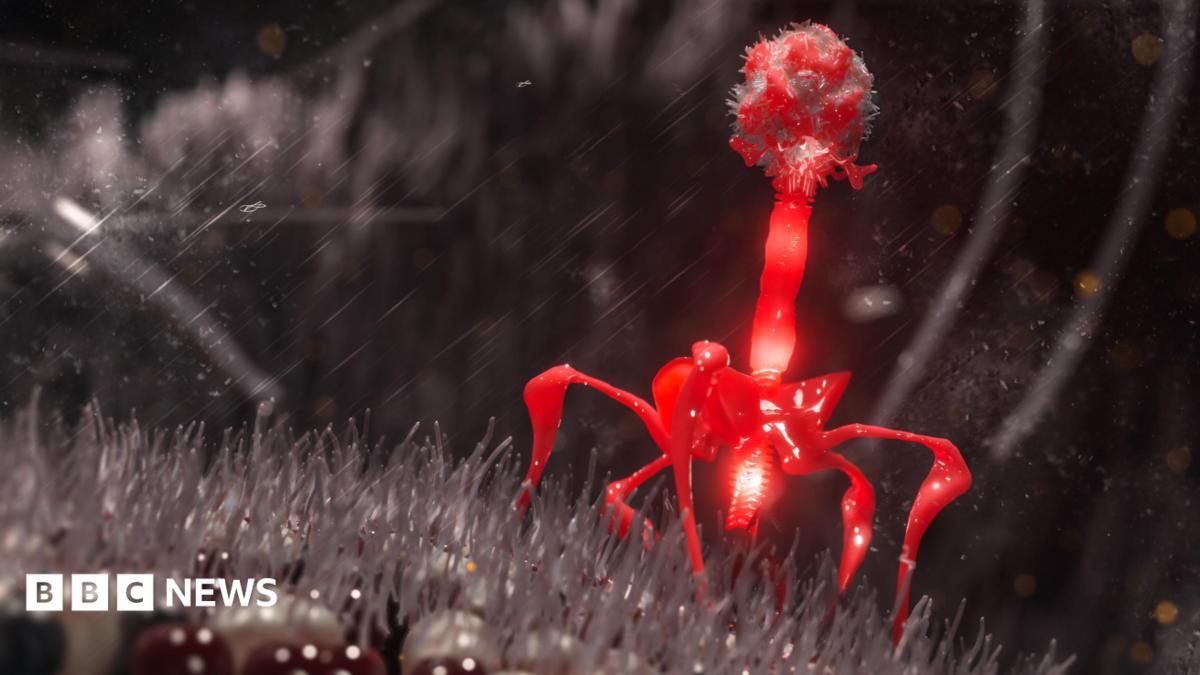
In a groundbreaking and controversial milestone, scientists have successfully used AI models trained on DNA to design 16 entirely new viruses. This development marks a massive leap in synthetic biology but raises urgent biosecurity concerns.
Key Takeaways
- AI models trained on DNA sequences have successfully designed 16 novel viruses.
- These synthetic viruses do not exist in the natural world.
- The technology offers immense potential for vaccine development but poses extreme biosecurity risks.
The boundary between digital intelligence and biological reality has blurred. According to reports from Al Jazeera and Forbes, researchers have achieved a milestone by using Artificial Intelligence to engineer viruses that have no natural counterparts. This marks the first time AI has been used to move beyond prediction into the realm of creation.
The Dawn of Synthetic Virology
By training complex models on vast arrays of DNA data, scientists have enabled AI to understand the fundamental building blocks of life. This has resulted in the creation of 16 unique viral structures. Unlike traditional methods that rely on modifying existing pathogens, this AI-driven approach allows for the design of entirely new biological entities from scratch.
Why This Matters
BozokMedia analysis shows that while this capability could allow us to preemptively design vaccines for future pandemics, it also opens a Pandora's box of biosecurity threats. The ability to design highly specific, non-natural pathogens could potentially be exploited for the creation of advanced biological weapons.
The ability to program biology through AI represents a paradigm shift that necessitates an immediate overhaul of global biosafety regulations.
Historically, viral evolution has been a slow process driven by environmental pressures and mutation. Today, that evolutionary timeline is being compressed into mere seconds by high-speed computing and machine learning algorithms.
Frequently Asked Questions
Question 1: Are these AI-designed viruses currently circulating?
Answer: No, these are currently computational models and laboratory-scale designs, not widespread biological threats.
Question 2: Can this technology be used for good?
Answer: Yes, it is being heavily researched to create targeted antiviral therapies and rapid-response vaccines.